
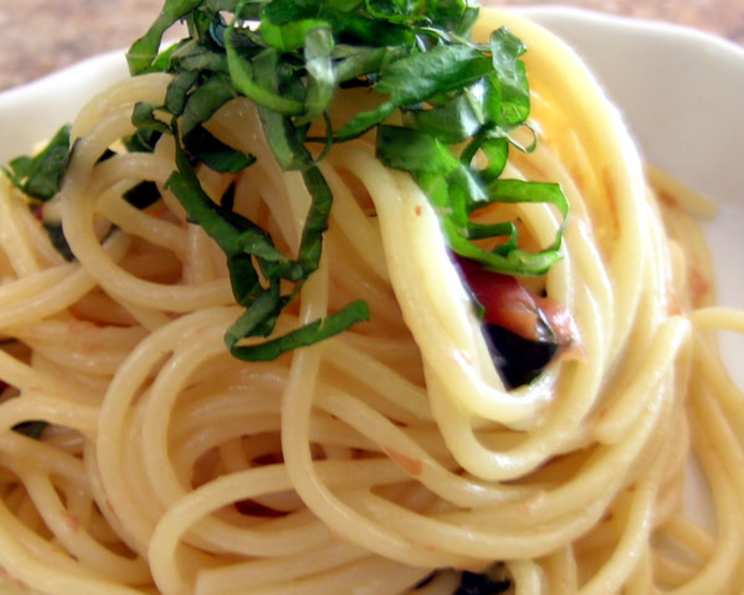
Japanese Style Ume Shiso Pasta: A Taste of Summer
The first time I had ume shiso pasta, I was a student backpacking through Japan. I stumbled upon a tiny, family-run restaurant tucked away in a Kyoto backstreet. The aroma of toasted sesame and something bright and herbaceous drew me in. I ordered without knowing what to expect, and what arrived was a revelation: delicate strands of spaghetti, barely coated in a vibrant, tangy sauce, studded with emerald slivers of shiso. It was a dish that captured the essence of summer in Japan – light, refreshing, and utterly unforgettable. I’ve been chasing that flavor ever since, and this recipe comes closer than anything I’ve tried before.
Recipe Overview
- Prep Time: 20 minutes
- Cook Time: 25 minutes
- Total Time: 45 minutes
- Servings: 3
- Dietary Type: Vegetarian
Ingredients
For the Ume Bishio (Sweetened Ume Paste):
- 10 umeboshi (salted Japanese plums)
- ¼ cup sugar
- 2 tablespoons mirin (sweet rice wine)
For the Pasta:
- 10 green shiso leaves, washed
- 300 g dried spaghetti (thin)
- 30 g butter
- Salt, to taste
Equipment Needed
- Small knife
- Food processor (optional)
- Small saucepan
- Large bowl
- Large pot
Instructions
-
Begin by preparing the umeboshi. Soak them in water for 3-4 hours to remove some of the saltiness. It is highly recommended to change the water every hour. Soaking is important to draw out excess salt and achieve the right balance of flavor in the finished dish.
-
Once the umeboshi have soaked, remove the pits using a small knife. Be careful not to cut yourself.
-
Mince the pitted umeboshi very, very finely until it forms a paste. Alternatively, you can use a food processor and pulse until you achieve a smooth paste. A smooth paste is crucial for even distribution of flavor in the sauce.
-
In a small saucepan, combine the ume paste, sugar, and mirin over low heat.
-
Turn the heat down to a simmer and stir the mixture frequently.
-
Continue simmering until the paste becomes shiny. This usually takes about 10-13 minutes. Keep a close eye on it, as it can burn easily. The paste will transform, taking on a beautiful, glossy appearance and color, indicating it’s ready.
-
Remove the ume bishio from the heat and set aside.
-
Gather the shiso leaves and roll them tightly into a pencil shape. This makes slicing them easier.
-
Thinly slice the rolled shiso into a chiffonade (thin ribbons). The chiffonade cut ensures the shiso releases its fragrant oils and evenly distributes throughout the pasta.
-
Place the butter in a large bowl and beat with a fork or whisk until creamy. You can also microwave for a few seconds to soften but be careful not to melt it completely.
-
Add 3 tablespoons of the prepared ume paste to the softened butter and mix well to combine. Reserve the remaining ume bishio for later use. It keeps well in the refrigerator.
-
In a large pot, boil the spaghetti according to package directions until al dente. Be careful not to overcook the pasta. Al dente means “to the tooth” in Italian – it should be slightly firm.
-
Drain the cooked spaghetti thoroughly.
-
Immediately add the drained spaghetti to the bowl with the butter/ume mixture. Toss to coat the pasta evenly.
-
Add the thinly sliced shiso to the pasta and toss gently to combine.
-
Serve the Ume Shiso Pasta either hot or at room temperature.
Expert Tips & Tricks
-
Umeboshi Selection: The quality of umeboshi greatly impacts the final flavor. Look for traditionally made umeboshi, which tend to be more complex and flavorful.
-
Shiso Freshness: Use fresh, vibrant shiso leaves for the best flavor. Avoid any leaves that are wilted or discolored.
-
Adjusting Sweetness/Tang: Taste the ume bishio as it simmers and adjust the sugar level to your preference. If you prefer a more tangy sauce, reduce the sugar slightly.
-
Pasta Water: Before draining the pasta, reserve about 1/2 cup of the starchy pasta water. If the sauce seems too thick, add a little pasta water to loosen it up and help it cling to the noodles.
-
Make-Ahead Tip: The ume bishio can be made well in advance and stored in the refrigerator for several weeks. This makes it easy to whip up the pasta quickly on a weeknight.
Serving & Storage Suggestions
Serve this Ume Shiso Pasta as a light lunch, a side dish, or even a late-night snack. Garnish with a few extra shiso leaves for visual appeal.
Leftovers can be stored in an airtight container in the refrigerator for up to 2 days. Reheat gently in a skillet over low heat, adding a splash of water if necessary. The pasta is best enjoyed fresh, as the shiso flavor can diminish over time. Freezing is not recommended as the texture of the pasta will change.
Nutritional Information
| Nutrient | Amount per Serving | % Daily Value |
|---|---|---|
| Calories | 420 kcal | 21% |
| Total Fat | 12g | 18% |
| Saturated Fat | 7g | 35% |
| Cholesterol | 30mg | 10% |
| Sodium | 250mg | 10% |
| Total Carbohydrate | 70g | 23% |
| Dietary Fiber | 4g | 16% |
| Sugars | 15g | N/A |
| Protein | 10g | 20% |
Note: Nutritional information is an estimate and may vary based on specific ingredients and preparation methods.
Variations & Substitutions
-
Gluten-Free: Use gluten-free spaghetti for a gluten-free version.
-
Vegan: Substitute the butter with a vegan butter alternative or olive oil.
-
Seafood Addition: Add cooked shrimp or crab meat for extra protein and flavor.
-
Citrus Twist: Add a squeeze of lemon or yuzu juice to brighten the flavors.
-
Spice It Up: Add a pinch of red pepper flakes for a touch of heat.
FAQs (Frequently Asked Questions)
Q: What is umeboshi?
A: Umeboshi are pickled Japanese plums, known for their intensely sour and salty flavor. They are often used in Japanese cuisine for their unique taste and health benefits.
Q: Can I use dried shiso instead of fresh?
A: While fresh shiso is highly recommended for the best flavor and aroma, you can use dried shiso as a substitute. Use about 1 tablespoon of dried shiso for every 10 fresh leaves.
Q: How long does ume bishio last in the refrigerator?
A: Ume bishio can last for several weeks in the refrigerator when stored in an airtight container.
Q: Can I adjust the amount of ume paste in the recipe?
A: Yes, you can adjust the amount of ume paste to your liking. If you prefer a more tangy flavor, add a little more. If you prefer a milder flavor, use a little less.
Q: What kind of spaghetti should I use?
A: Thin spaghetti (also known as spaghettini) works best in this recipe because it allows the delicate sauce to coat the noodles evenly. However, you can use regular spaghetti or other pasta shapes if preferred.
Final Thoughts
This Japanese Style Ume Shiso Pasta is a delightful dish that’s both easy to make and bursting with flavor. The combination of tangy umeboshi, fragrant shiso, and buttery spaghetti is truly unique and satisfying. I encourage you to try this recipe and experience the taste of summer in Japan! Don’t be afraid to experiment with variations and substitutions to make it your own. And if you do, please share your feedback. For a truly authentic experience, pair this pasta with a chilled glass of sake or a refreshing mugicha (roasted barley tea).