
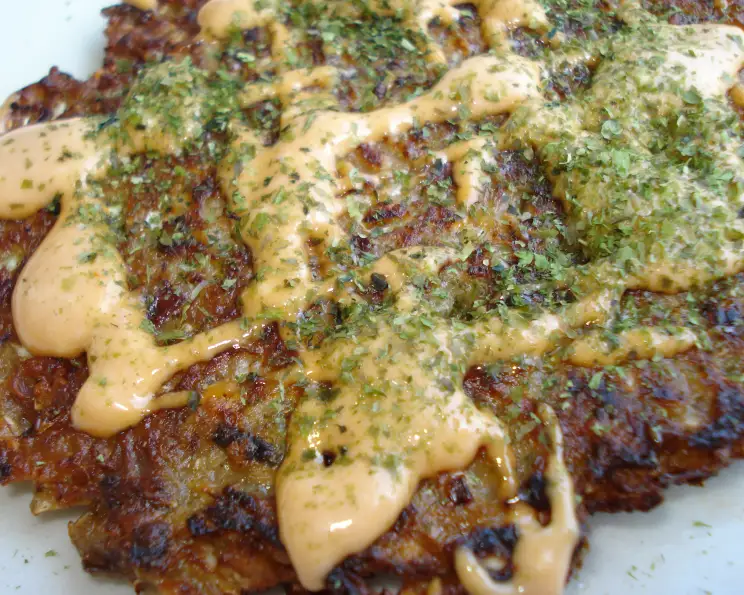
Japanese Vegetable Pancakes (Okonomiyaki)
I still remember the first time I tasted Okonomiyaki. It wasn’t in a fancy restaurant, but at a casual potluck hosted by a dear friend who had just returned from a year in Japan. The savory aroma filled the air, a comforting blend of cabbage, soy sauce, and something subtly sweet. Taking that first bite, the crispy edges yielding to a soft, flavorful interior, was a revelation. My kids devoured them, and this soon became a staple, customized for quick snacks on the go – a perfect way to sneak in extra vegetables.
Recipe Overview
- Prep Time: 15 minutes
- Cook Time: 5 minutes
- Total Time: 20 minutes
- Servings: 4-6
- Yield: Varies based on size
- Dietary Type: Vegetarian
Ingredients
- 2 1/2 cups green cabbage, chopped super fine
- 1 cup mushroom, finely chopped
- 1 scallion, finely chopped
- 2 eggs, beaten
- 1/2 cup flour
- 2 tablespoons soy sauce
- 3 tablespoons bonito flakes
- 1 tablespoon dashi granules
- 1/4 cup oil, for pan frying
For the Sauce:
- 1/4 cup ketchup
- 1/4 cup mayonnaise
- 1 tablespoon Worcestershire sauce (Japanese if you can get it)
Topping:
- Dried seaweed flakes (optional)
Equipment Needed
- Large mixing bowl
- Frying pan or griddle
- Spatula
- Paper towels
Instructions
-
Begin by preparing the vegetable mixture. In a large mixing bowl, combine the finely chopped green cabbage, mushrooms, and scallion. Ensuring the cabbage is finely chopped is key for even cooking and a pleasant texture.
-
Add the beaten eggs, flour, soy sauce, bonito flakes, and dashi granules to the vegetable mixture. Mix thoroughly until all ingredients are well combined. Be careful not to overmix, as this can develop the gluten in the flour and make the pancakes tough.
-
Heat the oil in a frying pan or on a griddle over medium-high heat. Allow the oil to get hot before adding the vegetable mixture. A hot pan is essential for creating a crispy exterior on the pancakes.
-
Once the oil is hot, carefully drop spoonfuls of the vegetable mixture into the pan, flattening them into small pancake shapes. Aim for a thickness of no more than 1/3 of an inch to ensure they cook through evenly. Avoid overcrowding the pan; work in batches to maintain the temperature and prevent steaming.
-
Cook the pancakes until browned on one side, approximately 2-3 minutes. Monitor the heat and adjust as needed to prevent burning.
-
Once browned, carefully flip the pancakes using a spatula and cook the other side until golden brown, about another 2-3 minutes.
-
Remove the cooked pancakes from the pan and place them on a plate lined with paper towels to drain any excess oil. This will help keep them crispy.
-
While the pancakes are cooking, prepare the sauce. In a small bowl, mix together the ketchup, mayonnaise, and Worcestershire sauce until smooth and well combined.
-
To serve, drizzle the sauce generously over the hot pancakes.
-
Top with dried seaweed flakes, if desired, for an extra touch of flavor and visual appeal.
Expert Tips & Tricks
- Cabbage Prep: Finely chopping the cabbage is crucial. A food processor can speed up this process, but be careful not to over-process it into a mush.
- Batter Consistency: The batter should be thick enough to hold its shape when dropped into the pan. If it seems too thin, add a little more flour, one tablespoon at a time, until the desired consistency is reached. If it’s too thick, add a little water, one tablespoon at a time.
- Cooking Temperature: Maintaining the correct pan temperature is essential for achieving the perfect balance of crispy exterior and tender interior. If the pancakes are browning too quickly, reduce the heat slightly. If they’re not browning enough, increase the heat.
- Flavor Boost: For a richer, more umami flavor, use Japanese Worcestershire sauce or add a splash of soy sauce to the sauce mixture.
- Make-Ahead Tip: The vegetable mixture can be prepared ahead of time and stored in the refrigerator for up to 24 hours. However, be aware that the salt in the soy sauce will draw moisture out of the cabbage, so you may need to drain any excess liquid before cooking. Adding a touch more flour can help as well.
- Crispy Edges: For extra crispy edges, press down slightly on the pancakes with the spatula as they cook.
Serving & Storage Suggestions
Serve the Okonomiyaki hot, immediately after cooking, for the best texture and flavor. They are delicious as a snack, appetizer, or light meal. They can be served plain or with a side of pickled ginger (gari) or a fresh green salad.
Leftover Okonomiyaki can be stored in an airtight container in the refrigerator for up to 3 days. To reheat, pan-fry them in a little oil until heated through and crispy again. Microwaving is not recommended as it will make them soggy.
These are best consumed immediately for optimal quality. While freezing is possible, it may affect the texture, making them slightly softer upon thawing and reheating.
Nutritional Information
| Nutrient | Amount per Serving | % Daily Value |
|---|---|---|
| Calories | 309.7 kcal | N/A |
| Calories from Fat | 192 g | 62% |
| Total Fat | 21.4 g | 32% |
| Saturated Fat | 3.3 g | 16% |
| Cholesterol | 109.6 mg | 36% |
| Sodium | 860.6 mg | 35% |
| Total Carbohydrate | 24 g | 8% |
| Dietary Fiber | 1.8 g | 7% |
| Sugars | 7.1 g | 28% |
| Protein | 7.3 g | 14% |
Note: Nutritional information is an estimate and may vary based on specific ingredients and portion sizes.
Variations & Substitutions
- Gluten-Free Okonomiyaki: Substitute the all-purpose flour with a gluten-free flour blend for a gluten-free version.
- Vegan Okonomiyaki: Replace the eggs with a flax egg (1 tablespoon of ground flaxseed mixed with 3 tablespoons of water, let sit for 5 minutes to thicken). Ensure the Worcestershire sauce is vegan as well, or substitute with a blend of soy sauce, tamarind paste, and a touch of vinegar.
- Add Protein: Incorporate cooked shrimp, bacon, pork belly, or even leftover grilled chicken into the vegetable mixture for added protein and flavor.
- Noodle Okonomiyaki (Hiroshima Style): Add cooked yakisoba noodles to the batter for a heartier pancake. This is a regional variation popular in Hiroshima.
- Seasonal Vegetables: Feel free to adapt the recipe based on seasonal vegetables. Shredded carrots, zucchini, or bell peppers are all excellent additions.
- Spicy Okonomiyaki: Add a pinch of red pepper flakes or a dash of chili oil to the batter for a spicy kick.
- Sweet & Savory: Top with a drizzle of honey or maple syrup for a touch of sweetness that complements the savory flavors.
FAQs (Frequently Asked Questions)
Q: Can I use pre-shredded cabbage?
A: While you can use pre-shredded cabbage, finely chopping it yourself will result in a better texture, as the pre-shredded cabbage can sometimes be drier.
Q: What is dashi?
A: Dashi is a Japanese soup stock that adds a savory umami flavor. It can be found in granule form in Asian grocery stores. If you can’t find dashi granules, you can omit them or substitute with a small amount of vegetable bouillon.
Q: Can I make these in advance?
A: While best served immediately, you can prepare the vegetable mixture in advance and store it in the refrigerator for up to 24 hours.
Q: How do I prevent the pancakes from sticking to the pan?
A: Make sure the pan is well-heated and that there is enough oil. A non-stick pan will also help prevent sticking.
Q: What if I don’t have bonito flakes?
A: Bonito flakes add a unique umami flavor but can be omitted if unavailable. You can add a pinch more dashi or a splash of soy sauce for a similar flavor boost.
Final Thoughts
These Japanese Vegetable Pancakes, or Okonomiyaki, are a wonderfully versatile and delicious way to enjoy a variety of vegetables. Don’t be afraid to experiment with different ingredients and toppings to create your own signature version. Whether you’re looking for a quick weeknight meal or a crowd-pleasing appetizer, this recipe is sure to become a favorite. Share your creations and variations – I’d love to see what you come up with! Pair these with some miso soup or a refreshing Japanese beer for a complete and satisfying experience.