
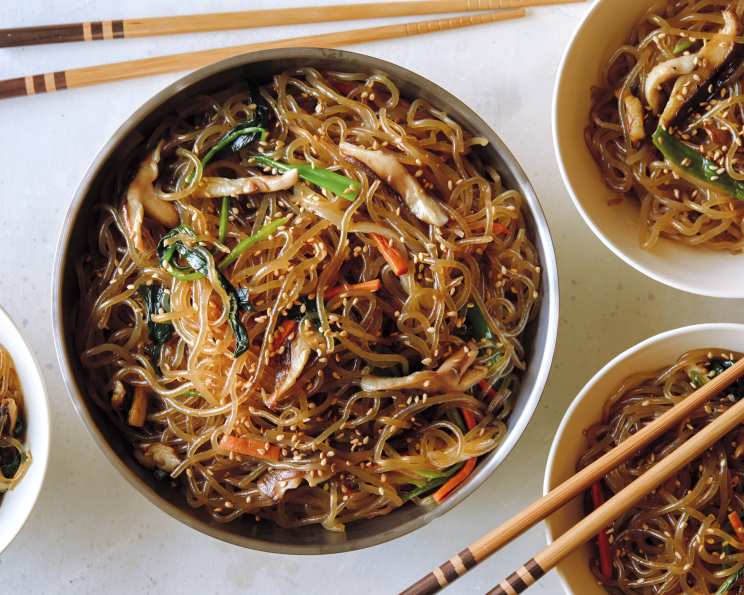
Japchae: A Symphony of Korean Flavors and Textures
My first encounter with Japchae was at a bustling Korean street market, the air thick with the aroma of sizzling meats and fermented kimchi. Amidst the sensory overload, one dish stood out: glistening, translucent noodles interwoven with vibrant vegetables. The vendor, with a warm smile, handed me a paper bowl piled high with this delightful creation. The subtle sweetness of the noodles, the satisfying chewiness, and the explosion of flavors from the various vegetables – it was an instant love affair. From that day on, I was determined to recreate this magic in my own kitchen. This recipe, adapted from a few sources, aims to capture the heart of that experience.
Recipe Overview
- Prep Time: 20 minutes
- Cook Time: 45 minutes
- Total Time: 1 hour 5 minutes
- Servings: 4-6
- Yield: 5 cups
- Dietary Type: Can be Vegetarian/Vegan (omit meat)
Ingredients
- 2 bundles (about 3 inches each) bean thread vermicelli (Dangmyun – Korean potato starch noodles)
- 1 medium-size carrot, julienned
- 1 1/2 large onions, thinly sliced
- 10 green onions, cut into 2-inch strips
- 2 cups mushrooms, sliced (shiitake, oyster, or button mushrooms work well)
- 9 ounces spinach, washed
- 4 tablespoons granulated sugar
- 1 tablespoon corn syrup (substitute with 1 extra tablespoon of sugar if needed)
- 2 teaspoons black pepper
- 1 tablespoon minced garlic
- 5 tablespoons soy sauce
- 5 tablespoons sesame oil
- 5 tablespoons olive oil, for stir-frying
- Sesame seeds, for garnish
- Optional: Thinly sliced beef, marinated with soy sauce, sugar, and garlic
Equipment Needed
- Large pot
- Colander or strainer
- Large bowls
- Frying pan or wok
- Scissors (optional, for cutting noodles)
Instructions
- Prepare the Noodles: Bring a large pot of water to a boil. Add the dangmyun noodles and cook for 3-4 minutes. The noodles should be soft but still slightly chewy. To test for doneness, remove one noodle and taste it.
- Rinse and Season the Noodles: Strain the noodles, reserving the hot water in the pot. Rinse the noodles thoroughly with cold water to stop the cooking process and prevent them from sticking together. Place the noodles in a large bowl (bowl #1). Use scissors to cut the noodles into more manageable lengths. Add 1 tablespoon of sesame oil, 1 tablespoon of soy sauce, and 1 tablespoon of corn syrup to the noodles. Mix well, using your hands for even coating.
- Blanch the Spinach: Return the reserved water in the pot to a boil. Add the spinach and blanch for only 1 minute. Remove immediately, strain, and squeeze out as much water as possible. Place the spinach in another large bowl (bowl #2). Add 1/2 tablespoon of sesame oil and 1/2 tablespoon of soy sauce to the spinach. Mix well.
- Stir-fry the Vegetables: In a frying pan or wok, heat 1 tablespoon of olive oil over medium-high heat. Stir-fry each vegetable separately, in the following order: carrots, onions, mushrooms, then green onions. Cook each vegetable until crisp-tender, being careful not to burn them. Add each cooked vegetable to bowl #2 with the spinach, stirring after each addition. Add more olive oil as needed.
- Add Meat (Optional): If using beef, slice it very thinly. Stir-fry the beef in the same pan with a little soy sauce, sugar, and garlic to taste. Cook until browned. Add the cooked beef to bowl #2 with the vegetables and spinach.
- Combine Noodles and Vegetables: Pour the seasoned noodles from bowl #1 into bowl #2 with the vegetables and mix everything together gently.
- Prepare the Sauce: In a small bowl, whisk together 4 tablespoons of soy sauce, 4 tablespoons of sugar, 2 tablespoons of sesame oil, and 2 teaspoons of black pepper.
- Dress the Japchae: Pour the sauce immediately over the noodle and vegetable mixture. Mix thoroughly with your hands or tongs until all the noodles are evenly coated and have a uniform color.
- Taste and Adjust: Taste the Japchae and adjust the seasonings as needed. Add more soy sauce for saltiness, sugar for sweetness, or sesame oil for richness.
- Garnish and Serve: Garnish with sesame seeds before serving.
Expert Tips & Tricks
- Noodle Texture is Key: Don’t overcook the noodles! They should be chewy, not mushy. The cold water rinse is crucial to achieving the right texture.
- Stir-Fry in Batches: Cooking the vegetables separately ensures they cook evenly and don’t steam. Overcrowding the pan leads to soggy vegetables.
- Don’t Skip the Sesame Oil: Sesame oil is essential for the authentic Japchae flavor. Use good quality sesame oil for the best results.
- Adjust Sweetness to Taste: The amount of sugar can be adjusted to your preference. If you prefer a less sweet dish, reduce the amount of sugar.
- Make Ahead: Japchae can be made ahead of time and reheated. The noodles may become a bit stickier, so add a little more sesame oil when reheating.
Serving & Storage Suggestions
Japchae can be served warm or at room temperature. It’s delicious as a main course or as a side dish (banchan) alongside other Korean dishes like grilled meats, kimchi, and rice.
To store leftovers, place the Japchae in an airtight container and refrigerate for up to 3 days. To reheat, microwave for 1-2 minutes, or stir-fry in a pan with a little extra sesame oil until heated through.
Nutritional Information
| Nutrient | Amount per Serving | % Daily Value |
|---|---|---|
| Calories | 450 kcal | 23% |
| Total Fat | 25g | 38% |
| Saturated Fat | 4g | 20% |
| Cholesterol | 0mg | 0% |
| Sodium | 1200mg | 50% |
| Total Carbohydrate | 55g | 18% |
| Dietary Fiber | 5g | 20% |
| Sugars | 20g | – |
| Protein | 8g | 16% |
Note: Nutritional information is an estimate and may vary based on specific ingredients and portion sizes.
Variations & Substitutions
- Vegetarian/Vegan: Omit the beef and use vegetable broth instead of beef broth (if beef is being used). Ensure your soy sauce is gluten-free if needed.
- Gluten-Free: Use gluten-free soy sauce (tamari).
- Protein Boost: Add tofu, tempeh, or other plant-based protein for a vegetarian option.
- Vegetable Variations: Feel free to add other vegetables such as bell peppers, zucchini, or bok choy.
- Spicy Japchae: Add a pinch of gochugaru (Korean chili flakes) to the sauce for a spicy kick.
FAQs (Frequently Asked Questions)
Q: Can I use other types of noodles?
A: While other noodles might work, dangmyun (Korean potato starch noodles) are essential for the authentic Japchae texture and flavor. They have a unique chewiness and translucence that other noodles don’t replicate.
Q: Can I make Japchae ahead of time?
A: Yes, Japchae can be made ahead of time. However, the noodles may become a bit sticky. Add a tablespoon or two of sesame oil when reheating to help loosen them.
Q: What if I don’t have corn syrup?
A: You can substitute the corn syrup with an extra tablespoon of sugar. The corn syrup adds a subtle gloss and slight stickiness, but sugar works as a fine replacement.
Q: How long does Japchae last in the refrigerator?
A: Japchae can be stored in an airtight container in the refrigerator for up to 3 days.
Q: Can I freeze Japchae?
A: Freezing Japchae is not recommended as the noodles can become mushy when thawed. It’s best enjoyed fresh or within a few days of making it.
Final Thoughts
Japchae is more than just a noodle dish; it’s a celebration of Korean flavors and culinary traditions. The balance of sweet, savory, and nutty notes, combined with the delightful textures, makes it a truly memorable dish. So, gather your ingredients, put on some Korean music, and embark on a culinary adventure. Don’t be afraid to experiment with variations and adjust the seasonings to your liking. Most importantly, enjoy the process and share this delicious creation with your loved ones. I hope this recipe brings as much joy to your kitchen as it has to mine!