
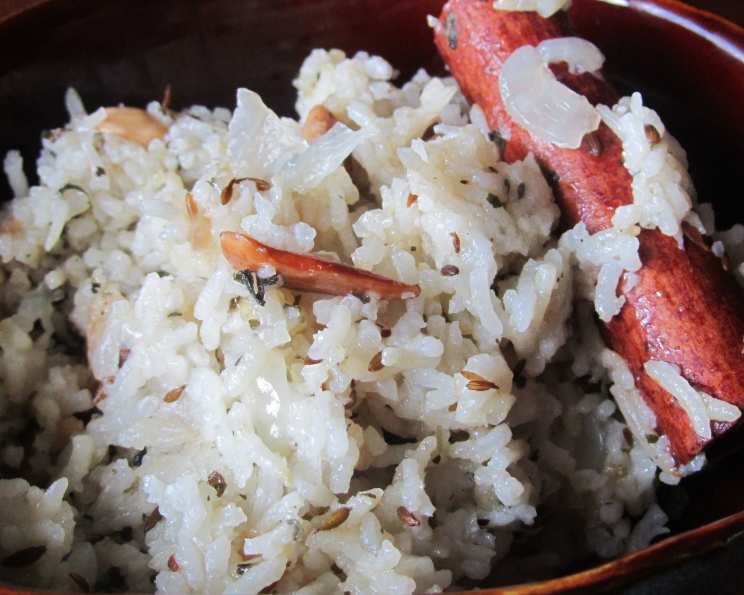
Jeera Rice: Aromatic Comfort in Every Grain
The first time I truly appreciated Jeera Rice was at a small roadside dhaba in Punjab. The air was thick with the scent of tandoori smoke and spices. After a long day of travel, weary and famished, I ordered a simple thali. It was the Jeera Rice, fluffy and fragrant, that stood out. Each grain, infused with the earthy warmth of cumin and the subtle sweetness of caramelized onions, was a tiny explosion of comfort. It wasn’t just rice; it was a warm embrace, a taste of home in a place I’d never been before. It was this simple yet extraordinary experience that sparked my passion for understanding the magic behind seemingly simple dishes.
Recipe Overview
- Prep Time: 30 minutes
- Cook Time: 25 minutes
- Total Time: 55 minutes
- Servings: 4-6
- Yield: 4-6 servings
- Dietary Type: Vegan
Ingredients
- 1 cup basmati rice
- 2 teaspoons jeera powder (cumin seeds)
- 2 tablespoons cashews
- 3 peppercorns
- 2 bay leaves
- 3 cloves
- 2 cinnamon sticks
- 1 onion, sliced
- 2 tablespoons ghee (can substitute with vegetable oil for a vegan option)
- Salt to taste
Equipment Needed
- Heavy-bottomed saucepan with a lid
- Measuring cups and spoons
- Strainer or colander
Instructions
- Begin by thoroughly washing the basmati rice under cold running water until the water runs clear. This removes excess starch and helps prevent the rice from becoming sticky.
- Soak the washed rice in fresh water for about half an hour. This allows the rice to absorb moisture, resulting in a fluffier texture after cooking.
- While the rice is soaking, prepare the aromatics. Slice the onion thinly. Set aside.
- In a heavy-bottomed saucepan, heat the ghee (or vegetable oil) over medium heat. The heavy bottom helps distribute heat evenly and prevent scorching.
- Once the ghee is hot, add the cashews. Fry them until they turn golden brown. This usually takes just a minute or two, so watch them closely to prevent burning.
- Remove the fried cashews from the saucepan and set them aside. These will be used as a garnish later.
- In the same ghee, add the sliced onions, bay leaves, cloves, cinnamon sticks, jeera powder (cumin seeds), and peppercorns.
- Fry the spices and onions for a few minutes, stirring frequently, until the onions are translucent and the spices release their fragrance. Be careful not to burn the spices, as this can result in a bitter taste.
- Drain the soaked rice thoroughly using a strainer or colander.
- Add the drained rice to the saucepan with the sautéed spices and onions.
- Stir gently to combine the rice with the spices, ensuring that each grain is coated with the aromatic ghee.
- Add salt to taste. Remember that you can always add more salt later, but you can’t take it away.
- Add water. The general rule is to use a 2:1 ratio of water to rice (2 cups of water for every 1 cup of rice). However, depending on your rice and the saucepan you’re using, you may need to adjust the amount of water slightly.
- Bring the mixture to a boil over medium-high heat.
- Once boiling, reduce the heat to low, cover the saucepan with a tight-fitting lid, and simmer.
- Cook until all the water has been absorbed and the rice is tender, approximately 15-20 minutes. Avoid lifting the lid during this time, as this can release steam and affect the cooking process.
- After 15-20 minutes, check the rice for doneness. Gently fluff the rice with a fork. If the rice is still wet, cover the saucepan and cook for a few more minutes until the water is completely absorbed.
- Once the rice is cooked, remove the saucepan from the heat and let it rest, covered, for 5-10 minutes. This allows the steam to redistribute and the rice to finish cooking, resulting in a fluffier texture.
- Finally, fluff the Jeera Rice with a fork to separate the grains.
- Serve the Jeera Rice hot, topped with the fried cashews.
Expert Tips & Tricks
- Toasting the spices: Briefly toasting the whole spices (cumin seeds, cloves, cinnamon sticks, peppercorns) in a dry pan before adding them to the ghee intensifies their aroma and flavor.
- Rice-to-water ratio: The ideal rice-to-water ratio may vary depending on the type of basmati rice and the saucepan used. Start with a 2:1 ratio and adjust as needed. If the rice is too dry, add a little more water. If it’s too wet, cook it uncovered for a few minutes to allow the excess water to evaporate.
- Fluffing the rice: Use a fork to fluff the rice gently to avoid breaking the grains.
- Make-ahead tip: The rice can be cooked ahead of time and reheated. Store cooked rice in an airtight container in the refrigerator for up to 3 days. Reheat in the microwave or on the stovetop with a splash of water.
- Preventing sticky rice: Washing and soaking the rice are crucial steps to prevent stickiness. Ensure that you wash the rice until the water runs clear and soak it for at least 30 minutes.
Serving & Storage Suggestions
Jeera Rice is incredibly versatile and pairs well with a wide variety of dishes. Serve it hot as a side dish with spicy curries, dals, or grilled meats. It’s also delicious with raita (yogurt dip) or as a base for vegetable stir-fries.
Storage: Leftover Jeera Rice can be stored in an airtight container in the refrigerator for up to 3 days.
Reheating: To reheat, add a tablespoon of water to the rice and microwave for 1-2 minutes, or until heated through. Alternatively, reheat the rice in a saucepan over low heat, stirring occasionally, until heated through.
Room Temperature: Cooked rice should not be left at room temperature for more than 2 hours.
Freezing: Freezing cooked rice is not generally recommended as it can change the texture. However, if you must freeze it, spread the rice in a single layer on a baking sheet and freeze until solid. Then, transfer the frozen rice to an airtight container and store in the freezer for up to 1 month. Reheat directly from frozen.
Nutritional Information
| Nutrient | Amount per Serving | % Daily Value |
|---|---|---|
| Calories | 280 kcal | 14% |
| Total Fat | 8g | 12% |
| Saturated Fat | 4g | 20% |
| Cholesterol | 15mg | 5% |
| Sodium | 40mg | 2% |
| Total Carbohydrate | 45g | 15% |
| Dietary Fiber | 2g | 8% |
| Sugars | 2g | – |
| Protein | 5g | 10% |
Nutritional information is an estimate and may vary based on specific ingredients and portion sizes.
Variations & Substitutions
- Vegan Jeera Rice: Use vegetable oil instead of ghee to make the recipe vegan.
- Brown Basmati Rice: Substitute white basmati rice with brown basmati rice for a healthier and nuttier option. Adjust cooking time and water accordingly.
- Herb Variations: Add fresh herbs like cilantro, mint, or parsley for a refreshing twist.
- Spicier Version: Increase the number of peppercorns or add a pinch of red chili powder for a spicier kick.
- Vegetable Addition: Add finely chopped vegetables like carrots, peas, or bell peppers for added nutrition and flavor. Sauté the vegetables with the onions and spices.
FAQs (Frequently Asked Questions)
Q: Why is it important to wash the rice before cooking?
A: Washing the rice removes excess starch, which helps prevent the rice from becoming sticky and ensures a fluffier texture.
Q: Can I use regular rice instead of basmati rice?
A: While you can use other types of rice, basmati rice is preferred for its delicate flavor, aroma, and fluffy texture.
Q: How do I prevent the rice from burning on the bottom of the saucepan?
A: Using a heavy-bottomed saucepan and simmering the rice over low heat helps prevent burning. It’s also important to avoid lifting the lid during cooking to maintain a consistent temperature.
Q: Can I add other spices to Jeera Rice?
A: Absolutely! Feel free to experiment with other spices like turmeric, coriander, or garam masala to create your own unique flavor profile.
Q: How can I tell if the rice is cooked through?
A: The rice is cooked when all the water has been absorbed and the grains are tender. Gently fluff the rice with a fork to check for doneness. If the rice is still wet, cook for a few more minutes until the water is completely absorbed.
Final Thoughts
Jeera Rice is more than just a simple side dish; it’s a celebration of simple ingredients transformed into something truly special. The earthy aroma of cumin, the subtle sweetness of caramelized onions, and the delicate fluffiness of the rice create a symphony of flavors and textures that is both comforting and satisfying. I encourage you to try this recipe and experience the magic of Jeera Rice for yourself. Don’t be afraid to experiment with variations and substitutions to create your own unique version. And most importantly, share your feedback and let me know what you think! Serve it alongside your favorite Indian curry or grilled dish, and savor the moment.