
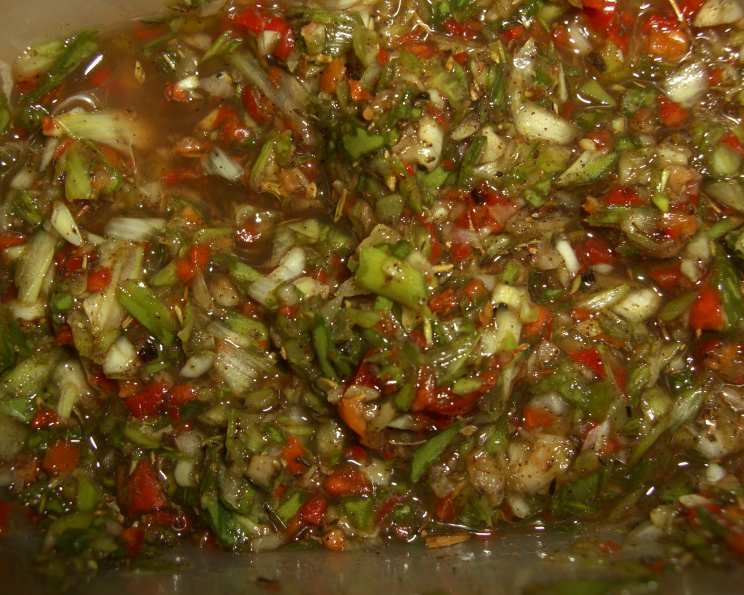
Authentic Caribbean Jerk Seasoning: A Taste of the Islands
My earliest memories of jerk chicken are inextricably linked to the vibrant energy of street-side vendors in Montego Bay. The air, thick with humidity and the rhythmic pulse of reggae music, carried the intoxicating aroma of wood smoke, spices, and grilling meat. Each vendor guarded their jerk recipe like a national treasure, a closely held secret passed down through generations. It wasn’t just food; it was an experience, a fiery explosion of flavor that painted the palate with the sun-drenched soul of Jamaica. This recipe brings that authentic taste home.
Recipe Overview
- Prep Time: 5 minutes
- Cook Time: 0 minutes (Seasoning only)
- Total Time: 5 minutes
- Yields: 10 tablespoons
- Dietary Type: Vegan
Ingredients
- 6 green onions, chopped fine
- 3 scotch bonnet peppers, seeded and chopped
- 2 garlic cloves, chopped
- 2 tablespoons white wine vinegar
- 1 tablespoon brown sugar
- 3⁄4 tablespoon fresh ground allspice
- 1 teaspoon dried thyme
- 1⁄4 teaspoon salt
- 1⁄8 teaspoon black pepper
Equipment Needed
- Blender or Food Processor
- Airtight Container
Instructions
- First, prepare your scotch bonnet peppers. For a milder flavor, be sure to remove the seeds and membranes. This is where most of the heat resides. Handle the peppers with care, using gloves is recommended, and avoid touching your face or eyes afterwards.
- Next, peel the garlic cloves.
- Now, combine all ingredients – the chopped green onions, seeded and chopped scotch bonnet peppers, chopped garlic, white wine vinegar, brown sugar, fresh ground allspice, dried thyme, salt, and black pepper – into a blender or food processor.
- Blend well until you achieve a smooth paste. You may need to scrape down the sides of the blender occasionally to ensure all ingredients are fully incorporated.
- Finally, store the jerk seasoning in a covered, airtight container in the refrigerator. It will keep for several weeks.
Expert Tips & Tricks
- Spice Level Adjustment: The heat of scotch bonnet peppers can vary. Start with a smaller amount and taste as you go, adding more to reach your desired level of spiciness. If you can’t find scotch bonnets, habaneros are a suitable, though slightly different in flavor, substitute.
- Freshness is Key: Using fresh, high-quality spices will make a significant difference in the final flavor of your jerk seasoning. If your spices have been sitting in the pantry for a while, consider replacing them.
- Marinating Time: For the most intense flavor, marinate your meat or vegetables in the jerk seasoning for at least 4 hours, or preferably overnight, in the refrigerator.
- Pre-Made Convenience: For a smoother consistency, especially if you are using a less powerful blender, you can use a mortar and pestle to grind the spices into a fine powder before adding the wet ingredients.
- Don’t Be Afraid to Experiment: While this recipe provides a solid foundation, feel free to adjust the proportions of the ingredients to suit your own taste preferences. Some people like to add a touch of ginger, cinnamon, or nutmeg for added complexity.
Serving & Storage Suggestions
This jerk seasoning is incredibly versatile. Traditionally, it’s used to marinate pork or chicken, but it’s equally delicious on fish, shrimp, tofu, or even vegetables like eggplant and bell peppers.
To serve, grill, bake, or pan-fry your marinated ingredients until cooked through. Garnish with fresh herbs like scallions or cilantro for a vibrant presentation. Pair your jerk-spiced dish with classic Caribbean sides such as rice and peas, coleslaw, or fried plantains.
Store any leftover jerk seasoning in an airtight container in the refrigerator. It will keep for up to 2 weeks. For longer storage, you can freeze it in ice cube trays. Once frozen, transfer the cubes to a freezer bag for easy portioning. The flavor may mellow slightly after freezing, but it will still be delicious.
Nutritional Information
| Nutrient | Amount per Serving | % Daily Value |
|---|---|---|
| Calories | 16 kcal | – |
| Total Fat | 0.1 g | 0% |
| Saturated Fat | 0 g | 0% |
| Cholesterol | 0 mg | 0% |
| Sodium | 61.9 mg | 2% |
| Total Carbohydrate | 3.8 g | 1% |
| Dietary Fiber | 0.6 g | 2% |
| Sugars | 2.3 g | – |
| Protein | 0.5 g | 1% |
Note: Percent Daily Values are based on a 2,000 calorie diet. Nutritional information is an estimate and may vary based on specific ingredients and preparation methods.
Variations & Substitutions
- Milder Version: For a milder flavor, use less scotch bonnet pepper, or substitute with jalapeño or serrano peppers. Remember to remove the seeds and membranes for even less heat.
- Sweetness: Adjust the amount of brown sugar to your liking. You can also use honey or maple syrup for a different flavor profile.
- Herb Variations: Experiment with different herbs such as marjoram, rosemary, or sage.
- Liquid Smoke: A dash of liquid smoke can add a smoky depth to the seasoning, mimicking the flavor of traditional wood-fired jerk cooking.
- Vegan Jerk: This recipe is naturally vegan, but ensure that when using it to marinate protein, you use vegan alternatives like tofu or tempeh.
FAQs (Frequently Asked Questions)
Q: How spicy is this jerk seasoning?
A: This recipe is fairly spicy due to the scotch bonnet peppers. However, you can adjust the heat by using fewer peppers or substituting them with milder varieties.
Q: Can I use dried allspice instead of fresh ground allspice?
A: While fresh ground allspice is preferred for its more intense flavor, dried allspice can be used in a pinch. Use about 1/2 teaspoon of dried allspice in place of 3/4 tablespoon of fresh ground.
Q: How long does this jerk seasoning last?
A: Stored properly in an airtight container in the refrigerator, this jerk seasoning will last for up to 2 weeks. For longer storage, you can freeze it for up to 3 months.
Q: What’s the best way to use this jerk seasoning?
A: Marinate your meat, poultry, seafood, or vegetables in the seasoning for at least 4 hours, or preferably overnight, before grilling, baking, or pan-frying.
Q: Can I use this as a dry rub instead of a marinade?
A: Yes, you can use this jerk seasoning as a dry rub. Simply rub it onto your meat or vegetables before cooking. For a more intense flavor, you can also add a little bit of oil or vinegar to the dry rub to create a paste.
Final Thoughts
I urge you to dive into this recipe and bring the taste of the Caribbean sunshine into your kitchen. Feel free to experiment, adjust the spices to your liking, and make it your own. Don’t be afraid to get creative and try it on everything from grilled chicken to roasted vegetables. And if you’re feeling adventurous, why not pair it with a refreshing rum punch? Share your creations and feedback – I’d love to hear how you’ve made this recipe your own!