
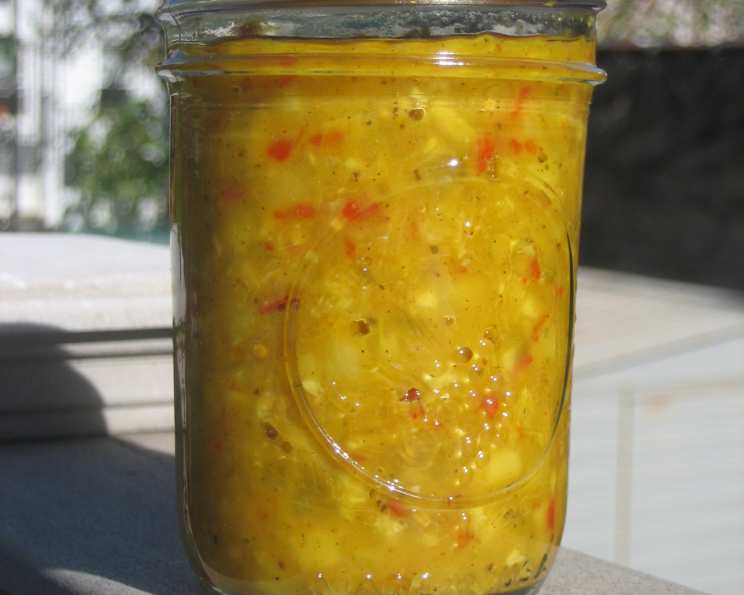
Jerusalem Artichoke Relish: A Taste of Autumn’s Bounty
My grandmother, a fiercely independent woman with a garden that rivaled botanical gardens, always made Jerusalem Artichoke Relish every fall. The earthy aroma of simmering vinegar and spices would fill her kitchen, a promise of holiday feasts and thoughtful gifts. As a child, I wasn’t always fond of the slightly odd-looking sunchokes, but the tangy-sweet relish transformed them into something magical, something I now associate with warmth, family, and the abundance of the harvest season. It’s a taste of home I carry with me, a reminder of simple pleasures and the love poured into every jar.
Recipe Overview
- Prep Time: 11 hours 15 minutes (includes soaking time)
- Cook Time: Approximately 1 hour
- Total Time: 12 hours 15 minutes
- Yields: 16 pints
- Dietary Type: Gluten-Free, Vegan
Ingredients
- 6 lbs jerusalem artichokes
- 3 lbs white cabbage, cored and roughly chopped
- 1 1⁄2 lbs white onions, peeled and roughly chopped
- 3 green bell peppers, cored and roughly chopped
- 3 red bell peppers, cored and roughly chopped
- 2 cups pickling salt (not iodized)
- 4 tablespoons white vinegar
- 1⁄2 cup flour
- One 24 ounce jar French’s yellow mustard
- 1 quart apple cider vinegar
- 1 quart white wine vinegar
- 3 lbs sugar
- 3 tablespoons mustard seeds
- 2 tablespoons celery seeds
- 1 tablespoon turmeric
- 1 teaspoon cayenne pepper
- 1 teaspoon ground allspice
- 1 teaspoon ground cloves
- 1 teaspoon ground black pepper
Equipment Needed
- 2 large stainless steel pots or very large plastic bowls (for soaking)
- Food processor (optional, for chopping)
- Large stockpot (at least 10 quarts)
- Paper towels
- Canning jars (16 pint jars)
- Chopstick or other non-metal utensil
- Canning equipment for water bath processing
Instructions
-
Prepare the Jerusalem Artichokes: These tubers tend to be dirty and knobby, so thorough cleaning is crucial. Place the artichokes in a large pot, cover with water, and scrub each one meticulously with a stiff vegetable brush under running water. Remove any loose bits to eliminate trapped grit.
-
Brine Preparation (Artichokes): In one of the large stainless steel pots or plastic bowls, create a brine by dissolving 1 cup of pickling salt in 1 gallon of water, adding 4 tablespoons of white vinegar. Stir until the salt is completely dissolved.
-
Chopping the Artichokes: Do not peel the artichokes! The skin is edible and contains valuable nutrients. You have two options for chopping. I prefer to cut the artichokes into quarter-inch dice by hand for a superior texture. Alternatively, you can use a food processor, but be cautious not to over-process them into mush. Aim for small, uniform chunks, similar to the consistency of relish. Immediately place the chopped artichokes into the prepared brine to prevent discoloration.
-
Brine Preparation (Cabbage, Onions, Peppers): In the second large stainless steel pot or plastic bowl, prepare another brine using the remaining 1 cup of pickling salt and 1 gallon of water. Stir well to ensure the salt dissolves completely.
-
Chopping the Cabbage, Onions, and Peppers: Using a food processor, chop the white cabbage, white onions, green bell peppers, and red bell peppers until finely chopped, achieving a relish-like consistency. As with the artichokes, monitor the process closely to avoid turning the vegetables into a paste.
-
Combining the Chopped Vegetables: Add the chopped cabbage, onions, and peppers to the second brine, stirring well to combine.
-
Soaking the Vegetables: Cover both bowls of brined vegetables (artichokes in one, cabbage/onion/pepper mix in the other) and let them soak on the counter overnight or for 8 hours. It is crucial not to exceed 10 hours to prevent the vegetables from becoming overly salty.
-
Draining the Vegetables: Line a large counter surface (approximately 2 1/2 feet by 1 1/2 feet) with multiple layers of paper towels (about 5 layers).
-
Draining and Rinsing (Artichokes): Drain the Jerusalem artichokes, rinse them thoroughly with cold water, and drain well again. Spread them evenly over half of the prepared paper towels.
-
Draining, Rinsing, and Squeezing (Cabbage Mixture): Drain the cabbage/onion/pepper mixture and rinse with cold water. Then, using clean hands, squeeze out as much remaining moisture as possible from the vegetables. You’ll be surprised at how much water is retained. Spread the drained and squeezed vegetables on the remaining half of the paper towels.
-
Preparing the Mustard-Flour Mixture: In a large bowl, whisk together the French’s yellow mustard and the flour until smooth. Set aside. This mixture will help to thicken the relish.
-
Combining the Vinegar and Spices: In a very large stockpot (at least 10 quarts), combine the apple cider vinegar, white wine vinegar, sugar, mustard seeds, celery seeds, turmeric, cayenne pepper, ground allspice, ground cloves, and black pepper.
-
Simmering the Vinegar Mixture: Bring the vinegar mixture to a boil over medium-high heat, stirring well. Once boiling, reduce the heat to a simmer.
-
Tempering the Mustard Mixture: Ladle out about 2 cups of the hot vinegar mixture from the stockpot and add it gradually to the mustard/flour mixture in the bowl, whisking constantly to prevent lumps from forming. Ensure the mixture is completely smooth.
-
Adding the Mustard to the Vinegar: Pour the tempered mustard/flour mixture back into the large stockpot with the remaining vinegar mixture, whisking continuously to combine thoroughly. Bring the mixture back to a boil, then reduce the heat to a simmer and cook for 10 minutes, stirring occasionally to prevent sticking.
-
Combining the Vegetables and Sauce: Add the drained artichokes and the drained cabbage/onion/pepper mixture to the stockpot, stirring well to ensure all the vegetables are fully coated with the vinegar/mustard sauce.
-
Final Simmer: Bring the mixture to a boil, stirring frequently to prevent scorching.
-
Canning: Carefully ladle the hot relish into sterilized canning jars, leaving 1/2 inch of headspace. Use a chopstick or other thin, non-metal utensil to run around the inside of the jar to release any trapped air bubbles. Wipe the rims of the jars with a damp paper towel to ensure a clean seal. Place the lids on the jars, followed by the bands, tightening them fingertip-tight only.
-
Water Bath Processing: Process the filled jars in a boiling water bath for 15 minutes. Ensure the water level is at least 1 inch above the tops of the jars.
-
Cooling and Sealing: Carefully remove the jars from the water bath and place them on a towel-lined surface to cool undisturbed for at least 12 hours before checking the seals. Avoid tilting or inverting the jars during this time. You will likely hear a “pop” or “click” sound as the jars seal.
-
Checking the Seals: After 12 hours, remove the bands from the jars and check the seals. Press down on the center of each lid. If the lid does not flex or move, the jar is properly sealed. If the lid gives or flexes, the jar did not seal correctly. You can either reprocess the unsealed jar with a new lid for another 15 minutes, or store it in the refrigerator and use it within 3 months.
-
Aging: For the best flavor, allow the artichoke relish to sit for at least a month before serving to allow the flavors to meld and develop fully.
Expert Tips & Tricks
- Vegetable Size Matters: Aim for a consistent dice size when chopping the vegetables to ensure even cooking and a pleasing texture.
- Salt is Key: Don’t skimp on the pickling salt. It not only preserves the vegetables but also helps to draw out excess moisture, resulting in a crisper relish.
- Mustard Choice: While this recipe calls for French’s yellow mustard, you can experiment with different mustards for a slightly different flavor profile. Dijon mustard would add a bit of tang, while a whole-grain mustard would provide a more rustic texture.
- Jar Sterilization: Ensure your canning jars are properly sterilized before filling them to prevent spoilage. You can sterilize them by boiling them in water for 10 minutes.
Serving & Storage Suggestions
Jerusalem artichoke relish is a versatile condiment that pairs wonderfully with a variety of dishes. Serve it alongside grilled sausages, hot dogs, hamburgers, or roasted meats. It’s also a delicious accompaniment to cheese boards or charcuterie platters.
Properly sealed jars of artichoke relish can be stored in a cool, dark place for up to one year. Once opened, refrigerate the relish and consume it within 3 months.
Nutritional Information
Please note that the following nutritional information is an estimate and may vary based on specific ingredients and preparation methods.
| Nutrient | Amount per Serving | % Daily Value |
|---|---|---|
| Calories | 542.9 kcal | N/A |
| Total Fat | 9 g | 2% |
| Saturated Fat | 0.1 g | 0% |
| Cholesterol | 0 mg | 0% |
| Sodium | 14178.3 mg | 590% |
| Total Carbohydrate | 130.9 g | 43% |
| Dietary Fiber | 7 g | 28% |
| Sugars | 107.6 g | N/A |
| Protein | 6.3 g | 12% |
Variations & Substitutions
- Spicier Relish: Increase the amount of cayenne pepper for a relish with a kick. You could also add a chopped jalapeño pepper to the cabbage mixture for extra heat.
- Sweeter Relish: Adjust the amount of sugar to your liking. If you prefer a less sweet relish, reduce the sugar by 1/2 pound or more.
- Herbaceous Relish: Add fresh herbs like dill or parsley to the relish for a brighter flavor. Stir in the chopped herbs just before canning.
FAQs (Frequently Asked Questions)
Q: Can I use iodized salt instead of pickling salt?
A: No, iodized salt is not recommended for pickling or canning as it can cause the vegetables to darken and the brine to become cloudy. Pickling salt is pure sodium chloride without any additives.
Q: Why do I need to soak the vegetables in brine?
A: Soaking the vegetables in brine helps to draw out excess moisture, resulting in a crisper relish. It also helps to preserve the vegetables and prevent spoilage.
Q: Can I use a different type of vinegar?
A: While apple cider vinegar and white wine vinegar are traditional in this recipe, you can experiment with other types of vinegar, such as rice vinegar or champagne vinegar, for a slightly different flavor profile.
Q: How long will the relish last once it’s opened?
A: Once opened, Jerusalem artichoke relish should be stored in the refrigerator and consumed within 3 months for the best quality and flavor.
Q: My relish seems too watery. What did I do wrong?
A: Overcrowding the pot can lower the temperature, preventing proper thickening. Ensure the pot is large enough, do not double the recipe at once. Make sure you squeezed all of the excess water out of the ingredients after they soaked in the brine overnight.
Final Thoughts
I hope this recipe for Jerusalem Artichoke Relish brings as much joy to your table as it has to mine. It’s a delicious and versatile condiment that’s perfect for adding a touch of autumn’s bounty to any meal. Don’t be intimidated by the long ingredient list or the canning process. It’s a labor of love that yields a treasure trove of flavorful jars, perfect for sharing with friends and family. Gather your ingredients, put on some music, and embrace the process – you’ll be rewarded with a taste of sunshine preserved in every bite. Let me know how it turns out and what variations you try!