
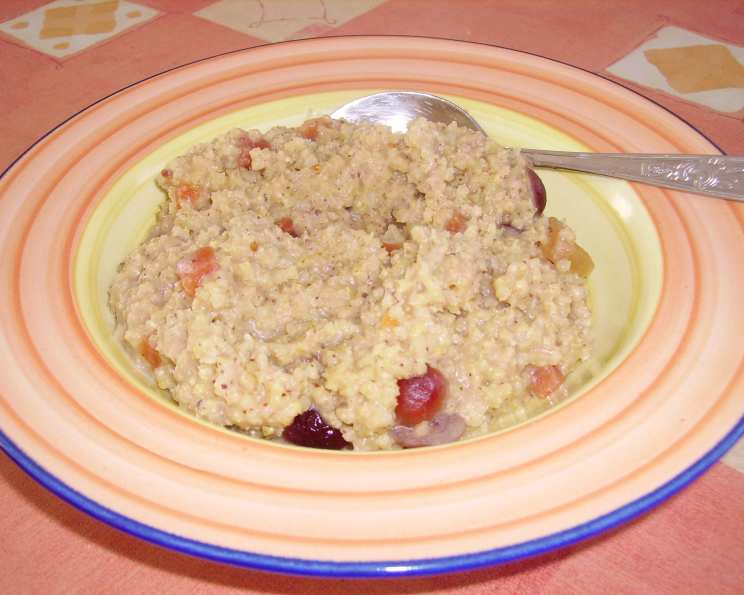
Jhangora Ki Kheer: A Taste of the Mountains
The aroma of slowly simmering milk, infused with the earthy sweetness of millet and a delicate hint of kewra, instantly transports me back to a small village nestled in the foothills of the Himalayas. I remember sitting on my grandmother’s porch, the crisp mountain air swirling around us, as she carefully stirred a pot of Jhangora Ki Kheer over a crackling wood fire. Each spoonful was a warm embrace, a comforting reminder of home, and a taste of the simple joys life had to offer. It’s a dish deeply rooted in tradition, a culinary treasure I’m eager to share with you.
Recipe Overview
- Prep Time: 15 minutes
- Cook Time: 25 minutes
- Total Time: 40 minutes
- Servings: 6
- Dietary Type: Vegetarian
Ingredients
- 2 cups millet (jhangora)
- ¾ cup sugar
- 2 quarts milk
- ½ tablespoon cashew nuts, chopped
- ½ tablespoon raisins
- ¼ cup almonds, slivered or chopped
- 2 tablespoons kewra essence (or 2 tablespoons rose water), to taste
Equipment Needed
- Large, thick-bottomed pan or pot
- Measuring cups and spoons
- Stirring spoon
- Chopping board
- Knife
Instructions
- Begin by pouring the milk into a large, thick-bottomed pan. The heavy bottom will prevent the milk from scorching and sticking during the long simmering process.
- Bring the milk to a gentle boil over medium heat, stirring occasionally. It is important to keep a close watch during this stage, as milk can easily boil over.
- Once the milk is boiling, reduce the heat to low and carefully add the millet (jhangora). Stir well to ensure the millet is fully submerged in the milk.
- Continue to cook the millet in the milk over low heat, stirring frequently to prevent lumps from forming and the millet from sticking to the bottom of the pan. This process typically takes around 15-20 minutes, or until the millet is soft and has absorbed much of the milk. The mixture will thicken as it cooks.
- When the millet is cooked through and the kheer has reached a desired creamy consistency, add the sugar. Stir well until the sugar is completely dissolved.
- Continue to simmer the kheer for another 2-3 minutes, allowing the sugar to fully integrate and the flavors to meld. Taste and adjust sweetness if needed.
- Remove the pan from the heat and stir in the kewra essence (or rose water). Start with 1 tablespoon and add more to taste, until you achieve the desired fragrance. Remember that kewra essence is potent, so add it gradually.
- Finally, garnish the Jhangora Ki Kheer with the chopped cashew nuts, raisins, and almonds.
- Allow the kheer to cool slightly before serving. It can be served warm or chilled, according to your preference. Refrigerate for at least an hour for a cold serving.
Expert Tips & Tricks
- Preventing Scorching: The most crucial part of making Jhangora Ki Kheer is preventing the milk from scorching. Use a heavy-bottomed pan and stir frequently, especially during the initial boiling and simmering stages.
- Achieving the Right Consistency: The consistency of the kheer depends on personal preference. If you like a thicker kheer, simmer it for a longer time, allowing more milk to evaporate. For a thinner consistency, add a little extra milk towards the end of the cooking process.
- Nut Roasting for Enhanced Flavor: For a richer, nuttier flavor, lightly toast the cashew nuts and almonds in a dry pan before adding them as a garnish. Be careful not to burn them.
- Make-Ahead Tip: Jhangora Ki Kheer can be made a day or two in advance. Store it in an airtight container in the refrigerator. The flavors will meld together beautifully, and it will be ready to serve whenever you need it.
Serving & Storage Suggestions
Jhangora Ki Kheer is traditionally served as a dessert. It is best served chilled, especially during summer months. You can serve it in individual bowls or glasses, garnished with a few extra nuts and a sprig of mint. Some people enjoy serving it with a side of fresh fruit, such as mangoes or berries, to add a refreshing contrast to the richness of the kheer.
Leftover Jhangora Ki Kheer can be stored in an airtight container in the refrigerator for up to 3-4 days. Reheat gently on the stovetop over low heat, stirring occasionally, or microwave in short bursts until warmed through. If the kheer has thickened too much during refrigeration, add a splash of milk to loosen it up before reheating. It is not recommended to freeze Jhangora Ki Kheer, as the texture may change upon thawing.
Nutritional Information
| Nutrient | Amount per Serving | % Daily Value (approx.) |
|---|---|---|
| Calories | 600 kcal | 30% |
| Total Fat | 18 g | 23% |
| Saturated Fat | 8 g | 40% |
| Cholesterol | 45 mg | 15% |
| Sodium | 190 mg | 8% |
| Total Carbohydrate | 91 g | 30% |
| Dietary Fiber | 6 g | 25% |
| Sugars | 26 g | 52% |
| Protein | 20 g | 40% |
Variations & Substitutions
- Vegan Version: For a vegan version, substitute the dairy milk with plant-based milk like almond milk, oat milk, or coconut milk. Keep in mind that the flavor and texture of the kheer will be slightly different.
- Sweetener Options: You can replace the sugar with other sweeteners like jaggery (gur) or honey. If using honey, add it after the kheer has cooled slightly to preserve its nutritional properties.
- Flavor Variations: Experiment with different spices and flavorings. A pinch of cardamom powder, a strand of saffron, or a dash of nutmeg can add a delightful aroma and flavor.
- Dry Fruit Medley: Feel free to use your favorite combination of dry fruits. Pistachios, walnuts, and dates are all excellent choices.
FAQs (Frequently Asked Questions)
Q: Can I use pre-cooked millet for this recipe?
A: While it is possible, it’s best to use uncooked millet for the best texture and flavor absorption. Pre-cooked millet may result in a less creamy kheer.
Q: How do I prevent the kheer from sticking to the bottom of the pan?
A: Use a heavy-bottomed pan and stir the kheer frequently, especially during the initial boiling and simmering stages. This will help prevent sticking and scorching.
Q: Can I make this kheer without kewra essence or rose water?
A: Yes, you can omit the kewra essence or rose water if you don’t have them on hand. However, they add a unique and fragrant touch to the kheer. You can also try using a little vanilla extract as a substitute.
Q: How long will the kheer last in the refrigerator?
A: Jhangora Ki Kheer can be stored in an airtight container in the refrigerator for up to 3-4 days.
Q: My kheer has become too thick after refrigeration. How can I fix it?
A: Add a splash of milk to the kheer and gently reheat it on the stovetop or in the microwave until it reaches the desired consistency.
Final Thoughts
Jhangora Ki Kheer is more than just a dessert; it’s a journey back to simpler times, a taste of tradition, and a celebration of the humble millet grain. I wholeheartedly encourage you to try this recipe and experience the unique flavors and comforting warmth of this delightful pudding. Whether you serve it to your family, friends, or simply enjoy it as a personal treat, I hope it brings you as much joy and satisfaction as it has brought me over the years. Don’t hesitate to experiment with variations and share your feedback – I’d love to hear how you make this recipe your own. Pair it with a cup of hot chai for the perfect ending to a meal!