
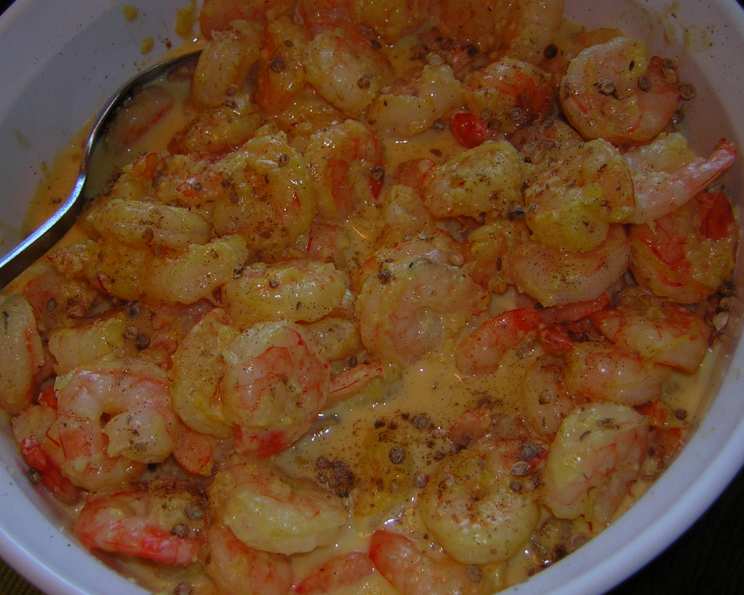
Jhinga Nisha: Prawns in Saffron, Cashew Nut and Almond Sauce!
The aroma of cardamom, saffron, and ghee simmering gently always transports me back to my grandmother’s kitchen. She had a knack for coaxing the most incredible flavors out of simple ingredients, and this Jhinga Nisha, a dish she’d often prepare for special occasions, was a testament to that. I remember watching, mesmerized, as she transformed humble prawns into a dish fit for royalty, the rich, fragrant sauce clinging lovingly to each succulent morsel. It was a meal meant to be savored, enjoyed with loved ones, and remembered long after the last grain of rice was gone.
Recipe Overview
- Prep Time: 45 minutes
- Cook Time: 45 minutes
- Total Time: 1 hour 30 minutes
- Servings: 4
- Dietary Type: Gluten-Free
Ingredients
- 75 g unblanched almonds
- 25 g unsalted cashews
- 1 kg large raw shrimp, shelled
- 1 pinch saffron
- 3 tablespoons milk
- 8 green cardamoms
- 4 tablespoons ghee or clarified butter
- 200 g finely chopped onions
- 3 green chilies, finely chopped to taste
- 20 g finely chopped fresh ginger
- 1 pinch salt
- 150 ml single cream
- 25 g fresh coriander, chopped
Equipment Needed
- Two medium saucepans
- Food processor
- Wide pan or wok
- Serving dish
Instructions
- Begin by blanching the nuts. In two separate saucepans, bring water to a rolling boil. Add the almonds to one pan and the cashews to the other. Boil for 30 minutes, then drain both.
- Once the almonds are cool enough to handle, peel them by slipping them out of their skins. Place the peeled almonds and the boiled cashews into a food processor.
- Whiz the nuts in the food processor until they form a smooth, creamy paste. You may need to scrape down the sides of the bowl a few times to ensure even processing. Set aside.
- Prepare the prawns. Peel, wash, and de-vein the shrimp. To de-vein, make a shallow incision down the length of the back of each prawn and carefully remove the dark digestive cord. Wash the prawns again and pat dry with paper towels. This helps them to brown nicely in the pan.
- Infuse the saffron. Crumble the saffron threads into the warm milk. Let it infuse while you prepare the other ingredients; this will allow the milk to become beautifully colored and fragrant.
- Prepare the cardamom. Remove the tiny black seeds from the green cardamom pods. Using a mortar and pestle or a spice grinder, grind the cardamom seeds to a fine powder. Set aside for later use.
- Heat the ghee in a wide pan or wok over medium-high heat.
- Sauté the finely chopped onions until they are golden brown and the ghee begins to separate from them. This step is crucial for building flavor, so don’t rush it.
- Add the finely chopped green chilies and fresh ginger. Cook for 1-2 minutes, stirring regularly, until fragrant.
- Incorporate the nut paste (prepared earlier) into the pan. Stir continuously until the ghee separates out again and the paste starts to leave the sides of the pan. This indicates that the paste is properly cooked and the flavors have melded.
- Gently add the prawns to the pan, followed by 2 tablespoons of cold water.
- Keep stirring, adding a further 2 tablespoons of cold water two or three times, until the prawns begin to turn pink and the sauce reaches a nice, thick consistency. The frequent addition of water helps to create a rich, emulsified sauce.
- Stir in the saffron-infused milk mixture.
- Season with salt to taste. Simmer for just a minute or two, until the prawns are fully cooked but still tender. Be careful not to overcook them, or they will become rubbery.
- Finally, add the single cream. Once the cream is heated through (do not boil), transfer the Jhinga Nisha to a serving dish.
- Sprinkle with the cardamom powder and freshly chopped green coriander leaves.
- Serve hot with steamed Basmati white rice.
Expert Tips & Tricks
- For a richer flavor, toast the almonds and cashews lightly in a dry pan before boiling them. This will enhance their nutty aroma.
- If you don’t have fresh green chilies, you can substitute with a pinch of red chili flakes.
- The quality of the saffron significantly impacts the color and flavor of the dish. Use high-quality saffron threads for the best results.
- If the sauce becomes too thick, add a splash of milk or water to thin it out. Conversely, if it’s too thin, simmer for a few more minutes to reduce it.
Serving & Storage Suggestions
Serve Jhinga Nisha hot, garnished with extra fresh coriander. It pairs perfectly with fluffy Basmati rice or Indian bread like naan or roti. Leftovers can be stored in an airtight container in the refrigerator for up to 2 days. To reheat, gently warm on the stovetop over low heat, adding a splash of milk or water if needed to prevent drying. Freezing is not recommended, as the cream sauce may separate upon thawing.
Nutritional Information
| Nutrient | Amount per Serving | % Daily Value |
|---|---|---|
| Calories | 658 kcal | 33% |
| Total Fat | 39 g | 59% |
| Saturated Fat | 15 g | 73% |
| Cholesterol | 438 mg | 146% |
| Sodium | 509 mg | 21% |
| Total Carbohydrate | 20 g | 7% |
| Dietary Fiber | 4 g | 16% |
| Sugars | 5 g | 10% |
| Protein | 59 g | 118% |
Variations & Substitutions
- For a dairy-free version, substitute the single cream with coconut cream or cashew cream.
- You can use other types of nuts, such as pistachios or walnuts, in addition to or instead of almonds and cashews.
- If you prefer a milder flavor, reduce the amount of green chilies or use a milder variety.
- Add other vegetables, such as bell peppers or peas, to the dish for added texture and flavor.
FAQs (Frequently Asked Questions)
Q: Can I use frozen prawns instead of fresh prawns?
A: Yes, you can use frozen prawns. Just make sure to thaw them completely and pat them dry before cooking.
Q: How can I prevent the prawns from becoming overcooked?
A: Cook the prawns until they just turn pink and opaque. Overcooked prawns will be tough and rubbery.
Q: Can I make this dish ahead of time?
A: You can prepare the nut paste and chop the vegetables ahead of time. However, it’s best to cook the prawns just before serving to ensure they are tender.
Q: What if I don’t have ghee?
A: You can substitute ghee with clarified butter or any neutral cooking oil. However, ghee adds a distinct flavor that enhances the dish.
Q: Can I add other spices to this dish?
A: Yes, feel free to experiment with other spices such as turmeric, cumin, or coriander powder to customize the flavor to your liking.
Final Thoughts
I hope this recipe brings you as much joy as it has brought me and my family over the years. This Jhinga Nisha is more than just a dish; it’s a taste of home, a celebration of flavor, and a reminder of the simple pleasures in life. Don’t be intimidated by the list of ingredients – the process is surprisingly straightforward, and the end result is well worth the effort. Serve this dish with pride, savor every bite, and share the experience with those you cherish. Perhaps pair it with a crisp Sauvignon Blanc or a light-bodied Pinot Noir to elevate the meal even further. I encourage you to try this recipe, experiment with it, and make it your own. And, of course, I’d love to hear your feedback and any variations you come up with! Happy cooking!