
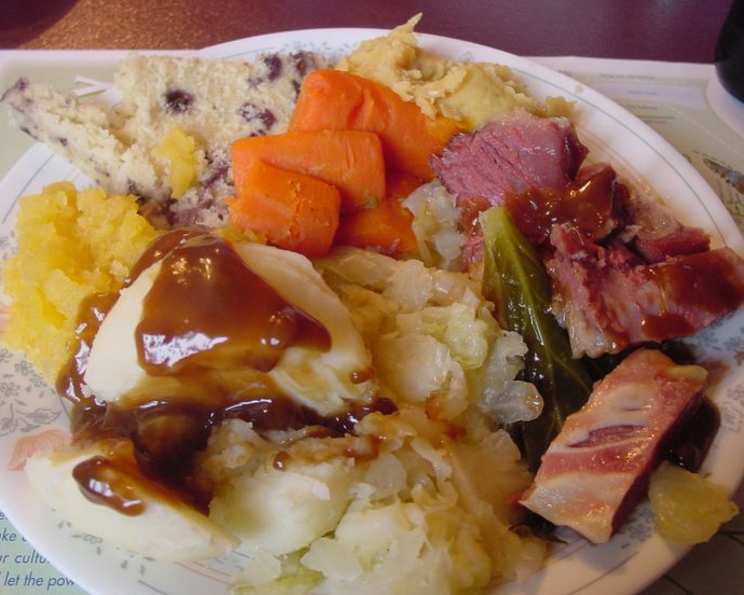
Jigg’s Dinner: A Newfoundland Classic
The memory of Jigg’s Dinner is permanently etched in my mind, a comforting beacon from childhood. Growing up, my grandmother, a proud Newfoundlander, would painstakingly prepare this hearty feast every Sunday. The aroma of salt beef simmering on the stove, mingling with the earthy scent of root vegetables, would fill her cozy kitchen, promising a meal that warmed both body and soul. Gathering around her weathered wooden table, surrounded by family, sharing stories and laughter as we devoured plates piled high with this culinary treasure, remains a cherished memory, a testament to the power of food to connect us to our roots.
Recipe Overview
- Prep Time: 30 minutes
- Cook Time: 2 hours
- Total Time: 2 hours 30 minutes (plus overnight soaking)
- Servings: 5
- Yield: One hearty meal
- Dietary Type: Not suitable for vegetarians (contains meat)
Ingredients
- 1 piece salt beef (You can buy salt beef in tubs or smaller individual pieces in vacuum-sealed packages)
- ½ head cabbage, quartered
- 1 medium turnip
- 10 carrots, chopped in chunks
- 10 potatoes, cut into quarters or halves depending on size
- Peas Pudding
- 1 bag yellow split peas
Equipment Needed
- Large stock pot
- Pudding bags (cheesecloth can be substituted)
Instructions
-
The first crucial step in preparing a delicious Jigg’s Dinner is to tame the salt beef. Begin by soaking the salt beef and split peas separately, in plenty of fresh water, overnight. This helps to draw out the excess salt, ensuring a more balanced flavour in the final dish.
-
The next day, drain the water in which the salt beef was soaking. Place the beef in the large stock pot and add enough fresh water to completely cover it.
-
Bring the water to a boil, then reduce the heat to a gentle simmer. After the beef has simmered for about an hour, taste the water. If it’s still aggressively salty, drain the water and soak the beef for another hour in fresh water, before returning it to the pot with more water. If the water is only mildly salty, fill the pot completely with water and bring it to a boil.
-
While the salt beef is simmering, prepare the peas pudding. Drain the split peas that have been soaking overnight. Moisten the pudding bag thoroughly with water, then carefully pour the peas into it. Tie the pudding bag securely, leaving enough room for the peas to expand as they cook. Drop the bag of peas into the boiling water with the salt beef.
-
Both the salt beef and the peas pudding should simmer for approximately two hours. Check the beef periodically to ensure it remains submerged in water; add more water if necessary.
-
Now, it’s time to orchestrate the vegetable cooking, ensuring everything is perfectly cooked at the same time. This requires a bit of timing finesse:
-
Add the quartered cabbage to the pot 40 minutes before the end of the two-hour cooking time (1 hour and 20 minutes into the boil).
-
Introduce the chopped turnips and carrots 30 minutes before the end (1 ½ hours into the boil).
-
Finally, add the quartered or halved potatoes 20 minutes before the end (1 hour and 40 minutes into the boil). The size of the potatoes will affect cooking time so adjust accordingly.
-
-
At the two-hour mark, everything should be cooked and tender. Carefully remove the salt beef, peas pudding, and vegetables from the pot using a slotted spoon. Drain the peas pudding well before carefully opening the pudding bag and transferring it to a serving dish.
-
Slice the salt beef against the grain and arrange it on a platter alongside the cooked vegetables and peas pudding.
-
Serve immediately, allowing everyone to create their perfect plate of Jigg’s Dinner.
Expert Tips & Tricks
- Salt Beef Selection: Opt for salt beef with a good balance of meat and fat for the best flavour and texture. If using a particularly salty cut, consider extending the soaking time overnight.
- Vegetable Variety: Feel free to add other root vegetables to your Jigg’s Dinner, such as parsnips or swedes, for a more diverse flavour profile.
- Pudding Bag Alternative: If you don’t have a pudding bag, you can use a double layer of cheesecloth. Make sure to secure it tightly with kitchen twine.
- Water Level: Maintaining the correct water level in the stock pot is key to even cooking. Ensure the beef and vegetables are always covered with water, adding more as needed.
- Timing is Everything: Keep a close eye on the cooking times for each vegetable, as they can vary depending on size and freshness. The goal is to have everything cooked to fork-tender perfection simultaneously.
Serving & Storage Suggestions
Serve Jigg’s Dinner hot, right after cooking. Arrange the sliced salt beef attractively on a platter alongside the cooked vegetables and mashed peas pudding. It is traditionally served with butter and sometimes Newfoundland savory.
Leftovers can be stored in the refrigerator in airtight containers for up to 3 days. To reheat, gently warm the salt beef and vegetables in a saucepan with a little bit of the cooking liquid, or in the microwave. The mashed peas pudding can also be reheated in the microwave.
Leftover vegetables fry up great the next day as a delicious hash.
Nutritional Information
(Note: These are approximate values and can vary based on specific ingredients and portion sizes.)
| Nutrient | Amount per Serving | % Daily Value |
|---|---|---|
| Calories | 650 kcal | 33% |
| Total Fat | 25g | 38% |
| Saturated Fat | 10g | 50% |
| Cholesterol | 80mg | 27% |
| Sodium | 1500mg | 63% |
| Total Carbohydrate | 80g | 27% |
| Dietary Fiber | 15g | 60% |
| Sugars | 10g | – |
| Protein | 30g | 60% |
Variations & Substitutions
- Leaner Meat: For a healthier version, use a leaner cut of beef, such as brisket, and trim off any excess fat before cooking.
- Vegetarian Option: While not traditional, you could adapt this recipe for vegetarians by using a smoked tofu or seitan in place of the salt beef, and vegetable broth instead of water.
- Spiced Up: Add a bay leaf or a few peppercorns to the cooking water for extra flavour.
- Regional Variations: In some regions of Newfoundland, turnip greens are also included in Jigg’s Dinner. Feel free to experiment and add your own twist to this classic dish.
FAQs (Frequently Asked Questions):
Q: Why do you soak the salt beef overnight?
A: Soaking the salt beef overnight helps to remove excess salt, making the final dish more palatable. Otherwise, the dish can be overwhelmingly salty.
Q: Can I use frozen vegetables?
A: While fresh vegetables are preferred for the best flavour and texture, frozen vegetables can be used in a pinch. Add them towards the end of the cooking time, as they will cook more quickly than fresh ones.
Q: How do I know when the peas pudding is cooked?
A: The peas pudding is done when the peas are soft and tender and have formed a solid mass inside the pudding bag.
Q: Can I make Jigg’s Dinner in a slow cooker?
A: Yes, you can adapt this recipe for a slow cooker. Reduce the amount of water, and adjust the cooking times accordingly.
Q: What do I do if my cabbage gets overcooked?
A: Add the cabbage later in the cooking process, or remove it from the pot earlier, to prevent it from becoming mushy.
Final Thoughts
Jigg’s Dinner is more than just a meal; it’s a taste of Newfoundland heritage, a symbol of family and community, and a celebration of simple, hearty ingredients. I encourage you to try this recipe and experience the comforting flavours of this classic dish. Share your creations and variations with others, and let’s keep the tradition of Jigg’s Dinner alive for generations to come. Pair your Jigg’s Dinner with homemade bread or buns for a complete and satisfying meal!