
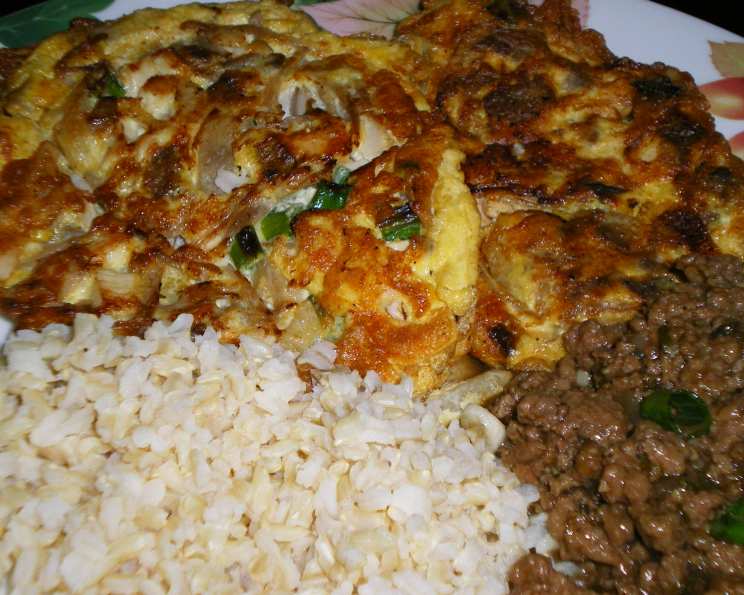
Judy’s Egg Foo Yong: A Budget-Friendly Classic
The aroma of Egg Foo Yong instantly transports me back to my childhood kitchen, where my grandmother, Judy, reigned supreme. She could whip up a feast from seemingly nothing, and this dish was one of her masterpieces. I remember watching, mesmerized, as she expertly flipped those golden-brown patties in her well-worn cast iron skillet. It wasn’t just the taste; it was the love and resourcefulness woven into every bite. It made our family feel like royalty, even if the “royal feast” included leftovers!
Recipe Overview
- Prep Time: 20 minutes
- Cook Time: 45 minutes
- Total Time: 1 hour 5 minutes
- Servings: 4
- Dietary Type: Adaptable (See Variations)
Ingredients
- 1 (14 ounce) can bean sprouts
- 1 (7 ounce) can mushrooms
- 1 (8 ounce) can sliced water chestnuts
- 4 green onions, including green parts, chopped
- 1 1/2 cups ham or 1 1/2 cups cooked chicken, chopped
- 8 eggs
- Peanut oil, for sauteing
Sauce
- 1 cup water
- 1 chicken bouillon cube
- 1 tablespoon soy sauce
- 1 tablespoon cornstarch, mixed with
- 1 tablespoon cold water
- Cooked rice
Equipment Needed
- Large mixing bowl
- Frying pan (cast iron preferred)
- Saucepan
- Serving platter
- Whisk
Instructions
-
Begin by thoroughly draining the canned veggies. A chef’s trick is to remove the lids and press them down into the cans in the sink to extract as much liquid as possible. This prevents soggy Egg Foo Yong patties.
-
Next, slice the sliced water chestnuts into thin strips. It may seem particular, but this ensures even distribution and a better texture in the final product.
-
Chop the mushrooms into 1/4-inch pieces. This size will cook evenly and provide a pleasant bite.
-
In a large mixing bowl, combine the bean sprouts, mushrooms, water chestnuts, green onions, and your chosen meat (ham or chicken). If using fresh sprouts and mushrooms, parboil the bean sprouts for about 3 minutes and saute the mushrooms in a dry pan until slightly softened.
-
Create a well in the center of the mixture, then crack the eggs into it. Break up and “scramble” the eggs within the well before mixing everything together.
-
Now, the key is to mix the entire mixture thoroughly. Aim for a nice, eggy consistency where the eggs and other ingredients are roughly equal in proportion. Too much egg will cause the patties to spread during cooking, while too little will prevent them from holding together.
-
Heat approximately 1/4 cup of peanut oil in a good, solid frying pan (cast iron works best) until it is hot but not smoking. The oil should shimmer, indicating it’s ready.
-
Working in batches, add the egg mixture to the hot pan in about 1/4 cup amounts using a large spoon. As you add the mixture, pat them into circles, and “scoop” the runny egg mixture from the sides of the pan back into the patties.
-
Remember to mix the egg mixture in the bowl before adding each batch to the pan. The solid ingredients tend to settle at the bottom.
-
Check the bottoms of the patties periodically. Once they turn a nice, golden brown, carefully flip them over and cook the other side until equally golden.
-
Place the cooked patties on a serving platter and keep them warm in a preheated oven at a low temperature (around 200°F or 93°C). They will stay warm for quite a while without losing their quality.
-
Repeat the cooking process with the remaining egg mixture, adding more oil to the frying pan as needed to maintain a hot, well-oiled surface. A good, hot frying pan with sufficient oil is crucial for “sealing” the egg mixture and preventing excessive spreading.
-
While the patties are cooking, prepare the sauce. In a saucepan, combine the water, chicken bouillon cube, and soy sauce. Bring the mixture to a boil over medium-high heat.
-
In a separate small bowl, combine the cornstarch and cold water, mixing until smooth. This prevents lumps in the sauce.
-
Slowly pour the cornstarch mixture into the boiling broth/soy sauce mixture, stirring continuously until the sauce thickens to your desired consistency. Consider doubling the sauce recipe, as it is a popular addition to the dish.
-
Serve the Egg Foo Yong patties over steamed rice, generously drizzled with the prepared sauce.
-
To freeze the Egg Foo Yong patties, wrap them individually in enough foil to fit a baking sheet, then place the wrapped patties in a plastic freezer bag. When ready to use, unwrap the foil-wrapped patties, place them on a baking sheet, and reheat in a preheated oven at 350°F (175°C) for approximately 15-20 minutes. Prepare the rice and sauce while the patties are reheating for a quick and easy meal.
Expert Tips & Tricks
- Crispy Edges: For extra crispy edges, increase the heat slightly towards the end of cooking, being careful not to burn the patties.
- Vegetable Variations: Feel free to experiment with different vegetables, such as diced bell peppers, shredded carrots, or snow peas. Just be sure to adjust the cooking time accordingly.
- Meat Alternatives: If you don’t have ham or chicken on hand, try using cooked shrimp, pork, or even crumbled tofu for a vegetarian option.
- Oil Temperature: Maintaining a consistent oil temperature is key to preventing the patties from sticking or becoming greasy.
Serving & Storage Suggestions
Serve Judy’s Egg Foo Yong hot, right after cooking, over a bed of fluffy rice and generously drizzled with the savory sauce. It’s a complete meal in itself, but a side of steamed broccoli or a simple salad complements it nicely.
Leftover Egg Foo Yong patties can be stored in an airtight container in the refrigerator for up to 3 days. Reheat them in a skillet over medium heat or in the oven until warmed through. As mentioned earlier, the patties freeze exceptionally well. Store them in the freezer for up to 2 months for best quality.
Nutritional Information
| Nutrient | Amount per Serving | % Daily Value |
|---|---|---|
| Calories | 320 kcal | 16% |
| Total Fat | 13g | 20% |
| Saturated Fat | 4g | 20% |
| Cholesterol | 412mg | 137% |
| Sodium | 686mg | 29% |
| Total Carbohydrate | 19g | 7% |
| Dietary Fiber | 4g | 16% |
| Sugars | 8g | – |
| Protein | 34g | 68% |
Note: Nutritional information is an estimate and can vary based on ingredient substitutions and portion sizes.
Variations & Substitutions
- Vegetarian: Substitute the ham or chicken with firm tofu, pan-fried until golden brown.
- Gluten-Free: Ensure the soy sauce and bouillon cube are gluten-free. Use tapioca starch instead of cornstarch for thickening the sauce.
- Low-Sodium: Use low-sodium soy sauce and omit the bouillon cube, adjusting the seasonings to taste.
- Spicy: Add a pinch of red pepper flakes or a dash of your favorite hot sauce to the sauce for a spicy kick.
- Deluxe: For a restaurant-style touch, top the Egg Foo Yong with a generous helping of stir-fried mixed vegetables.
FAQs (Frequently Asked Questions)
Q: Can I use fresh bean sprouts instead of canned?
A: Yes, fresh bean sprouts can be used. Parboil them for about 3 minutes before adding them to the mixture.
Q: What if my patties are falling apart while cooking?
A: This usually indicates too little egg in the mixture. Add one or two more eggs and mix well before continuing.
Q: Can I make the sauce ahead of time?
A: Absolutely! The sauce can be made a day or two in advance and stored in the refrigerator. Reheat it gently before serving.
Q: Is it necessary to use peanut oil for cooking?
A: While peanut oil adds a distinct flavor, you can substitute it with vegetable oil or canola oil.
Q: How can I prevent the patties from becoming too greasy?
A: Ensure the oil is hot enough before adding the egg mixture. Also, don’t overcrowd the pan, as this will lower the oil temperature.
Final Thoughts
Judy’s Egg Foo Yong is more than just a recipe; it’s a testament to resourcefulness, love, and the power of simple ingredients. I encourage you to give this dish a try and make it your own. Feel free to experiment with different vegetables and meats to create your unique version. And don’t forget to share your creations and feedback – I’d love to hear how it turns out! Serve it with a refreshing glass of iced tea or a light beer for a complete and satisfying meal.