
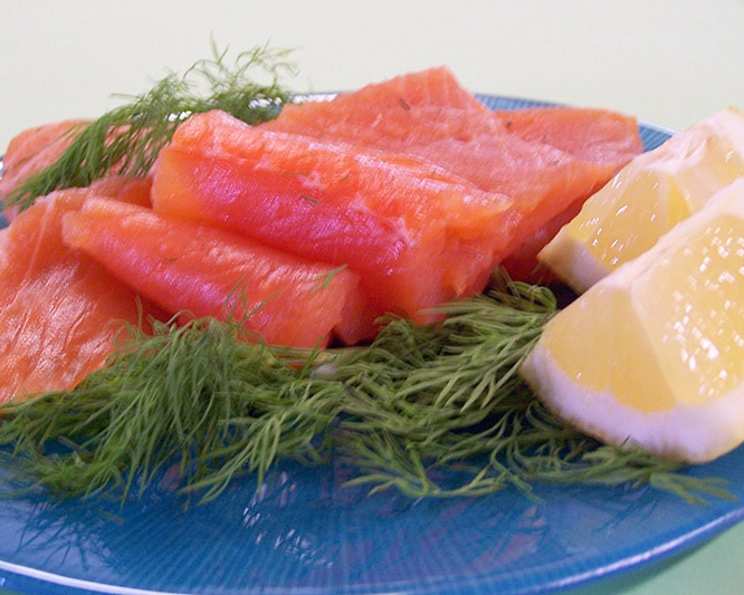
Mastering Julia Child’s Gravlax: A Culinary Adventure in Curing
The first time I tasted gravlax, it wasn’t in some fancy restaurant, but at a small, unassuming Scandinavian deli tucked away on a quiet street in Brooklyn. The owner, a woman with kind eyes and flour-dusted apron, offered me a sliver. The silky texture, the subtle sweetness balanced by the dill and salt, and the lingering hint of cognac were a revelation. It was love at first bite. Instantly, I knew I needed to learn how to make this at home, and who better to turn to than the queen of French cuisine, Julia Child? While Gravlax isn’t French, Julia embraced cuisines from all over the world, and her version is a testament to the beauty of simple, perfectly executed recipes.
Recipe Overview
- Prep Time: 30 minutes
- Cook Time: 96 hours (curing time)
- Total Time: 96 hours 30 minutes
- Servings: 15-20
- Yield: Approximately 2 pounds of gravlax
- Dietary Type: Gluten-Free, Dairy-Free
Ingredients
- 2 ½ – 3 lbs salmon fillets, skin on, all bones removed
- 1 ½ tablespoons kosher salt, plus more if needed
- 2 ¼ teaspoons brown sugar
- 4 tablespoons cognac, plus more if needed
- 1 cup dill sprigs, packed
Equipment Needed
- Glass or non-reactive baking dish
- Plastic wrap
- Cutting board or flat pan
- Heavy weight (e.g., large can of tomatoes)
- Long, thin-bladed slicing knife
Instructions
- Begin by preparing the salmon. Trim the salmon fillet, cutting away any thin, uneven edges and the thin end of the tail. These trimmings can be reserved for another use, such as salmon burgers or fish stock.
- Ensure all pinbones are meticulously removed. Run your fingers along the surface of the fillet. If you detect any bones, use tweezers or needle-nosed pliers to gently pull them out.
- Cut the fillet in half crosswise, creating two pieces of roughly equal length and width. This will help with even curing.
- In a small bowl, combine the kosher salt and brown sugar. Mix thoroughly.
- Sprinkle half of the salt and sugar mixture evenly over each fillet, then rub it in with your fingers. Make sure to cover all surfaces of the salmon.
- Place one fillet in a glass or non-reactive baking dish large enough to accommodate it.
- Drizzle approximately 2 tablespoons of cognac over each salmon half, again rubbing it in with your fingers to ensure even distribution.
- Spread the dill sprigs generously over the salmon half that is already in the baking dish. Pack the dill tightly.
- Lay the other salmon half on top of the dill-covered fillet, skin side up. Align the two halves as closely as possible.
- Cover the salmon closely with a sheet of plastic wrap, pressing it down to minimize air pockets.
- Place a cutting board or flat pan on top of the fillets, ensuring it rests directly on the fish and not on the sides of the baking dish.
- Weight the board or pan with a heavy object, such as a large can of tomatoes or a few bricks wrapped in plastic. This pressure helps draw out moisture and aids in the curing process.
- Place the baking dish in the refrigerator.
- After one day of curing, remove the weights and the board, and carefully turn the fillets over, so that the top fillet is now on the bottom.
- Baste the salmon with the liquid that has accumulated in the dish. This brine is essential to the curing process.
- Replace the weights and board, and return the salmon to the refrigerator.
- On the second day, repeat the turning and basting process. Then, slice off a tiny piece of the salmon to taste.
- If the gravlax doesn’t taste like it’s developing the desired flavor, add a little more salt and/or cognac to the fish. This step is crucial for adjusting the cure to your preference.
- Return the salmon to the refrigerator.
- Cure for a third day, turning and basting again.
- On the fourth day, the gravlax should be ready to serve.
- To serve, clean the dill away from the salmon and wipe the fish dry with paper towels.
- Using a long, thin-bladed slicing knife (sharpened), start slicing a few inches from the narrow end of the fillet.
- Cut with a back-and-forth sawing motion toward the narrow end to remove a thin slice of fish.
- Start each succeeding slice a bit farther in from the narrow end; always cut at a flat angle to keep the slices as long and thin as possible.
Expert Tips & Tricks
- Quality of Salmon: The key to great gravlax is using the freshest, highest-quality salmon you can find. Look for salmon that is firm, bright in color, and has a fresh, clean smell.
- Removing Pin Bones: Don’t skip the step of removing the pin bones. It makes a huge difference in the eating experience. Run your fingers carefully along the fillet to locate them.
- Weighting is Key: The weight is essential for pressing the moisture out of the salmon and creating the characteristic texture of gravlax. Make sure the weight is evenly distributed across the fillet.
- Adjusting the Cure: Taste-testing is crucial. If the gravlax is too salty, rinse it briefly under cold water before slicing. If it’s not salty enough, add a little more salt and let it cure for another day.
- Slicing Technique: Slicing gravlax properly is an art. A sharp, thin-bladed knife is essential. If you don’t have one, consider investing in a salmon slicer.
Serving & Storage Suggestions
Serve your homemade gravlax thinly sliced on dark rye bread or crackers with a dollop of crème fraîche or mustard sauce. Fresh cucumber slices and a sprinkle of fresh dill make excellent accompaniments. For a truly Scandinavian experience, pair it with ice-cold aquavit.
Gravlax will keep in the refrigerator for up to a week after the curing process is complete. Wrap it tightly in plastic wrap or store it in an airtight container. You can also freeze gravlax for longer storage. Thaw it in the refrigerator overnight before serving.
Nutritional Information
| Nutrient | Amount per Serving | % Daily Value |
|---|---|---|
| Calories | 99 kcal | N/A |
| Calories from Fat | 29 kcal | N/A |
| Total Fat | 3.3g | 5% |
| Saturated Fat | 0.6g | 3% |
| Cholesterol | 34.9mg | 11% |
| Sodium | 754.7mg | 31% |
| Total Carbohydrate | 0.7g | 0% |
| Dietary Fiber | 0g | 0% |
| Sugars | 0.7g | N/A |
| Protein | 15.5g | 31% |
Note: Nutritional information is an estimate and may vary based on specific ingredients and portion sizes.
Variations & Substitutions
- Vodka Gravlax: Substitute vodka for the cognac for a different flavor profile.
- Beet-Cured Gravlax: Add grated beetroot to the cure for a vibrant color and subtle earthy flavor.
- Spice It Up: Incorporate cracked black pepper, juniper berries, or fennel seeds into the cure for added complexity.
- Citrus Zest: Add the zest of a lemon or orange to the cure for a bright, citrusy note.
FAQs (Frequently Asked Questions)
Q: Can I use frozen salmon for gravlax?
A: Yes, you can use frozen salmon, but make sure it is completely thawed before starting the curing process.
Q: How long does it take to cure gravlax?
A: The curing time can vary depending on the thickness of the fillets and your personal preference, but typically it takes 3-4 days.
Q: How do I know when the gravlax is done?
A: Taste it! The gravlax is ready when it has a firm texture and a slightly salty, sweet, and dill-infused flavor.
Q: Can I use table salt instead of kosher salt?
A: It’s best to use kosher salt because it doesn’t contain iodine, which can affect the flavor and texture of the gravlax.
Q: What can I do with leftover gravlax?
A: Leftover gravlax can be used in salads, sandwiches, or scrambled eggs.
Final Thoughts
Julia Child’s gravlax recipe is a testament to the power of simple ingredients and patient technique. Don’t be intimidated by the curing process; it’s surprisingly easy and incredibly rewarding. The resulting gravlax is a culinary masterpiece that is sure to impress your family and friends. So, gather your ingredients, sharpen your knife, and embark on this delicious adventure. And, don’t forget to share your gravlax creations and experiences!