
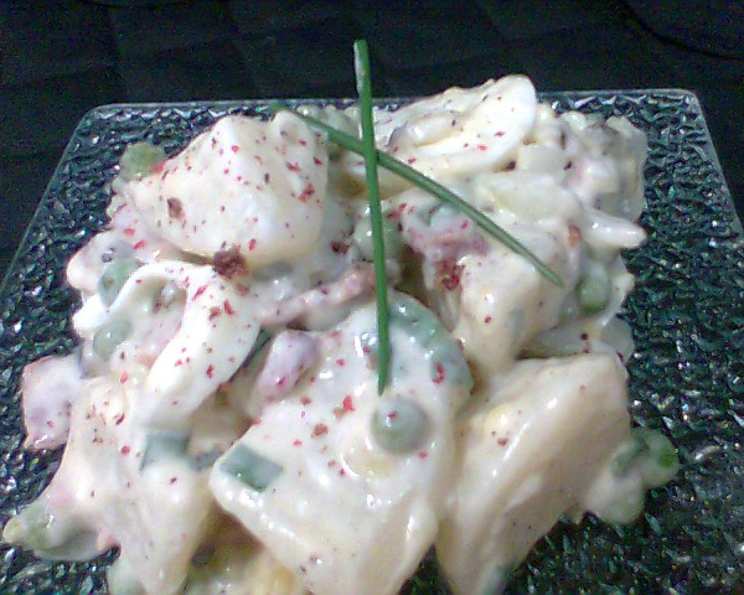
Julia’s Potato Salad: A Culinary Love Letter
The aroma of potato salad always transports me back to childhood summers. My grandmother, a woman whose kitchen was a haven of warmth and love, had her own version, a closely guarded secret. But it was Julia Child’s take on this classic that truly elevated my understanding of what potato salad could be – a symphony of textures and flavors, a dish that spoke of simple elegance and utter deliciousness. To this day, the first bite of this potato salad is pure nostalgia, a reminder of family, sunshine, and the magic of a perfectly balanced recipe.
Recipe Overview
- Prep Time: 20 minutes
- Cook Time: 10 minutes
- Total Time: 30 minutes
- Servings: 6
- Yield: 6 cups
- Dietary Type: Vegetarian (can be made vegan by substituting mayonnaise and sour cream)
Ingredients
- 2 lbs large Yukon Gold potatoes
- 2 tablespoons cider vinegar
- 1/3 cup potato water (reserved from cooking)
- 1/3 cup onion, finely chopped
- 1/2 cup celery or 1/2 cup peas, finely chopped
- 3 slices bacon, crumbled
- 3 tablespoons sweet pickle relish, finely chopped
- 2 hard-boiled eggs, peeled and sliced thin
- 3 tablespoons fresh chives (including a bit of their tender green) or 3 tablespoons scallions, finely chopped (including a bit of their tender green)
- Salt, to taste
- Fresh ground white pepper, to taste
- 1 cup mayonnaise, homemade if possible
- Sour cream (optional)
Equipment Needed
- Large saucepan
- Colander
- Large bowl
- Rubber spatula
Instructions
-
Begin by peeling the potatoes. Slice each potato lengthwise in half (or in quarters if they are very large). Next, cut crosswise into half-round or quarter-round slices, about 1/2 inch thick. Uniformity here helps with even cooking.
-
Place the potato slices in a saucepan and add water just to cover them. Add 1 1/2 teaspoons of salt per quart of water. Salt the water liberally – it’s your primary chance to season the potatoes themselves.
-
Bring the water to a simmer over medium heat. Cook the potatoes for 5 to 6 minutes, or until they are just cooked through. This is a crucial step. Overcooked potatoes will be mushy, while undercooked potatoes will be too firm. The goal is tender but still holding their shape.
-
To be absolutely sure the potatoes are perfectly cooked, bite into a slice or two. It should be easily pierced with a fork but not falling apart.
-
Immediately remove the saucepan from the heat and drain the potatoes into a colander. Be quick; the residual heat will continue to cook the potatoes.
-
Reserve a cup of the cooking liquid. This “potato water” is packed with starch and flavor and is essential for the dressing.
-
Transfer the drained potatoes to a large bowl. While they are still warm, gently stir in the next dressing component.
-
In a separate small bowl, stir together the cider vinegar and 1/3 cup of the reserved potato water. This mixture will provide a subtle tang and moisture to the salad. Chicken stock can be used instead of potato water, if desired.
-
Drizzle the vinegar and potato water mixture over the warm potato pieces, turning them gently to distribute it evenly. This allows the potatoes to absorb the liquid and its flavor while they are still receptive.
-
Let the potatoes sit for 10 minutes to absorb the liquid. This step is key for ensuring that the potato salad isn’t dry.
-
Now it’s time to add the remaining ingredients. Add the finely chopped onion, celery (or peas), crumbled bacon, sweet pickle relish, thinly sliced hard-boiled eggs, and chives (or scallions) to the bowl with the potatoes.
-
Season carefully with salt and fresh ground white pepper, to taste. Remember that the bacon and pickle relish will also contribute salt, so start conservatively.
-
In a small bowl, combine 2/3 cup of mayonnaise (or a mix of mayonnaise and a bit of sour cream). This ratio is where personal preference comes into play; some people prefer all mayonnaise, while others enjoy the tang of sour cream.
-
Add the mayonnaise mixture to the bowl with the other ingredients. With a large rubber spatula, gently fold everything together until well blended. Be careful not to overmix, as this can cause the potatoes to break down.
-
Taste the salad and add more salt, pepper, or mayonnaise as needed. This is your chance to fine-tune the flavors and ensure everything is perfectly balanced.
-
Cover the salad and set it aside in the refrigerator for at least an hour or so before serving. This allows the flavors to meld together and the salad to chill properly.
-
If the salad is refrigerated for longer than an hour, let it come back to room temperature slightly before serving. This will enhance the flavors and prevent the salad from being too cold.
-
Taste and adjust the seasoning again just before serving. Flavors can change as the salad chills, so a final adjustment is often necessary.
Expert Tips & Tricks
- Don’t overcook the potatoes! This is the most common mistake. Test them frequently while they are simmering to ensure they remain slightly firm.
- Using homemade mayonnaise makes a world of difference in terms of flavor and richness. If you have the time, it’s well worth the effort.
- For a smoother texture, consider using a potato ricer to prepare the potatoes.
- If you don’t have Yukon Gold potatoes, red potatoes are a good substitute. They have a similar waxy texture that holds up well in potato salad.
- Browning the bacon before crumbling it adds a delicious smoky flavor.
- Don’t be afraid to experiment with the herbs. Fresh dill, parsley, or tarragon can all be wonderful additions.
- If the potato salad seems dry after chilling, add a little more mayonnaise or sour cream to moisten it.
- For a spicier kick, add a pinch of cayenne pepper or a dash of your favorite hot sauce.
Serving & Storage Suggestions
Serve Julia’s Potato Salad chilled or at room temperature. It’s a perfect side dish for grilled meats, sandwiches, or picnics. Garnish with a sprinkle of fresh chives or a dusting of paprika for a pop of color.
Leftover potato salad should be stored in an airtight container in the refrigerator. It will keep for up to 3-4 days. While freezing is not recommended due to changes in texture, the salad is best enjoyed fresh. If left at room temperature, discard after 2 hours for food safety reasons.
Nutritional Information
| Nutrient | Amount per Serving | % Daily Value |
|---|---|---|
| Calories | 378 kcal | 19% |
| Total Fat | 20 g | 31% |
| Saturated Fat | 4 g | 21% |
| Cholesterol | 89 mg | 29% |
| Sodium | 468 mg | 19% |
| Total Carbohydrate | 44 g | 14% |
| Dietary Fiber | 3 g | 12% |
| Sugars | 6 g | 23% |
| Protein | 7 g | 13% |
Variations & Substitutions
- Vegan Potato Salad: Substitute vegan mayonnaise and a plant-based sour cream alternative for a dairy-free version. Omit the bacon, or use a plant-based bacon substitute.
- Mediterranean Potato Salad: Add Kalamata olives, sun-dried tomatoes, and feta cheese (or vegan feta) for a Mediterranean twist. Use olive oil in the dressing instead of mayonnaise for a lighter flavor.
- Spicy Potato Salad: Add chopped jalapeños or a dash of hot sauce to the dressing for a spicy kick.
- Herbed Potato Salad: Mix in fresh herbs like dill, parsley, and tarragon for a fragrant and flavorful salad.
FAQs (Frequently Asked Questions)
Q: Can I make this potato salad ahead of time?
A: Absolutely! In fact, it’s best to make it at least an hour ahead of time to allow the flavors to meld.
Q: What kind of potatoes work best for potato salad?
A: Yukon Gold potatoes are ideal because they have a waxy texture that holds their shape well when cooked. Red potatoes are also a good option. Avoid starchy potatoes like Russets, which can become mushy.
Q: Can I use dried herbs instead of fresh?
A: Fresh herbs will provide the best flavor, but if you don’t have them on hand, you can substitute dried herbs. Use about 1 teaspoon of dried herbs for every tablespoon of fresh herbs.
Q: How long does potato salad last in the refrigerator?
A: Potato salad will keep for up to 3-4 days in an airtight container in the refrigerator.
Q: Can I freeze potato salad?
A: Freezing is not recommended, as the mayonnaise and potatoes can change texture and become watery when thawed. It’s best to enjoy potato salad fresh.
Final Thoughts
Julia’s Potato Salad is more than just a recipe; it’s a celebration of simple ingredients and classic techniques. Its versatility allows for endless adaptations to suit your personal taste. I encourage you to try this recipe and make it your own. Feel free to experiment with different herbs, spices, and vegetables to create a potato salad that reflects your unique culinary style. Serve it at your next barbecue, picnic, or potluck, and watch as it becomes an instant crowd-pleaser. Don’t forget to share your creations and feedback – I’d love to hear how you’ve made this classic dish your own! Enjoy!