
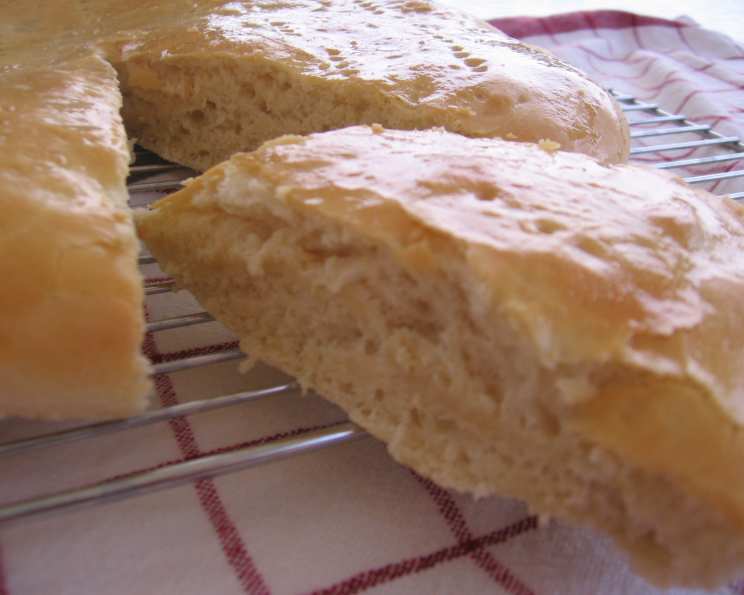
Kake Brod: A Taste of Swedish Simplicity
The scent of warm bread always transports me back to my grandmother’s kitchen. I can almost feel the warmth of the wood-burning stove on my face as she pulled a golden-brown flatbread from the oven. It wasn’t fancy, just a simple Kake Brod, but the taste was pure comfort. Each bite was a reminder of family, tradition, and the enduring power of simple, home-baked goodness. It’s a recipe I’ve cherished, tweaked over the years, and now share with you, hoping it brings as much joy to your table as it has to mine.
Recipe Overview
- Prep Time: 30 minutes (including resting time)
- Rise Time: 1 hour 30 minutes
- Cook Time: 10-15 minutes
- Servings: 16
- Yield: 2 large flatbreads
- Dietary Type: Vegetarian
Ingredients
- 1 1/4 ounces yeast
- 1/4 cup warm water
- 1 tablespoon honey
- 1 1/3 cups warm milk
- 2 teaspoons salt
- 2 tablespoons softened butter
- 4-5 cups unbleached white flour
- Melted butter, for brushing
Equipment Needed
- Large mixing bowl
- Measuring cups and spoons
- Mixer or wooden spoon
- Floured board
- 2 round pizza pans or cookie sheets
- Fork
- Damp cloth
- Wire rack
Instructions
-
Begin by activating the yeast. In a small bowl, sprinkle the yeast over the warm water. Add the honey, stir gently, and set aside for about 5-10 minutes, or until foamy. This indicates that the yeast is active and ready to use.
-
In a large mixing bowl, combine the warm milk, salt, softened butter, and 2 cups of the unbleached white flour.
-
Using a mixer or a sturdy wooden spoon, beat the ingredients together until smooth. This creates a base for the dough and helps to develop its structure.
-
Gradually add the activated yeast mixture to the bowl. Mix well.
-
Continue to gradually add the remaining flour, mixing until a shaggy dough forms. You may not need to use all of the flour, so add it slowly until the dough pulls away from the sides of the bowl.
-
Turn the dough out onto a lightly floured surface.
-
Knead the dough until all the flour is incorporated and the dough is no longer sticky.
-
Invert the bowl over the dough and let it rest for 10 minutes. This allows the gluten to relax, making the dough easier to handle.
-
Knead the dough for 8 to 10 minutes until it becomes smooth and elastic. This develops the gluten structure, giving the bread its characteristic chewiness.
-
Return the dough to the bowl, cover, and let it rise in a warm place for about 1 hour, or until doubled in size.
-
Punch the dough down to release the air. This prevents large air pockets from forming during baking.
-
Divide the dough into 2 equal parts.
-
Generously butter two round pizza pans or cookie sheets. This will prevent the bread from sticking and help it to brown evenly.
-
Roll each piece of dough out to fit the prepared pans.
-
Place the dough in the pans and gently press the edges with your fingers to make it fit snugly.
-
Prick the surface of the dough all over with a fork. This prevents the bread from puffing up too much during baking and ensures an even texture.
-
Cover the pans with a damp cloth and let the dough rise again until doubled in thickness, about 30 minutes.
-
Preheat your oven to 350°F (175°C).
-
Bake the flatbreads in the preheated oven for about 10 to 15 minutes, or until golden brown. Keep a close eye on them, as baking times can vary depending on your oven.
-
As soon as the flatbreads are removed from the oven, generously brush the tops with melted butter. This adds flavor, richness, and a beautiful sheen.
-
Cool the flatbreads slightly on a wire rack before serving.
Expert Tips & Tricks
- Yeast Activation: Ensure your water isn’t too hot, or it will kill the yeast. Lukewarm is best.
- Dough Consistency: The dough should be soft and slightly tacky, but not overly sticky. Adjust the flour accordingly.
- Kneading Time: Don’t skimp on the kneading! This step is crucial for developing the gluten and achieving the right texture.
- Even Baking: Rotate the pans halfway through baking to ensure even browning.
- Butter Quality: Use a high-quality butter for brushing the tops – it makes a noticeable difference in flavor.
- Make-Ahead: The dough can be made ahead of time and refrigerated for up to 24 hours. Allow it to come to room temperature before rolling out and baking.
Serving & Storage Suggestions
Kake Brod is incredibly versatile. Serve it warm with a pat of butter, alongside soups and stews, or use it as a base for open-faced sandwiches (smörgåsar). It’s also delicious with cheese and charcuterie.
Leftover Kake Brod can be stored at room temperature in an airtight container for up to 2 days. For longer storage, wrap it tightly in plastic wrap and freeze for up to 2 months. To reheat, thaw completely and warm in a low oven or toaster oven. A quick zap in the microwave also works, but may affect the texture slightly.
Nutritional Information
| Nutrient | Amount per Serving | % Daily Value |
|---|---|---|
| Calories | 150 kcal | N/A |
| Total Fat | 2.6g | 3% |
| Saturated Fat | 1.4g | 7% |
| Cholesterol | 6.7mg | 2% |
| Sodium | 312.7mg | 13% |
| Total Carbohydrate | 26.7g | 8% |
| Dietary Fiber | 1.3g | 5% |
| Sugars | 1.2g | N/A |
| Protein | 4.8g | N/A |
Note: Nutritional information is an estimate and may vary based on specific ingredients and portion sizes.
Variations & Substitutions
- Whole Wheat: Substitute up to half of the unbleached white flour with whole wheat flour for a nuttier flavor and added fiber.
- Spices: Add a pinch of cardamom, anise, or fennel seeds to the dough for a traditional Swedish touch.
- Herbs: Incorporate fresh herbs like rosemary, thyme, or dill into the dough for a savory twist.
- Gluten-Free: Use a gluten-free flour blend suitable for bread baking, but be aware that the texture may be slightly different.
- Dairy-Free: Substitute the butter with a plant-based butter alternative and the milk with your favorite non-dairy milk, such as almond, soy, or oat milk.
- Sweet Version: Add a bit more honey or sugar to the dough and sprinkle the top with cinnamon sugar before baking for a sweet treat.
FAQs (Frequently Asked Questions)
Q: Can I use active dry yeast instead of instant yeast?
A: Yes, you can. Just make sure to proof the yeast in warm water with a little sugar before adding it to the other ingredients.
Q: How do I know if the dough has risen enough?
A: The dough should have doubled in size and feel light and airy. Gently poke it with your finger; if the indentation remains, it’s ready to be punched down.
Q: My flatbreads are browning too quickly. What should I do?
A: Tent the pans with aluminum foil to prevent the tops from burning while the insides continue to bake.
Q: Can I freeze the baked flatbreads?
A: Yes! Wrap them tightly in plastic wrap and then in foil or a freezer bag. They can be frozen for up to 2 months. Thaw completely before reheating.
Q: What can I serve with Kake Brod?
A: Kake Brod is delicious with a variety of dishes. Try it with soups, stews, salads, cheese platters, or as a base for open-faced sandwiches.
Final Thoughts
Kake Brod, with its simple ingredients and straightforward technique, is a testament to the beauty of home baking. I hope this recipe inspires you to create your own warm and comforting memories. Don’t be afraid to experiment with different variations and find what suits your taste. And please, share your creations and feedback – I’d love to hear about your Kake Brod adventures! This flatbread is especially enjoyable with a cup of hot coffee or tea, making it the perfect addition to any gathering. Enjoy!