
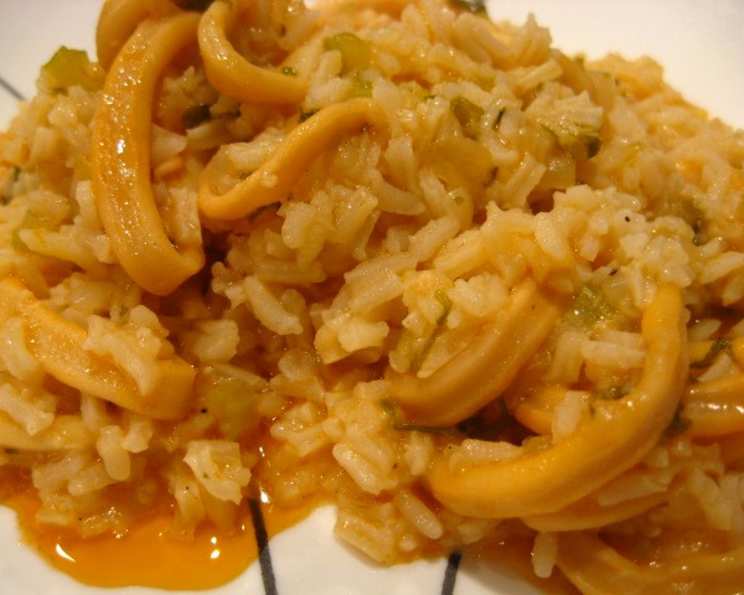
Kalamaria Pilafi: A Taste of the Greek Seaside
The aroma always takes me back to the small taverna on the harbor of Mykonos. The salty air, the gentle lapping of the waves against the fishing boats, and the clatter of plates filled with Kalamaria Pilafi being served to sun-kissed diners. I remember watching the fisherman unload their daily catch, knowing the freshest squid would soon be transformed into this very dish. This pilaf, fragrant with garlic, parsley, and the sweet brininess of the squid, is more than just a meal; it’s a memory, a feeling, a perfect bite of the Greek islands.
Recipe Overview
- Prep Time: 20 minutes
- Cook Time: 45 minutes
- Total Time: 1 hour 5 minutes
- Servings: 6
- Yield: Approximately 1 1/2 lbs
- Dietary Type: Dairy-Free
Ingredients
- 1 1/2 lbs squid, cleaned and cut into 1/2-inch circles (tentacles chopped)
- 1/2 cup olive oil
- 3 garlic cloves, crushed
- 1/2 cup yellow onion, chopped
- 1/4 cup finely chopped celery
- 1/4 cup Greek tomato sauce (a good quality store-bought or homemade)
- 1/4 cup chopped parsley
- 1/4 cup finely chopped green onion
- 1 teaspoon salt
- Fresh ground black pepper (to taste)
- 2 1/4 cups boiling water
- 1 cup long-grain rice
Equipment Needed
- 12-inch frying pan (with lid)
- Cutting board
- Sharp knife
- Measuring cups and spoons
Instructions
-
Begin by ensuring your squid is thoroughly cleaned. Remove the internal organs, cartilage (pen), and beak. Rinse well under cold water. Cut the squid bodies into approximately 1/2-inch circles. Chop the tentacles into smaller, manageable pieces.
-
Heat the olive oil in a 12-inch frying pan over medium heat.
-
Add the crushed garlic, chopped yellow onion, and finely chopped celery to the heated oil. Sauté the vegetables until the onion becomes translucent and softened, stirring occasionally to prevent burning. This should take about 5-7 minutes.
-
Add the prepared squid (both the rings and the chopped tentacles) to the pan with the softened vegetables.
-
Introduce the remaining ingredients to the pan, excluding the boiling water and long-grain rice. This includes the Greek tomato sauce, chopped parsley, finely chopped green onion, salt, and freshly ground black pepper.
-
Stir the mixture gently to combine all ingredients thoroughly.
-
Bring the mixture to a simmer. Once simmering, cover the frying pan with a lid.
-
Allow the mixture to cook, covered, for 20 minutes, maintaining a gentle simmer. This allows the squid to become tender.
-
After 20 minutes, remove the lid and stir in the long-grain rice. Ensure the rice is evenly distributed throughout the squid mixture.
-
Carefully pour in the boiling water. Stir gently to combine the rice and squid with the water.
-
Bring the mixture back to a boil. Once boiling, immediately reduce the heat to a low simmer.
-
Cover the frying pan again with the lid.
-
Cook, covered, for approximately 25 minutes, or until the rice is fully cooked and has absorbed most of the liquid. Avoid lifting the lid frequently during this step, as it releases steam and can affect the cooking time and texture of the rice.
-
After 25 minutes, check the rice for doneness. If the rice is still too firm or there is still excess liquid in the pan, continue to cook, covered, for a few more minutes, checking periodically until the rice is cooked through and the liquid has been absorbed.
-
Taste the pilaf and adjust the seasoning with additional salt and pepper if needed. Remember that the squid itself can be naturally salty, so taste before adding more salt.
Expert Tips & Tricks
- Squid Tenderness: The key to perfect Kalamaria Pilafi is tender squid. Overcooking will result in a rubbery texture. The initial 20-minute simmer is crucial for achieving this.
- Rice Selection: Using long-grain rice is recommended as it cooks evenly and holds its shape well in the pilaf. Avoid short-grain rice, which can become sticky.
- Flavor Enhancement: For a richer flavor, consider adding a splash of dry white wine along with the tomato sauce. A squeeze of fresh lemon juice just before serving brightens the flavors.
- Make-Ahead Prep: The squid and vegetables can be prepped ahead of time. Store them separately in the refrigerator until ready to cook.
Serving & Storage Suggestions
Serve Kalamaria Pilafi hot, garnished with a sprinkle of fresh parsley and a wedge of lemon for squeezing. It makes a wonderful main course alongside a simple Greek salad (Horiatiki Salata) and crusty bread.
Leftovers can be stored in an airtight container in the refrigerator for up to 3 days. To reheat, gently warm the pilaf in a saucepan over low heat, adding a splash of water or broth if needed to prevent it from drying out. You can also microwave it in short intervals, stirring in between. Freezing is not recommended, as the rice and squid may change texture upon thawing.
Nutritional Information
| Nutrient | Amount per Serving | % Daily Value |
|---|---|---|
| Calories | 389 kcal | – |
| Calories from Fat | 178 | 46% |
| Total Fat | 19.9 g | 30% |
| Saturated Fat | 3 g | 14% |
| Cholesterol | 264.7 mg | 88% |
| Sodium | 501.9 mg | 20% |
| Total Carbohydrate | 31 g | 10% |
| Dietary Fiber | 1.1 g | 4% |
| Sugars | 1.2 g | 5% |
| Protein | 20.4 g | 40% |
Variations & Substitutions
- Seafood Medley: For a more complex seafood pilaf, add other types of seafood, such as shrimp or mussels, along with the squid. Adjust cooking times accordingly, adding the more delicate seafood towards the end of the cooking process.
- Herb Variations: Experiment with different herbs, such as dill or oregano, to customize the flavor profile.
- Spicy Kick: Add a pinch of red pepper flakes to the pilaf for a touch of heat.
- Vegetarian Option: While traditionally made with squid, you could try substituting with large, meaty mushrooms for a vegetarian version.
FAQs (Frequently Asked Questions)
Q: Can I use frozen squid for this recipe?
A: Yes, you can use frozen squid. Just make sure to thaw it completely before cooking and pat it dry with paper towels to remove excess moisture.
Q: How do I know when the rice is cooked properly?
A: The rice should be tender and have absorbed most of the liquid in the pan. Taste a few grains to check for doneness. If the rice is still too firm, add a little more water and continue cooking for a few more minutes.
Q: Can I use a different type of rice?
A: While long-grain rice is recommended, you can experiment with other types of rice, such as basmati or jasmine rice. Keep in mind that different types of rice may require slightly different cooking times and amounts of liquid.
Q: How can I prevent the rice from sticking to the bottom of the pan?
A: Make sure to use a heavy-bottomed pan and stir the rice gently a few times during cooking to prevent sticking. Also, ensure that the heat is low enough to maintain a gentle simmer.
Q: Can I add other vegetables to this dish?
A: Absolutely! Feel free to add other vegetables, such as bell peppers, zucchini, or peas, to the pilaf. Add them along with the other vegetables at the beginning of the cooking process.
Final Thoughts
Kalamaria Pilafi is a dish that embodies the heart and soul of Greek cuisine: simple, fresh ingredients, and vibrant flavors. I encourage you to try this recipe and bring a taste of the Greek seaside to your own kitchen. Don’t be afraid to experiment with variations and make it your own. Share your creations and experiences with others, and let this dish transport you to sun-drenched shores and the warm embrace of Greek hospitality. Kali Orexi! (Good Appetite!)