
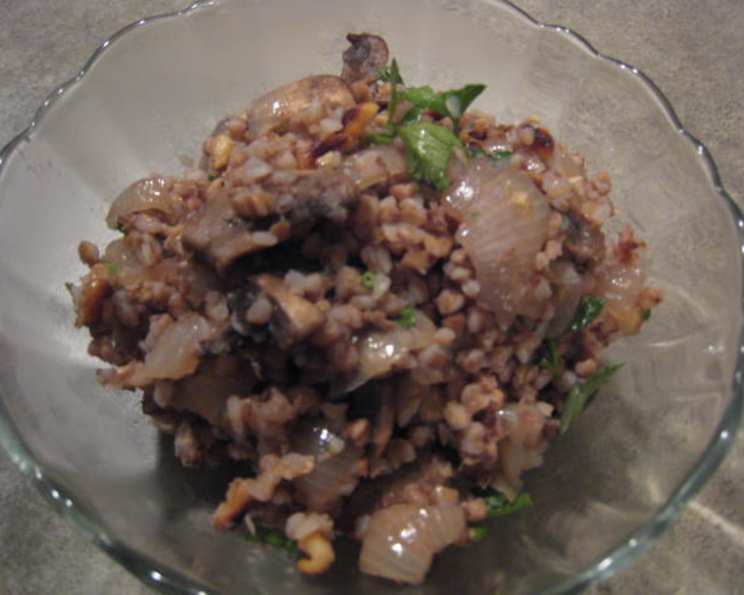
Kasha With Browned Onions and Walnuts: A Taste of Eastern European Comfort
The scent of toasted buckwheat, caramelized onions, and earthy walnuts – it instantly transports me back to my grandmother’s kitchen. Bubbe Rose, as we called her, wasn’t a fancy chef, but she possessed the magic of transforming simple ingredients into profoundly comforting meals. This kasha recipe, adapted from her well-worn cookbook, is a testament to that magic – a dish that nourishes both body and soul, filling the kitchen with warmth and inviting memories.
Recipe Overview
- Prep Time: 10 minutes
- Cook Time: 28 minutes
- Total Time: 38 minutes
- Servings: 4
- Dietary Type: Vegetarian
Ingredients
- 1 cup coarse dried kasha (roasted buckwheat groats)
- 2 cups boiling-hot water
- ¾ teaspoon salt
- ½ teaspoon black pepper
- ¾ cup walnuts, coarsely chopped (3 oz)
- 1 ½ tablespoons unsalted butter
- 2 tablespoons olive oil
- 1 medium onion, coarsely chopped
- 2 teaspoons fresh thyme leaves
- 3 tablespoons chopped fresh flat-leaf parsley
Equipment Needed
- 3 ½- to 4-quart heavy saucepan
- 12-inch heavy skillet
Instructions
-
Begin by toasting the kasha. Place the coarse dried kasha in a dry 3 ½- to 4-quart heavy saucepan over moderate heat. Stir constantly, ensuring the grains don’t burn, until they smell toasty and begin to separate, about 2 minutes. This step is crucial for developing the nutty flavor of the kasha.
-
Add the boiling-hot water, ½ teaspoon salt, and ¼ teaspoon pepper to the toasted kasha. Bring the mixture back to a simmer, then reduce the heat to low. Cover the saucepan and let it simmer until the kasha is barely tender and most of the water is absorbed, about 12 minutes. Resist the urge to peek or stir too often, as this can disrupt the cooking process.
-
Remove the saucepan from the heat and let it stand, still covered, for 10 minutes. This allows the remaining moisture to be fully absorbed and the kasha to become perfectly tender.
-
While the kasha is cooking, prepare the walnuts. In a 12-inch heavy skillet, melt 1 tablespoon of butter over moderate heat. Add the coarsely chopped walnuts and toast them, stirring frequently, for about 5 minutes. Keep a close eye on them, as they can burn quickly. The goal is to enhance their nutty flavor and give them a slightly crisp texture.
-
Transfer the toasted walnuts to a plate to prevent them from overcooking in the hot skillet.
-
Add the olive oil and the remaining ½ tablespoon of butter to the same skillet. Heat over moderate heat until the foam from the butter subsides. This indicates that the butter is properly melted and ready for the onions.
-
Add the coarsely chopped onion and fresh thyme leaves to the skillet. Cook, stirring occasionally, until the onion is softened and beautifully browned, about 15 minutes. Patience is key here; the browning process is what develops the deep, rich flavor of the onions. Don’t rush it!
-
Finally, combine all the elements. Stir the cooked kasha into the skillet with the browned onions. Add the toasted walnuts, chopped fresh flat-leaf parsley, and the remaining ¼ teaspoon salt and ¼ teaspoon pepper. Mix well to ensure all the ingredients are evenly distributed and the flavors meld together.
Expert Tips & Tricks
- Toasting the kasha: Don’t skip this step! It intensifies the nutty flavor and prevents the kasha from becoming mushy during cooking.
- Browning the onions: Low and slow is the way to go. This allows the onions to caramelize properly, developing a deep, sweet flavor. If they start to burn, reduce the heat slightly.
- Adding a touch of sweetness: For a richer flavor, consider adding a teaspoon of brown sugar or a drizzle of honey to the onions during the last few minutes of cooking.
- Make it ahead: The kasha can be cooked a day ahead and reheated. The onions can also be browned in advance, but it’s best to add the walnuts and parsley just before serving to maintain their texture and freshness.
- Variations in broth: While this recipe calls for water, feel free to substitute with vegetable or chicken broth to infuse even more flavor into the kasha.
Serving & Storage Suggestions
Serve the kasha hot, garnished with a sprinkle of fresh parsley. It makes a wonderful side dish for roasted chicken, grilled vegetables, or hearty stews. It’s also delicious on its own as a light meal.
Leftovers can be stored in an airtight container in the refrigerator for up to 3 days. Reheat gently in a skillet over low heat, adding a splash of water or broth if needed to prevent it from drying out. While freezing is possible, the texture of the kasha may change slightly upon thawing.
Nutritional Information
| Nutrient | Amount per Serving | % Daily Value |
|---|---|---|
| Calories | 350 kcal | 18% |
| Total Fat | 25.4g | 39% |
| Saturated Fat | 5g | 25% |
| Cholesterol | 11.4mg | 3% |
| Sodium | 443.5mg | 18% |
| Total Carbohydrate | 6g | 2% |
| Dietary Fiber | 2.2g | 8% |
| Sugars | 1.8g | 7% |
| Protein | 3.8g | 7% |
Variations & Substitutions
- Vegan: This recipe is easily adaptable to be vegan by simply substituting the butter with a plant-based butter alternative or using only olive oil.
- Gluten-Free: Kasha is naturally gluten-free, so this recipe is safe for those with gluten sensitivities.
- Other Nuts: Feel free to experiment with other nuts like pecans, almonds, or hazelnuts in place of the walnuts.
- Dried Fruit: For a touch of sweetness and chewiness, add some dried cranberries or raisins along with the walnuts.
FAQs (Frequently Asked Questions)
Q: What exactly is kasha?
A: Kasha refers to roasted buckwheat groats. Roasting gives them a distinctive nutty flavor and aroma.
Q: Can I use pre-cooked kasha for this recipe?
A: While you could, toasting the kasha yourself really enhances the flavor and texture. I wouldn’t recommend skipping that step.
Q: How do I know when the onions are properly browned?
A: They should be a deep golden-brown color and very soft and sweet. It takes patience, but the flavor is worth it!
Q: Can I add other vegetables to this dish?
A: Absolutely! Mushrooms, carrots, or celery would all be delicious additions. Just sauté them along with the onions.
Q: What’s the best way to reheat leftover kasha?
A: Gently heat it in a skillet over low heat with a splash of broth or water to prevent it from drying out. You can also microwave it, but be careful not to overcook it.
Final Thoughts
This Kasha with Browned Onions and Walnuts is more than just a recipe; it’s a connection to tradition, a celebration of simple flavors, and a reminder of the warmth of home. I encourage you to try it, experiment with your own variations, and share it with loved ones. And if you have any stories or feedback, please let me know! I hope this dish brings you as much comfort and joy as it has brought me over the years.