
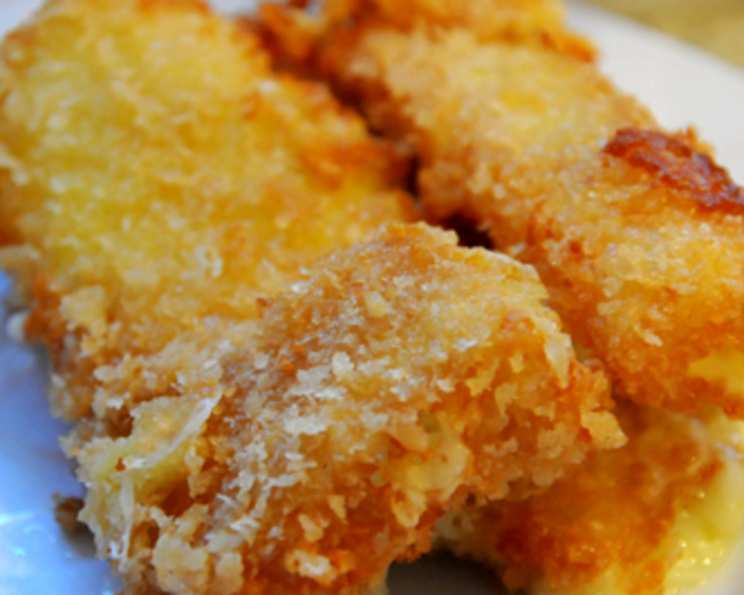
Golden Memories: Mastering Kashkaval Pane, a Bulgarian Delight
The scent of frying cheese always transports me back to a small, sun-drenched taverna nestled in the Bulgarian countryside. I was a wide-eyed culinary student on a backpacking trip, and the aroma of kashkaval pane, sizzling in hot oil, filled the air. It was a simple dish, yet the crispy exterior giving way to a molten, salty center was an unforgettable experience. I watched the cook, a woman with hands weathered by time and love, effortlessly transform humble ingredients into a plate of pure joy, a memory etched in my mind ever since.
Recipe Overview
- Prep Time: 10 minutes
- Cook Time: 5 minutes
- Total Time: 15 minutes
- Servings: 8-10
- Yield: 8-10 slices
- Dietary Type: Vegetarian
Ingredients
- 1 lb kashkaval cheese (provolone or halloumi can also be used)
- All-purpose flour
- 2-3 large eggs, beaten
- 2-3 cups fresh breadcrumbs, panko crumbs, or 2-3 cups matzo meal
Equipment Needed
- Large frying pan
- Tongs or slotted spoon
- Paper towels
Instructions
- Begin by pouring about two inches of oil into a large frying pan. Place the pan over high heat. You’ll know the oil is ready when bubbles start to form around the end of a wooden spoon when it is inserted into the oil. Be very careful not to overheat the oil, as this can cause splattering and burning.
- While the oil heats, prepare the kashkaval cheese. Slice the cheese into pieces approximately half an inch thick. Uniformity in thickness is important for even cooking.
- Set up a breading station with three shallow dishes: one containing flour, one with the beaten eggs, and the last with your choice of breadcrumbs, panko, or matzo meal.
- Take each slice of kashkaval and thoroughly coat all sides with flour. Make sure to shake off any excess flour to prevent it from clumping in the egg wash.
- Next, dip the floured cheese into the beaten eggs, ensuring it’s completely coated. Allow any excess egg to drip off.
- Finally, dredge the egg-coated cheese in the breadcrumbs, panko, or matzo meal, pressing gently to adhere. Make sure the entire surface is evenly covered.
- Carefully submerge each breaded kashkaval slice into the hot oil. Do not overcrowd the pan; work in batches to maintain the oil temperature.
- Fry the cheese until it is golden brown on all sides, which should only take a minute or two per side. Watch closely, as it can burn quickly.
- Remove the fried kashkaval pane from the oil using tongs or a slotted spoon. Place the slices on a plate lined with paper towels to drain any excess oil.
- Serve immediately. The kashkaval pane is best enjoyed hot, when the cheese is melted and gooey inside and the coating is crispy and golden brown.
Expert Tips & Tricks
- Cheese Choice: While kashkaval is traditional, provolone and halloumi offer similar textures and flavors. Halloumi has a higher melting point, so it may require slightly longer frying.
- Breading Consistency: For a crispier crust, consider double-breading the cheese. After the first breading, dip it back into the egg and then into the breadcrumbs again.
- Oil Temperature: Maintaining the right oil temperature is crucial. Too low, and the cheese will absorb too much oil and become greasy. Too high, and the crust will burn before the cheese melts. Use a thermometer to ensure the oil stays around 350°F (175°C).
- Preventing Cheese Melt-Out: For kashkaval that tends to melt very quickly, consider chilling the breaded slices in the freezer for 10-15 minutes before frying. This will help the coating set and prevent the cheese from oozing out too much.
- If you are using panko crumbs, you can toast them lightly in a dry pan or oven before using to give them an even deeper golden color and crunch.
Serving & Storage Suggestions
Kashkaval pane is best served immediately, while it’s hot and the cheese is molten. It makes an excellent appetizer or side dish. Serve it with a squeeze of lemon juice for a touch of brightness or alongside a simple salad.
Leftovers can be stored in an airtight container in the refrigerator for up to 2 days. However, the texture will change as the crust loses its crispness. To reheat, you can bake the slices in a preheated oven at 350°F (175°C) for about 5-10 minutes, or until heated through. You can also reheat them in a skillet with a little oil, but be careful not to burn the crust. Reheating in a microwave is not recommended, as it will make the cheese rubbery. Kashkaval pane is generally not suited for freezing as the breading becomes soggy.
Nutritional Information
| Nutrient | Amount per Serving | % Daily Value |
|---|---|---|
| Calories | 312.5 kcal | N/A |
| Calories from Fat | 148 g | N/A |
| Total Fat | 16.5 g | 25% |
| Saturated Fat | 9.4 g | 47% |
| Cholesterol | 82.8 mg | 27% |
| Sodium | 764.1 mg | 31% |
| Total Carbohydrate | 24.2 g | 8% |
| Dietary Fiber | 1.2 g | 4% |
| Sugars | 1.7 g | 6% |
| Protein | 16.3 g | 32% |
Note: Nutritional information is an estimate and may vary based on specific ingredients and preparation methods.
Variations & Substitutions
- Gluten-Free: Use gluten-free flour and breadcrumbs. Almond flour or a gluten-free breadcrumb mix work well.
- Spicy Kick: Add a pinch of cayenne pepper or paprika to the flour mixture for a subtle heat.
- Herb Infusion: Mix finely chopped fresh herbs like parsley, dill, or oregano into the breadcrumbs for added flavor.
- Cheese Variety: Experiment with other semi-hard cheeses that melt well, such as mozzarella or Monterey Jack.
- Air Fryer Option: For a lighter version, try air frying the breaded cheese slices at 375°F (190°C) for about 8-10 minutes, flipping halfway through, until golden brown and melted. You may need to spray them lightly with oil for even browning.
FAQs (Frequently Asked Questions)
Q: Can I prepare the kashkaval pane ahead of time?
A: You can bread the cheese slices ahead of time and store them in the refrigerator for a few hours before frying. However, it’s best to fry them just before serving for the best texture.
Q: What if I can’t find kashkaval cheese?
A: Provolone and halloumi are good substitutes. Provolone offers a similar mild, slightly salty flavor and melts well, while halloumi has a firmer texture and a saltier taste.
Q: How do I prevent the cheese from sticking to the pan?
A: Make sure the oil is hot enough before adding the cheese. Also, avoid overcrowding the pan, as this can lower the oil temperature and cause the cheese to stick.
Q: Can I bake the kashkaval pane instead of frying it?
A: While frying is traditional, you can bake it. Preheat your oven to 400°F (200°C), place the breaded cheese slices on a baking sheet lined with parchment paper, and bake for about 10-12 minutes, or until golden brown and melted.
Q: What should I serve with kashkaval pane?
A: It pairs well with a simple green salad, roasted vegetables, or a tomato-based sauce. It can also be served as part of a meze platter with olives, pickles, and other appetizers.
Final Thoughts
Kashkaval pane is more than just fried cheese; it’s a taste of Bulgarian hospitality and tradition. I hope this recipe inspires you to create your own golden memories in the kitchen. Don’t be afraid to experiment with different cheeses and seasonings to find your perfect version. And, of course, please share your creations and experiences! This simple dish is a crowd-pleaser, perfect as an appetizer, side, or even a snack. Pair it with a crisp white wine or a light beer for a truly delightful experience.