
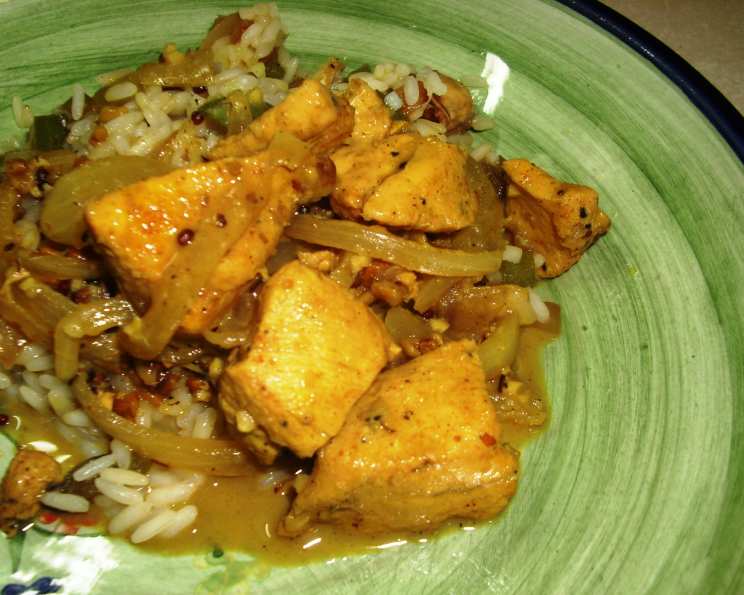
Aromatic Kashmiri Curry Chicken: A Taste of Paradise
The first time I tasted Kashmiri curry chicken, I was a wide-eyed culinary student volunteering at a local cultural festival. The air was thick with exotic aromas, but one fragrance, a tantalizing blend of warm spices and creamy coconut, drew me in like a moth to a flame. An elderly woman, her hands gnarled with age but her eyes sparkling with passion, ladled a generous portion of the vibrant curry over a bed of fluffy basmati rice. The moment the flavors exploded on my palate – the gentle heat of chili, the earthy warmth of coriander, and the subtle sweetness of coconut – I was transported. It wasn’t just a dish; it was a story, a legacy, a taste of the majestic Himalayas. From that day on, I was determined to master the art of Kashmiri curry chicken, and I’m excited to share my perfected version with you.
Recipe Overview
- Prep Time: 15 minutes
- Cook Time: 40 minutes
- Total Time: 55 minutes
- Servings: 6
- Yield: 6 servings
- Dietary Type: Gluten-Free, Dairy-Free (if using dairy-free coconut milk)
Ingredients
- 3 lbs chicken pieces
- ½ teaspoon ground turmeric
- 1 tablespoon ground coriander
- 2 teaspoons black pepper
- 1 ½ tablespoons chili powder
- 1 ½ teaspoons salt
- 3 tablespoons vegetable oil
- 1 teaspoon mustard seeds
- 1 teaspoon fenugreek seeds
- 1 large onion, sliced
- 1 ½ teaspoons cumin seeds
- 3 fresh curry leaves
- 2 teaspoons ginger paste
- 1 teaspoon garlic paste
- 2 cups water
- 1 cup coconut milk
- 2 tablespoons fresh lime juice
Equipment Needed
- Large bowl
- Large pan or pot with a lid
- Measuring spoons and cups
- Knife
- Cutting board
Instructions
-
Marinate the Chicken: In a large bowl, place the chicken pieces. Add the ground turmeric, ground coriander, black pepper, chili powder, and salt. Mix thoroughly, ensuring that the chicken is evenly coated with the spices. Cover the bowl and refrigerate for at least 1 hour. This allows the flavors to penetrate the chicken, resulting in a more flavorful dish.
-
Prepare the Base: Heat the vegetable oil in a large pan or pot over medium heat. Once the oil is hot, add the mustard seeds and fenugreek seeds. Allow them to sizzle and pop for a few seconds. This releases their aromatic oils and adds a distinct flavor to the curry.
-
Sauté the Aromatics: Add the sliced onion and sauté until it turns golden brown, about 5-7 minutes. Stir frequently to prevent burning. Next, add the cumin seeds and fresh curry leaves, and continue to cook for another 3-4 minutes, stirring constantly. The curry leaves will release their fragrant aroma, infusing the oil with their essence.
-
Add Ginger and Garlic: Stir in the ginger paste and garlic paste and cook for another 2 minutes, stirring continuously. This step is crucial, as it helps to eliminate the raw taste of ginger and garlic and allows their flavors to meld with the other spices.
-
Cook the Chicken: Add the marinated chicken to the pan and stir well to coat it with the spice mixture. Add water, stir again, and cover the pan with a lid. Cook for 20-25 minutes, or until the chicken is cooked through and tender.
-
Add Coconut Milk: Stir in the coconut milk and cook until the sauce has thickened slightly, about 5-7 minutes. Stir frequently to prevent the chicken from sticking to the bottom of the pan.
-
Finish the Curry: Stir in the fresh lime juice and cook for another 2-3 minutes, or until the curry has reached your desired consistency. Stir continuously. The lime juice adds a touch of acidity, balancing the richness of the coconut milk and enhancing the overall flavor of the curry.
-
Serve: Serve the Kashmiri curry chicken hot, garnished with fresh cilantro or a dollop of plain yogurt, if desired. Enjoy with basmati rice, naan bread, or roti.
Expert Tips & Tricks
- Spice Level Adjustment: Adjust the amount of chili powder according to your preference. For a milder curry, reduce the amount of chili powder. For a spicier curry, add a pinch of cayenne pepper.
- Marinating Time: For the best flavor, marinate the chicken overnight. This allows the spices to fully penetrate the meat, resulting in a more flavorful and tender dish.
- Freshness Matters: Use fresh curry leaves for the most authentic flavor. Dried curry leaves can be used as a substitute, but the flavor will not be as intense.
- Coconut Milk Quality: Full-fat coconut milk will result in a richer, creamier curry. If you prefer a lighter curry, use light coconut milk.
- Browning the Onions: Don’t rush the process of browning the onions. This is crucial for developing a deep, rich flavor base for the curry.
- Bone-in, Skin-on Chicken: Using bone-in, skin-on chicken pieces will result in a more flavorful and succulent curry. The bones and skin add depth and richness to the sauce.
Serving & Storage Suggestions
Kashmiri Curry Chicken is best served hot, accompanied by fluffy basmati rice, warm naan bread, or roti. Garnish with freshly chopped cilantro or a dollop of plain yogurt for added visual appeal and flavor.
Leftovers can be stored in an airtight container in the refrigerator for up to 3 days. To reheat, gently warm the curry in a pan over medium heat, stirring occasionally, or microwave until heated through. You can also freeze the curry for up to 2 months. Thaw overnight in the refrigerator before reheating.
Nutritional Information
| Nutrient | Amount per Serving | % Daily Value |
|---|---|---|
| Calories | 561.9 kcal | N/A |
| Calories from Fat | 327 g | 58% |
| Total Fat | 36.4 g | 56% |
| Saturated Fat | 14.6 g | 72% |
| Cholesterol | 103.5 mg | 34% |
| Sodium | 734 mg | 30% |
| Total Carbohydrate | 32 g | 10% |
| Dietary Fiber | 2.1 g | 8% |
| Sugars | 26.8 g | N/A |
| Protein | 27.4 g | 54% |
Variations & Substitutions
- Vegan Option: Substitute the chicken with firm tofu or paneer for a vegetarian or vegan version. Ensure the tofu is pressed to remove excess water before cooking.
- Spice Blend: Experiment with different spice blends to create your own unique flavor profile. Garam masala, Kashmiri chili powder, or dried mango powder (amchur) can be added for added complexity.
- Vegetables: Add vegetables such as potatoes, cauliflower, peas, or spinach for a heartier and more nutritious meal. Add them during the last 15-20 minutes of cooking time.
- Coconut Milk Alternative: If you don’t have coconut milk, you can substitute it with heavy cream or cashew cream for a similar richness and flavor.
FAQs (Frequently Asked Questions)
Q: Can I make this curry ahead of time?
A: Absolutely! In fact, the flavors often meld and deepen when made a day or two in advance. Store it in an airtight container in the refrigerator until ready to reheat and serve.
Q: How can I thicken the curry if it’s too runny?
A: You can simmer the curry uncovered for a few minutes to allow some of the liquid to evaporate. Alternatively, you can mix a teaspoon of cornstarch with a tablespoon of cold water and stir it into the curry to thicken it.
Q: Can I use boneless, skinless chicken breasts instead of bone-in pieces?
A: Yes, you can, but the flavor might not be as rich. If using boneless, skinless chicken breasts, reduce the cooking time to prevent them from drying out.
Q: What kind of rice pairs best with Kashmiri curry chicken?
A: Basmati rice is the classic choice, but jasmine rice or even brown rice would also work well.
Q: Is it possible to make this curry in a slow cooker?
A: Yes, you can adapt this recipe for a slow cooker. Sauté the onions and spices as directed, then transfer everything to the slow cooker. Cook on low for 6-8 hours or on high for 3-4 hours, or until the chicken is tender. Add the coconut milk and lime juice during the last 30 minutes of cooking time.
Final Thoughts
Kashmiri Curry Chicken is more than just a meal; it’s an experience. It’s a symphony of flavors that dance on your palate, a testament to the rich culinary heritage of Kashmir. Don’t be intimidated by the ingredient list; each spice plays a vital role in creating the dish’s signature depth and complexity. So, gather your ingredients, embrace the process, and prepare to be transported to the majestic landscapes of the Himalayas with every flavorful bite. I encourage you to try this recipe and make it your own. Don’t hesitate to share your feedback and variations – I’m always eager to learn from fellow food enthusiasts! Consider pairing this dish with a crisp, dry white wine like Gewürztraminer or a refreshing Indian beer for the ultimate culinary journey.