
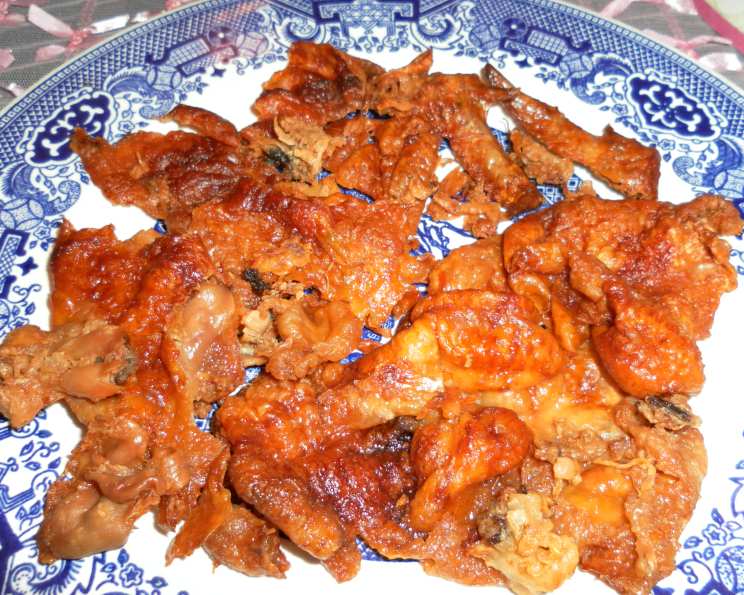
Kate’s Crispy Cracklings from Leftover Rotisserie Chicken Skin
The aroma of rotisserie chicken always takes me back to weekend family dinners. We’d gather around the table, a golden bird sitting proudly in the center, its skin glistening under the warm kitchen light. While the tender meat was always the star, I secretly coveted the crispy, flavorful skin. There was something intensely satisfying about that salty, crunchy bite, a textural delight that made my taste buds sing. Now, I’ve found a way to elevate that memory with a simple technique that transforms leftover rotisserie chicken skin into irresistible cracklings.
Recipe Overview
- Prep Time: 5 minutes
- Cook Time: 30 minutes
- Total Time: 35 minutes
- Servings: Varies (Yields cracklings from 1 rotisserie chicken)
- Yield: Varies based on chicken size
- Dietary Type: Keto, Paleo
Ingredients
- 1 rotisserie chicken (any flavor)
- Salt and black pepper, to taste (optional)
Equipment Needed
- Metal baking pan with sides (not a shallow cookie sheet)
- Paper towels
- Spatula
Instructions
-
Preheat your oven to 375°F (190°C).
-
Carefully remove the skin from the rotisserie chicken. Don’t worry if it tears; you can still make delicious cracklings.
-
Pay attention to the excess fat around the cavity opening and the tail. Remove these pieces. Next, remove any small bones from the tail and discard them. Finally, remove any significant layer of fat along the thighs.
-
Arrange the skin, tail piece, and the removed fat (from the cavity opening and thighs) in a single layer in a metal baking pan that has sides. Avoid using a shallow cookie sheet. Do not line the pan with aluminum foil or parchment paper. The skin needs direct contact with the hot metal to render the fat effectively and crisp up beautifully. Remember, the goal is to render out almost all the excess oil, leaving behind a crispy “chip.” The rotisserie chicken meat can be used for chicken salad, casseroles, soup, or any other recipe that calls for boneless, skinless cooked chicken.
-
If your rotisserie chicken is not already heavily seasoned or flavored, sprinkle the skin and fat with salt and black pepper to taste.
-
Bake the skin, uncovered, for 15 minutes at 375°F (190°C).
-
Remove the baking pan from the oven, being careful as the pan will be hot. Drain off all the rendered oil. Wearing oven mitts, carefully tilt the baking pan and use a paper towel to soak up the oil that pools in the bottom corner. Discard the oil thoughtfully (do not pour hot oil down the drain).
-
Return the pan to the oven and bake for another 15 minutes. Again, drain off any additional oil that has rendered.
-
Check the skin and fat. They should be golden brown (not burnt) and crispy (not limp or chewy). If the cracklings are not yet crispy enough, bake for an additional 10 minutes. Monitor closely to prevent burning.
-
Once the cracklings reach your desired crispness, loosen them from the pan with a spatula and transfer them to paper towels to drain any remaining oil.
-
Enjoy the cracklings while they’re still warm for the best flavor and texture.
-
Note: This method is not exclusive to rotisserie chicken. It works equally well for other baked or roasted poultry, including holiday turkey skin and fat. This method will also work with refrigerated leftovers; simply add an extra five minutes of baking time to allow the skin to warm through.
Expert Tips & Tricks
- Don’t overcrowd the pan: Arrange the skin in a single layer to ensure even rendering and crisping. Overlapping skin will steam and become chewy.
- Embrace the unevenness: Don’t strive for perfectly uniform cracklings. The varying thickness of the skin will create different textures, adding to the overall enjoyment.
- Temperature control: Keep a close eye on the cracklings during the final baking stage. Ovens can vary, and the line between crispy and burnt is thin.
- Save the rendered fat: The rendered chicken fat (schmaltz) is liquid gold! Strain it through a fine-mesh sieve and store it in the refrigerator for cooking vegetables, roasting potatoes, or adding richness to soups and stews.
Serving & Storage Suggestions
Serve the crispy cracklings immediately while they are warm and at their peak crispness. They make a fantastic snack on their own or a crunchy topping for salads, soups, or even deviled eggs.
Store leftover cracklings in an airtight container at room temperature for up to 2 days. They will lose some of their crispness over time, but they will still be flavorful. To re-crisp them, spread them on a baking sheet and bake at 350°F (175°C) for a few minutes, watching carefully to prevent burning.
I don’t recommend freezing the cracklings, as this will significantly affect their texture.
Nutritional Information
| Nutrient | Amount per Serving* | % Daily Value |
|---|---|---|
| Calories | 975 kcal | N/A |
| Calories from Fat | 614 kcal | N/A |
| Total Fat | 68 g | 105% |
| Saturated Fat | 20 g | 97% |
| Cholesterol | 340 mg | 113% |
| Sodium | 318 mg | 13% |
| Total Carbohydrate | 0 g | 0% |
| Dietary Fiber | 0 g | 0% |
| Sugars | 0 g | 0% |
| Protein | 84 g | 168% |
*Note: Nutritional information is an estimate and will vary based on the size and fat content of the rotisserie chicken. One serving represents all cracklings yielded from one chicken.
Variations & Substitutions
- Spice it up: Add a pinch of cayenne pepper, smoked paprika, or garlic powder to the skin before baking for a flavorful kick.
- Herbaceous delight: Sprinkle dried herbs like rosemary, thyme, or oregano on the skin for an aromatic twist.
- Sweet and savory: A light dusting of brown sugar or maple syrup before baking will create a caramelized, sweet-and-salty treat.
- Citrus zest: Add lemon or orange zest for a bright, zesty flavor.
- Soy sauce/Tamari: If you’re not sensitive to sodium, a little soy sauce or tamari can add umami to your cracklings.
FAQs (Frequently Asked Questions)
Q: My cracklings are still chewy after baking. What did I do wrong?
A: The most likely reason is that the oven temperature was too low, or the skin wasn’t in direct contact with the hot baking pan. Also, the skin may have been too crowded in the pan, preventing proper rendering. Make sure the pan is hot before placing the skin on it, and spread the pieces out into a single layer.
Q: Can I make this with chicken skin that has been frozen?
A: Yes, but make sure to thaw the skin completely before baking. Pat it dry with paper towels to remove excess moisture, as this will help it crisp up better.
Q: How can I tell if the cracklings are done?
A: The cracklings are done when they are golden brown in color, crispy to the touch, and no longer limp or chewy. They should easily snap or break when bent.
Q: Can I use a convection oven?
A: Yes, you can use a convection oven. Reduce the baking temperature by 25°F (15°C) and check the cracklings frequently, as they may cook faster.
Q: Is the rendered chicken fat healthy?
A: Rendered chicken fat (schmaltz) is primarily saturated fat. While saturated fat has been demonized in the past, current research suggests it may not be as harmful as once thought. Like all fats, it should be consumed in moderation as part of a balanced diet.
Final Thoughts
Now, go forth and transform those overlooked scraps of rotisserie chicken skin into culinary gold! These crispy cracklings are a testament to the fact that the most satisfying treats often come from the simplest ingredients and techniques. Don’t be shy about experimenting with different seasonings and flavor combinations to create your own signature version. And most importantly, don’t forget to share your creation with friends and family (if you can bear to part with them!). Perhaps serve alongside a comforting bowl of creamy tomato soup for a delightful textural contrast. Bon appétit!