
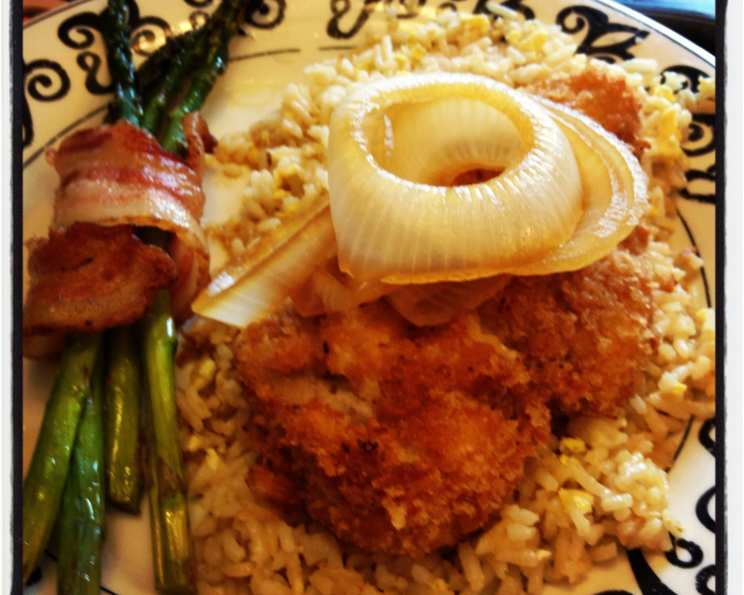
Katsudon: A Taste of Comfort and Tradition
One rainy afternoon in Tokyo, huddled in a tiny, steaming ramen shop, I stumbled upon katsudon. It wasn’t the ramen I’d craved, but the aroma wafting from the counter – savory, slightly sweet, and deeply comforting – that lured me in. The golden-brown cutlet, nestled on a bed of fluffy rice and glistening with a rich, umami-packed sauce, was more than just a meal; it was a hug in a bowl. That first bite sparked a love affair that continues to this day, a reminder of cozy afternoons and culinary adventures in a faraway land.
Recipe Overview
- Prep Time: 20 minutes
- Cook Time: 24 minutes
- Total Time: 44 minutes
- Servings: 4
- Dietary Type: Japanese
Ingredients
- ½ lb pork cutlets or ½ lb chicken cutlet
- 1 ½ cups basmati rice
- 2 onions, sliced
- 2 cups chicken broth
- ½ cup mirin
- ½ cup soy sauce
- 2 tablespoons sugar
- 4 slices ginger
- 6 eggs, beaten
- ¼ cup flour
- ½ teaspoon kosher salt
- ½ teaspoon pepper, to taste
- 2-3 cups panko breadcrumbs
- ¼ cup oil
- Chopped scallion (to garnish)
Equipment Needed
- Large pan
- Large bowl
- Plates
- Paper towels
Instructions
- First, prepare the rice according to package instructions. Keep warm. Ideally, you want the rice to be slightly sticky to better absorb the sauce.
- In a large pan, simmer the sliced onions, chicken broth, mirin, soy sauce, sugar, and ginger over low heat for 15 minutes. This allows the flavors to meld together and creates a rich, fragrant sauce. Be sure to use low heat to avoid burning the sauce.
- While the sauce simmers, beat the eggs in a large bowl. Set aside.
- Next, prepare the dredging station. On one plate, mix the flour, salt, and pepper. On another plate, pour the panko breadcrumbs.
- Dredge the pork (or chicken) in the flour mixture, ensuring it’s evenly coated.
- Then, dip the floured cutlet into the beaten eggs.
- Immediately dip the egg-coated cutlet into the panko breadcrumbs, pressing gently to ensure the breadcrumbs adhere well.
- For an extra-crispy crust, dip the panko-coated cutlet back into the beaten eggs and then back into the panko breadcrumbs. This double-dipping technique creates a beautifully textured and satisfying crunch.
- In a large skillet, heat the oil over medium-high heat.
- Carefully cook the breaded cutlets in the hot oil until browned on both sides. This usually takes about 3-4 minutes per side, depending on the thickness of the cutlets. Be careful not to overcrowd the pan; cook in batches if necessary.
- Once the cutlets are cooked through and golden brown, remove them from the skillet and drain on paper towels to remove any excess oil.
- Now for the final assembly. Dip the cooked cutlets into the simmering broth mixture in the large pan. Warm for about 1 minute, allowing the cutlets to soak up the delicious sauce.
- Slice the cutlets into bite-sized pieces.
- To serve, place a generous portion of the cooked rice in a bowl.
- Arrange the sliced cutlets over the rice.
- Ladle the onion broth generously over the cutlets and rice, ensuring everything is nicely saturated.
- Sprinkle with chopped scallions for a fresh, vibrant garnish.
Expert Tips & Tricks
- Use high-quality panko breadcrumbs: The texture of the panko makes a big difference in the final crunch. Look for Japanese panko if possible.
- Don’t skip the double-dipping: It really enhances the crispiness of the cutlet.
- Control the oil temperature: Too hot, and the panko will burn before the meat cooks through. Too cold, and the cutlet will be greasy. Medium-high heat is ideal.
- Adjust the sweetness: If you prefer a less sweet sauce, reduce the amount of sugar slightly.
- Make the sauce ahead of time: The sauce can be made a day in advance and stored in the refrigerator. This allows the flavors to meld even further.
- Crispy Cutlet Insurance: After frying, place the cutlets on a wire rack in a preheated oven at 200°F (93°C) to keep them warm and crisp while you finish the sauce.
Serving & Storage Suggestions
Katsudon is best served immediately while the cutlet is still crispy and the rice is warm. Garnish generously with chopped scallions and, if you like, a sprinkle of toasted sesame seeds. A side of pickled ginger (gari) is also a classic accompaniment.
Leftovers can be stored in the refrigerator for up to 2 days. Reheat gently in the microwave, but be aware that the cutlet will lose some of its crispness. You can try reheating the cutlet in a toaster oven or air fryer to restore some of the crunch. Unfortunately, this dish doesn’t freeze well due to the texture of the rice and breaded cutlet.
Nutritional Information
| Nutrient | Amount per Serving | % Daily Value |
|---|---|---|
| Calories | 900.9 kcal | N/A |
| Calories from Fat | 256 g | 28% |
| Total Fat | 28.5 g | 43% |
| Saturated Fat | 6.1 g | 30% |
| Cholesterol | 316.4 mg | 105% |
| Sodium | 3320.8 mg | 138% |
| Total Carbohydrate | 114.9 g | 38% |
| Dietary Fiber | 6.4 g | 25% |
| Sugars | 14.3 g | 57% |
| Protein | 42.7 g | 85% |
Variations & Substitutions
- Chicken Katsudon (Oyakodon): As the recipe suggests, chicken cutlets are a great alternative to pork.
- Turkey Katsudon: Ground turkey can be formed into patties, breaded, and used instead of pork or chicken.
- Vegetarian Katsudon: Use thick slices of firm tofu, pressed to remove excess water, and breaded in the same manner. Consider using a vegetarian broth for the sauce.
- Gluten-Free Katsudon: Substitute gluten-free flour and panko breadcrumbs. Ensure your soy sauce is also gluten-free (tamari is a good option).
- Spicy Katsudon: Add a pinch of cayenne pepper or a dash of chili oil to the sauce for a spicy kick.
- Regional Variations: In some regions of Japan, a soft-cooked egg is poured over the katsudon just before serving.
FAQs (Frequently Asked Questions)
Q: Can I use regular breadcrumbs instead of panko?
A: While you can, panko breadcrumbs create a much lighter and crispier crust. Regular breadcrumbs will result in a denser, less appealing texture.
Q: Can I make this dish ahead of time?
A: It’s best to serve katsudon immediately after preparing. While the sauce can be made ahead, the cutlet will lose its crispness if assembled in advance.
Q: What if I can’t find mirin?
A: A dry sherry or sweet marsala wine can be used as a substitute for mirin. Use about half the amount of sugar in the recipe if substituting with sherry, as sherry will not be as sweet.
Q: How do I keep the rice warm while I’m preparing the other ingredients?
A: After cooking the rice, keep it in a rice cooker on the “warm” setting. If you don’t have a rice cooker, cover the pot and place it in a very low-temperature oven (around 200°F or 93°C).
Q: My cutlets are burning before they’re cooked through. What am I doing wrong?
A: The oil is likely too hot. Reduce the heat to medium and continue cooking. You can also finish cooking the cutlets in the oven at 350°F (175°C) for a few minutes to ensure they are cooked through.
Final Thoughts
Katsudon is more than just a recipe; it’s a culinary journey, a comforting embrace, and a taste of Japanese tradition. Don’t be intimidated by the steps involved – each one contributes to the harmony of flavors and textures that make this dish so special. So, gather your ingredients, put on some Japanese City Pop, and embark on this delicious adventure. Share your katsudon creations with friends and family, and let the comforting aroma and satisfying crunch transport you to a tiny ramen shop in Tokyo, even if just for a moment. Kampai!