
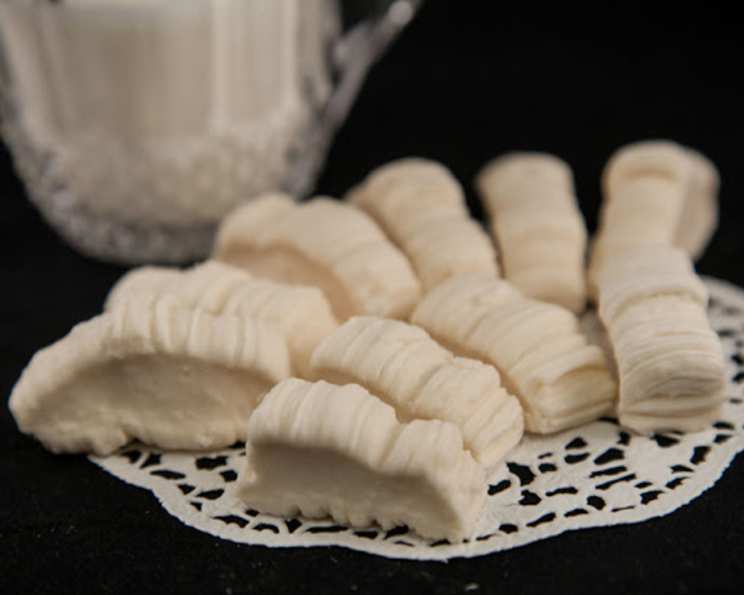
Kentucky Cream Candy: A Taste of Southern Tradition
There’s something magical about candy-making, a transformation of simple ingredients into something utterly delightful. My grandmother, a true Kentucky woman, used to make cream candy every Christmas. The whole house would fill with the sweet, buttery aroma, and I’d perch on a stool, mesmerized as she stretched and twisted the warm, pliable candy, turning it from a golden mass into ribbons of creamy white. The taste—a melt-in-your-mouth sweetness—is forever etched in my memory. This recipe is a direct descendant of hers, and I’m thrilled to share it with you.
Recipe Overview
- Prep Time: 5 minutes
- Cook Time: 20 minutes
- Total Time: 25 minutes
- Yields: 30 pieces
- Dietary Type: Vegetarian
Ingredients
- 3 cups granulated sugar
- 1 cup water
- ½ cup (1 stick) butter or ½ cup margarine
Equipment Needed
- Medium saucepan
- Candy thermometer
- Marble slab or clean, heat-resistant surface
- Butter knife or scissors
- Damp cloth
Instructions
- In a medium saucepan, combine the sugar and water. Stir briefly to moisten the sugar.
- Place the saucepan over medium heat. Clip the candy thermometer to the side of the pan, ensuring it doesn’t touch the bottom.
- Bring the mixture to a boil. Once boiling, do not stir. Stirring can cause the sugar to crystallize, resulting in grainy candy.
- Continue boiling until the mixture reaches 265 degrees Fahrenheit on the candy thermometer (firm-ball stage). This process may take 15-20 minutes. Keep a close watch, as the temperature can rise quickly towards the end.
- Once the candy reaches 265°F, remove the saucepan from the heat and immediately stir in the butter (or margarine). The mixture will bubble vigorously, so be careful. Stir until the butter is completely melted and incorporated.
- Pour the hot candy mixture onto a marble slab or a clean, heat-resistant surface, such as a lightly oiled baking sheet.
- Let the candy cool slightly around the edges. As the edges cool and begin to thicken, use a spatula or butter knife to push them towards the center of the mass. This helps to cool the candy evenly.
- Once the candy is cool enough to handle comfortably (but still pliable), butter your hands lightly.
- Begin pulling the candy. Grab a portion of the candy and pull it away from the center. Then, fold it back over onto itself. Repeat this pulling and folding process continuously. Keeping your hands cool by wiping them with a damp cloth as needed will make handling the candy much easier.
- Continue pulling and folding the candy until it becomes lighter in color and develops a satin-like sheen. This process incorporates air into the candy, giving it its characteristic creamy texture.
- When the pulling is complete, shape the candy into a long rope or log.
- Use scissors or a buttered knife to cut the candy into bite-sized pieces. Aim for pieces approximately 1-2 inches long.
- Allow the cut pieces of candy to cool completely on a wax paper-lined surface.
Expert Tips & Tricks
- Accuracy is Key: A candy thermometer is essential for this recipe. Achieving the correct temperature is crucial for the right texture.
- Don’t Stir! Resist the urge to stir the boiling sugar mixture. Agitation can lead to crystallization and a grainy texture.
- Marble Magic: A marble slab is ideal for cooling candy as it dissipates heat quickly and evenly. If you don’t have one, a lightly oiled baking sheet works well.
- Butter is Better: While margarine can be used, butter provides a richer flavor and smoother texture.
- Keep it Cool: Keeping your hands cool during the pulling process prevents the candy from sticking and makes it easier to handle. Use a damp cloth to wipe your hands frequently.
- Troubleshooting: If your candy turns out grainy, it likely crystallized during boiling. Unfortunately, there’s no easy fix. Start again, being careful not to stir the mixture after it begins to boil. If the candy is too hard, it was likely cooked to too high a temperature. Next time, ensure you remove it from the heat at 265°F.
- Flavor Boost: For a hint of vanilla, add 1 teaspoon of pure vanilla extract after removing the candy from the heat and before adding the butter.
Serving & Storage Suggestions
Kentucky cream candy is best enjoyed at room temperature. Its soft, melt-in-your-mouth texture is incredibly satisfying. It makes a wonderful addition to holiday treat platters, gift baskets, or as a sweet treat alongside a cup of coffee or tea.
Store the candy in an airtight container at room temperature. It will keep for up to 2 weeks. Avoid storing it in the refrigerator, as it can become sticky. The candy does not freeze well.
Nutritional Information
(Estimated per serving, based on 30 servings)
| Nutrient | Amount per Serving | % Daily Value |
|---|---|---|
| Calories | 100 kcal | 5% |
| Total Fat | 3g | 4% |
| Saturated Fat | 2g | 10% |
| Cholesterol | 8mg | 3% |
| Sodium | 9mg | 0% |
| Total Carbohydrate | 19g | 7% |
| Dietary Fiber | 0g | 0% |
| Sugars | 19g | 38% |
| Protein | 0g | 0% |
Variations & Substitutions
- Peppermint Cream Candy: Add a few drops of peppermint extract along with the butter for a festive holiday flavor. You can also crush peppermint candies and sprinkle them on top of the cooling candy.
- Chocolate Cream Candy: Add 2 tablespoons of unsweetened cocoa powder along with the sugar and water.
- Maple Cream Candy: Substitute ½ cup of the granulated sugar with ½ cup of maple syrup for a warm, autumnal twist.
- Brown Butter Cream Candy: Brown the butter before adding it to the cooked sugar mixture for a nutty, caramelized flavor. Be sure to watch the butter carefully to prevent it from burning.
- Nutty Cream Candy: Add ½ cup of chopped pecans or walnuts after pulling the candy.
FAQs (Frequently Asked Questions)
Q: Why is my candy grainy?
A: Graininess is usually caused by sugar crystals forming during the boiling process. Avoid stirring the mixture after it starts to boil to prevent this.
Q: Can I use a different type of sugar?
A: While granulated sugar is recommended for the best results, you can experiment with other sugars like caster sugar. Avoid using brown sugar, as it will alter the flavor and texture.
Q: How do I know when the candy is cool enough to pull?
A: The candy should be cool enough to handle comfortably without burning your hands but still pliable. It should be slightly thickened around the edges.
Q: My candy is too sticky. What did I do wrong?
A: The candy may not have been cooked to a high enough temperature. Ensure your candy thermometer is accurate and that the mixture reaches 265°F.
Q: Can I add food coloring?
A: Yes, you can add a few drops of food coloring after removing the candy from the heat and before adding the butter.
Final Thoughts
Kentucky cream candy is more than just a sweet treat; it’s a taste of heritage, a connection to family traditions, and a reminder of simpler times. Don’t be intimidated by the candy-making process—with a little patience and attention to detail, you can create a truly special treat that will delight your friends and family. Give it a try, experiment with different flavors, and most importantly, enjoy the process. I hope this recipe becomes a cherished tradition in your own home.