
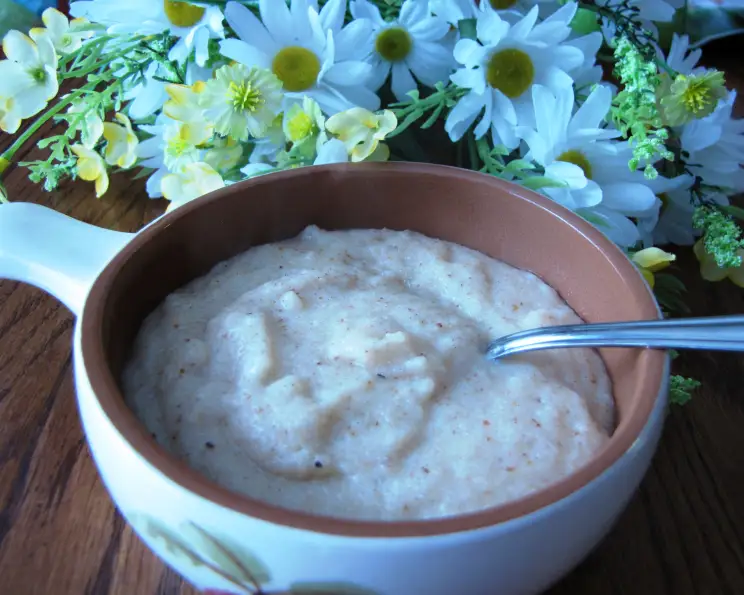
Khabeesa: A Sweet Omani Sunrise in a Bowl
I’ll never forget the first time I tasted Khabeesa. I was wandering through a bustling Omani market, the air thick with the aroma of spices and dates, when a kind woman offered me a small bowl of this golden, fragrant porridge. The warm, comforting sweetness, infused with cardamom and rosewater, was like a gentle hug on a cool morning. It was more than just a breakfast dish; it was a taste of Omani hospitality and a memory I cherish to this day.
Recipe Overview
- Prep Time: 5 minutes
- Cook Time: 10 minutes
- Total Time: 15 minutes
- Servings: 6
- Dietary Type: Vegetarian
Ingredients
- 1/3 cup sugar (or to taste)
- 1 tablespoon ground cardamom
- 2 tablespoons butter
- 2 tablespoons rose water (optional)
- 1/2 teaspoon saffron or 1/2 teaspoon saffron threads (one pinch)
- 5 cups milk (any fat content will work)
- 3/4 cup farina (cream of wheat or sameed)
Equipment Needed
- Saucepan (nonstick recommended)
- Whisk
- Measuring cups and spoons
- Bowls or plates for serving
Instructions
- In a saucepan, combine all the ingredients: sugar, ground cardamom, butter, rose water (if using), saffron, milk, and farina.
- Bring the mixture to a boil over medium heat, stirring constantly to prevent sticking and ensure even cooking.
- Once boiling, reduce the heat to the lowest setting and simmer for 10 minutes, stirring occasionally to prevent scorching. The mixture will thicken as it simmers.
- Serve the Khabeesa warm in individual bowls or on small dessert plates.
- Drizzle with melted butter, if desired, for added richness and flavor.
Expert Tips & Tricks
- Bloom the Saffron: For a more intense color and flavor, gently crush the saffron threads and soak them in a tablespoon of warm milk or rose water for about 10 minutes before adding them to the saucepan. This process, called “blooming,” releases the saffron’s essential oils.
- Control the Sweetness: The amount of sugar can be adjusted to your preference. Start with 1/3 cup and taste as it simmers. You can always add more, but you can’t take it away! Honey or other natural sweeteners can be substituted for sugar, but this will affect the flavor profile.
- Prevent Sticking: Using a nonstick saucepan is highly recommended to prevent the farina from sticking to the bottom and burning. If you don’t have a nonstick pan, use a heavy-bottomed saucepan and stir more frequently.
- Adjust the Consistency: If the Khabeesa becomes too thick while simmering, add a little more milk to reach your desired consistency. If it’s too thin, continue simmering for a few more minutes, stirring constantly, until it thickens.
- Spice Variations: While cardamom is the traditional spice, feel free to experiment with other warm spices like cinnamon, nutmeg, or a pinch of ginger. Just be sure to use them sparingly so they don’t overpower the delicate flavor of the cardamom.
- Rose Water Quality: Use a high-quality rose water for the best flavor. Lower-quality rose water can have a slightly artificial taste. If you are unsure of the quality, start with a smaller amount and add more to taste.
Serving & Storage Suggestions
Khabeesa is best served warm, ideally immediately after cooking. The warm, creamy texture and fragrant aroma are part of its charm. To serve, ladle the Khabeesa into individual bowls or onto small plates. A drizzle of melted butter adds a luxurious touch. A sprinkle of chopped nuts, such as almonds or pistachios, can provide a delightful textural contrast. You can also garnish with a few saffron threads for an elegant presentation.
If you have leftovers, store them in an airtight container in the refrigerator. Khabeesa will keep for up to 3 days. To reheat, gently warm it in a saucepan over low heat, adding a splash of milk if needed to loosen the consistency. You can also microwave it in short intervals, stirring in between, to prevent it from overheating and splattering. Note that the texture may change slightly upon reheating, becoming a bit softer.
Khabeesa is not typically frozen, as the freezing process can alter the texture of the farina and milk, making it grainy upon thawing.
Nutritional Information
| Nutrient | Amount per Serving | % Daily Value* |
|---|---|---|
| Calories | 292 kcal | 15% |
| Total Fat | 12g | 18% |
| Saturated Fat | 7g | 35% |
| Cholesterol | 39mg | 13% |
| Sodium | 128mg | 5% |
| Total Carbohydrate | 38g | 13% |
| Dietary Fiber | 1g | 4% |
| Sugars | 11g | N/A |
| Protein | 9g | 18% |
*Percent Daily Values are based on a 2,000 calorie diet. Your daily values may be higher or lower depending on your calorie needs.
Variations & Substitutions
- Dairy-Free Khabeesa: For a dairy-free version, substitute the milk with plant-based milk, such as almond milk, soy milk, or oat milk. The flavor and consistency will be slightly different, but it will still be delicious. Use coconut milk for a richer, more flavorful variation.
- Spice it Up: Add a pinch of ground ginger or nutmeg along with the cardamom for a warmer, more complex flavor profile.
- Nutty Khabeesa: Stir in a handful of chopped almonds, pistachios, or cashews during the last few minutes of simmering for added texture and flavor.
- Fruity Khabeesa: Add a handful of raisins or chopped dates to the mixture for a touch of natural sweetness and chewiness.
- Saffron Alternatives: If you don’t have saffron, you can use a pinch of turmeric powder to give the Khabeesa a yellow color, although it won’t have the same distinct flavor.
- Rose Water Omission: If you are not a fan of rose water, you can simply omit it from the recipe. The Khabeesa will still be delicious with the cardamom and saffron flavors.
FAQs (Frequently Asked Questions)
Q: Can I use quick-cooking farina for this recipe?
A: Yes, quick-cooking farina works well. Just keep a close eye on the consistency and adjust the simmering time as needed, as it may cook faster than regular farina.
Q: Can I make Khabeesa ahead of time?
A: Yes, you can prepare it a day in advance and store it in the refrigerator. Reheat gently on the stovetop, adding a little milk if needed to restore the creamy consistency.
Q: Is it essential to use saffron?
A: While saffron adds a distinctive flavor and color, it’s not strictly essential. You can omit it or use a pinch of turmeric for color.
Q: Can I adjust the sweetness of the Khabeesa?
A: Absolutely! Start with the recommended amount of sugar and adjust to your taste preferences. Honey or other sweeteners can also be used.
Q: What if my Khabeesa is too thick?
A: Simply add a splash of milk and stir until you reach your desired consistency.
Final Thoughts
Khabeesa is more than just a breakfast dish; it’s a warm embrace in a bowl, a taste of Omani tradition, and a delightful way to start the day. Whether you follow the classic recipe or experiment with variations, I encourage you to try making this fragrant and comforting porridge. Share it with loved ones, savor each spoonful, and let the flavors transport you to the sun-kissed shores of Oman. Don’t hesitate to experiment and adjust the recipe to your personal preferences. If you try this recipe, please leave a comment and let me know what you think. I’d love to hear about your culinary adventures!