
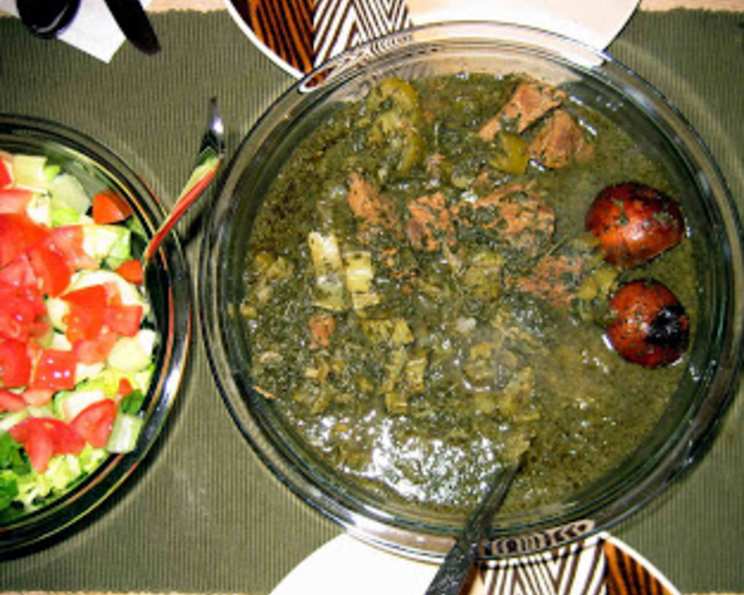
Khoresht Karafs: A Persian Symphony of Celery and Lamb
My first taste of Khoresht Karafs was a revelation. I was a young culinary student, and a friend’s Iranian grandmother, Bibi Joon, invited me for dinner. The aroma alone, a heady mix of herbs, citrus, and something subtly earthy, pulled me into the kitchen. Bibi Joon, with hands that knew more about cooking than any textbook, ladled a generous portion of the stew over fluffy basmati rice. The celery, often overlooked in Western cuisine, was the star, its unique flavor deepened by lamb and fragrant herbs. That day, Khoresht Karafs wasn’t just a meal; it was a window into a culture, a history, and a love for the simple, yet profound, act of sharing food. It sparked my lifelong passion for Persian cuisine.
Recipe Overview
- Prep Time: 20 minutes
- Cook Time: 2 hours 30 minutes
- Total Time: 2 hours 50 minutes
- Servings: 6
- Yield: About 8 cups
- Dietary Type: Potentially Gluten-Free (check bouillon), Dairy-Free
Ingredients
- 1 lb lamb, cut into chunks
- 1 head celery, cut into 2-inch pieces
- 1 onion, diced
- 4 garlic cloves, minced
- 1 bunch green onion, chopped
- 2 bunches mint, chopped
- 1 bunch parsley, chopped
- 3 dried Persian lemons (Limu Omani)
- 3 cups water
- 2 cups water
- 2 teaspoons vegetable bouillon or 2 teaspoons chicken bouillon
- ½ teaspoon turmeric
- 5 tablespoons olive oil
- Salt and pepper to taste
Equipment Needed
- Dutch oven or large pot
- Small saucepan
- Fork
Instructions
-
In a Dutch oven (or large pot), heat 4 tablespoons of olive oil over medium heat. Add the diced onion, chopped green onions, and minced garlic. Sauté until the onion becomes translucent, about 5-7 minutes. Stir occasionally to prevent burning.
-
Add the lamb chunks to the pot and brown them lightly on all sides. This step is crucial for developing a deep, savory flavor in the stew.
-
Add ½ teaspoon of turmeric to the pot. Stir the ingredients well to coat the lamb and vegetables with the spice, allowing it to release its aroma. Season generously with salt and pepper to taste.
-
Take the dried Persian lemons (Limu Omani) and prick them several times with a fork. This will allow their unique tart and slightly fermented flavor to infuse the stew. Add the pricked lemons to the pot.
-
Pour in 3 cups of water to the pot, ensuring the lamb is partially submerged. Cover the pot and bring the mixture to a simmer. Cook over medium heat for one hour, allowing the lamb to tenderize and the flavors to meld.
-
While the lamb is cooking, prepare the celery. In a separate small saucepan, heat 1 tablespoon of olive oil over medium heat. Add the celery pieces and sauté them for a few minutes, just until they start to soften slightly. Don’t overcook them at this stage.
-
After the lamb has been cooking for an hour, add the sautéed celery to the Dutch oven or pot.
-
Add the chopped fresh mint and parsley to the pot. These herbs provide a vibrant freshness and complexity to the stew.
-
Add the bouillon (either vegetable or chicken) and 2 cups of water. Stir well to dissolve the bouillon and combine all the ingredients.
-
Taste the stew and adjust the salt and pepper seasoning as needed. The flavor should be well-balanced and slightly tangy from the Persian lemons.
-
Cover the pot and continue to cook over medium heat for another 1 ½ hours. During this time, the celery will become very tender, the lamb will be incredibly soft, and the stew will thicken.
-
When the khoresht is done, it should have lost its bright green color and transformed into a darker, more muted shade. The aroma emanating from the pot should be intensely fragrant and inviting. The celery should be very soft and yielding.
-
Serve hot with basmati rice.
Expert Tips & Tricks
- Browning the lamb: Don’t overcrowd the pot when browning the lamb. Brown it in batches if necessary to ensure even browning, which is key for flavor development.
- Limu Omani: Persian lemons are essential for the authentic flavor of this dish. If you can’t find them, you can substitute with a tablespoon of lime juice, but it won’t be quite the same.
- Herb proportions: The ratio of mint to parsley can be adjusted to your preference. Some people prefer a more pronounced mint flavor, while others prefer a more balanced blend.
- Consistency: If the stew is too thick, add a little more water. If it’s too thin, simmer it uncovered for a while to allow the liquid to reduce.
- Make-ahead: Khoresht Karafs actually tastes even better the next day, as the flavors have had more time to meld. You can make it a day or two in advance and store it in the refrigerator.
- Vegetarian Option: To make this vegetarian, simply omit the lamb and add a can of drained and rinsed chickpeas or kidney beans along with the celery. Consider adding a touch of smoked paprika for depth of flavor.
Serving & Storage Suggestions
Khoresht Karafs is traditionally served hot over a bed of fluffy basmati rice. Garnish with a sprig of fresh mint or parsley for visual appeal. A side of yogurt or a simple Shirazi salad (diced cucumbers, tomatoes, and onions with a lemon vinaigrette) complements the stew beautifully.
Leftovers can be stored in an airtight container in the refrigerator for up to 3 days. For longer storage, freeze in individual portions for up to 2 months. To reheat, thaw in the refrigerator overnight and gently warm on the stovetop or in the microwave.
Nutritional Information
| Nutrient | Amount per Serving | % Daily Value |
|---|---|---|
| Calories | 310 kcal | 16% |
| Total Fat | 18g | 28% |
| Saturated Fat | 5g | 25% |
| Cholesterol | 45mg | 15% |
| Sodium | 120mg | 5% |
| Total Carbohydrate | 12g | 4% |
| Dietary Fiber | 4g | 16% |
| Sugars | 4g | – |
| Protein | 15g | 30% |
Note: Nutritional information is an estimate and may vary based on specific ingredients and preparation methods.
Variations & Substitutions
- Beef instead of Lamb: If you’re not a fan of lamb, you can substitute with beef chuck, cut into similar-sized chunks. Adjust cooking time accordingly, as beef may require slightly longer to become tender.
- Different Herbs: While mint and parsley are the traditional herbs, you can experiment with other fresh herbs like cilantro or dill. Just be mindful of the flavor profile and use them sparingly.
- Spice Level: For a spicier stew, add a pinch of red pepper flakes or a finely chopped chili pepper along with the turmeric.
- Vegan Version: Omit the lamb and use vegetable broth instead of bouillon. Add more vegetables such as potatoes or mushrooms for added heartiness.
FAQs (Frequently Asked Questions)
Q: What are Persian lemons (Limu Omani) and where can I find them?
A: Persian lemons are dried limes commonly used in Persian cuisine. They have a unique tart, slightly fermented flavor. You can find them at most Middle Eastern or specialty food stores.
Q: Can I make this stew in a slow cooker?
A: Yes, you can. Brown the lamb and sauté the vegetables as instructed, then transfer everything to a slow cooker. Cook on low for 6-8 hours, or on high for 3-4 hours.
Q: How do I prevent the celery from becoming mushy?
A: Avoid overcooking the celery during the initial sauté. Also, ensure that the stew is simmering gently, rather than boiling vigorously, during the final cooking stage.
Q: Can I use dried herbs instead of fresh?
A: While fresh herbs are preferred for their vibrant flavor, you can use dried herbs in a pinch. Use about one-third the amount of dried herbs as you would fresh.
Q: What kind of rice goes best with Khoresht Karafs?
A: Basmati rice is the traditional choice. Its delicate flavor and fluffy texture complement the richness of the stew perfectly. You can also serve it with brown basmati rice for a healthier option.
Final Thoughts
Khoresht Karafs is more than just a recipe; it’s a journey into the heart of Persian cuisine. The combination of lamb, celery, and fragrant herbs creates a symphony of flavors that is both comforting and exotic. I encourage you to try this recipe and experience the magic for yourself. Don’t be afraid to experiment with the ingredients and adjust the seasonings to your liking. Share your creations with friends and family, and let them savor the taste of Persia. Bon appétit, or as they say in Iran, Noosh-e Jan!