
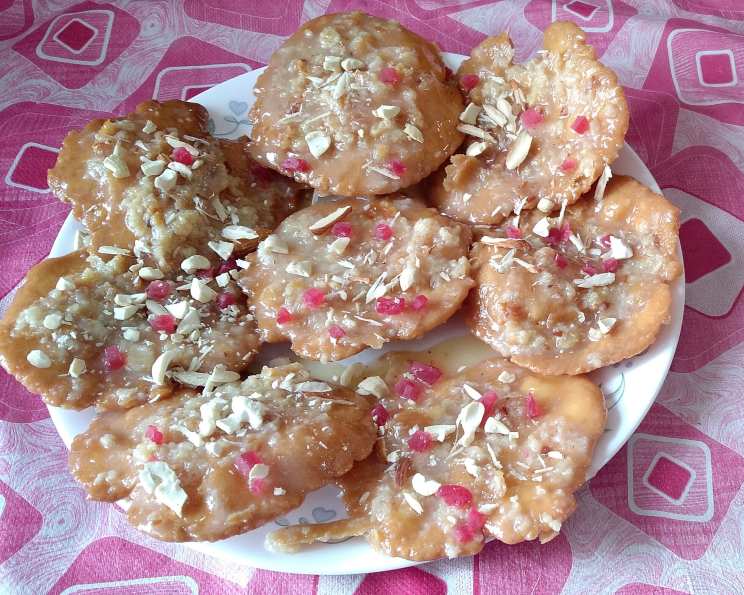
Khoya Suhali: A Sawan Sweet from the Heart of Haryana
The monsoon season in North India always brings a rush of nostalgia. As children, my cousins and I eagerly awaited Sawan and Teej, not just for the playful swings and vibrant green bangles, but especially for the treats my grandmother would lovingly prepare. Among them, Khoya Suhali held a special place – crispy, melt-in-your-mouth discs infused with the aroma of cardamom and rosewater. Every bite transported us to a world of festive joy, a tradition I now cherish recreating in my own kitchen.
Recipe Overview
- Prep Time: 30 minutes
- Cook Time: 45 minutes
- Total Time: 1 hour 15 minutes
- Servings: 6
- Yield: 12-15 Suhalis
- Dietary Type: Vegetarian
Ingredients
- 2 cups refined flour (maida)
- ¼ cup oil, for the dough
- Oil, for frying
- 1 cup sugar
- 200 g khoya (mawa)
- 4-5 cardamom pods, crushed
- 4 tablespoons rose water
- 50 g dried fruits (almonds, pistachios), chopped for garnish
- ¾ cup water
Equipment Needed
- Large mixing bowl
- Rolling pin
- Fork or toothpick
- Deep frying pan or kadhai
- Saucepan
- Slotted spoon
- Wire rack
Instructions
- Prepare the Dough: In a large mixing bowl, combine the refined flour and oil. Mix the oil thoroughly into the flour, rubbing it in with your fingertips until the mixture resembles breadcrumbs. This process, called moyan, ensures a flaky texture.
- Knead the Dough: Gradually add lukewarm water, kneading to form a tight, stiff dough. The dough should not be sticky. Cover the dough and let it rest for 15-20 minutes. This resting period allows the gluten to relax, resulting in a more tender suhali.
- Shape the Suhalis: After the dough has rested, gently knead it again. Divide the dough into small, lemon-sized balls. Roll each ball into a disc of approximately 2-2.5 inches in diameter. The discs should be slightly thicker than a chapati.
- Prevent Puffing: Using a fork, knife, or toothpick, prick the surface of each rolled-out disc multiple times. This prevents them from puffing up like pooris while frying.
- Fry the Suhalis: Heat oil in a deep frying pan or kadhai over medium heat. Gently slide the prepared suhalis into the hot oil, ensuring not to overcrowd the pan. Fry them until they turn golden brown and crispy on both sides. This usually takes 3-4 minutes per side.
- Drain the Suhalis: Remove the fried suhalis from the oil using a slotted spoon and place them on a wire rack to drain excess oil.
- Prepare the Sugar Syrup: In a separate saucepan, combine the sugar and ¾ cup water. Heat over medium heat, stirring constantly, until the sugar dissolves completely. Once the sugar has dissolved, bring the syrup to a boil.
- Infuse the Syrup: Once the syrup comes to a boil, add the rose water and crushed cardamom. Simmer for a minute to allow the flavors to infuse. The syrup should be slightly thick, about one-string consistency.
- Add the Khoya: Lower the heat to low and add the khoya (mawa) to the sugar syrup. Stir continuously to prevent it from sticking to the bottom of the pan. Continue stirring until the khoya is fully dissolved and the mixture is smooth and creamy. Bring the mixture to a good boil, stirring constantly.
- Soak the Suhalis: One by one, dip the fried suhalis into the hot khoya syrup, ensuring they are well coated on both sides. Remove the soaked suhalis and place them on a wire rack or a tray lined with parchment paper.
- Dry the Suhalis: Allow the suhalis to dry under a fan for 12-15 hours, or overnight. This allows the khoya coating to set and crystallize slightly, creating a delightful texture.
- Garnish and Serve: Garnish the dried khoya suhalis with chopped dried fruits. You can serve them warm or at room temperature.
Expert Tips & Tricks
- Moyan Mastery: The moyan (oil added to the flour) is crucial for the texture of the suhalis. Ensure the oil is thoroughly mixed into the flour for a flaky, melt-in-your-mouth result.
- Syrup Consistency: The sugar syrup consistency is key. Aim for a one-string consistency – when you take a little syrup between your thumb and forefinger and pull apart, it should form one string. If the syrup is too thin, the suhalis will become soggy. If it is too thick, the khoya coating will be too hard.
- Prevent Sticking: When adding the khoya to the sugar syrup, keep the heat low and stir constantly to prevent sticking and burning.
- Even Frying: Maintain a consistent medium heat while frying to ensure the suhalis cook evenly and become golden brown.
- Drying Time: The drying time is essential for the khoya coating to set properly. Do not rush this step.
- Khoya Quality: Use good quality khoya (mawa) for the best flavor and texture. Fresh, homemade khoya is ideal, but store-bought khoya works well too.
Serving & Storage Suggestions
Khoya Suhalis are traditionally served as a sweet treat during festivals like Sawan and Teej. They can be served warm or at room temperature. To serve, arrange them attractively on a platter and garnish with chopped dried fruits like almonds, pistachios, and cashews.
Store the suhalis in an airtight container in a cool, dry place. They will last for up to a week at room temperature. For longer storage, refrigerate them for up to two weeks. Reheat them gently in a low oven or microwave if desired. They can also be frozen for up to a month; thaw completely before serving.
Nutritional Information
| Nutrient | Amount per Serving | % Daily Value |
|---|---|---|
| Calories | 361 kcal | – |
| Calories from Fat | 85 g | 24% |
| Total Fat | 9.5 g | 14% |
| Saturated Fat | 1.2 g | 6% |
| Cholesterol | 0 mg | 0% |
| Sodium | 1.2 mg | 0% |
| Total Carbohydrate | 65.1 g | 21% |
| Dietary Fiber | 1.1 g | 4% |
| Sugars | 33.4 g | – |
| Protein | 4.3 g | 8% |
Note: Nutritional information is an estimate and may vary based on specific ingredients and cooking methods.
Variations & Substitutions
- Gluten-Free Suhali: Substitute the refined flour with a blend of gluten-free flours like almond flour and tapioca starch for a gluten-free version. You may need to adjust the amount of water used to achieve the right dough consistency.
- Flavor Variations: Experiment with different flavorings in the sugar syrup. Add a pinch of saffron for a luxurious aroma, or try using cardamom powder instead of crushed pods. You can also add a teaspoon of kewra water for a more intense floral fragrance.
- Nut Variations: Instead of dried fruits, you can garnish the suhalis with chopped nuts like walnuts or pecans.
- Jaggery Suhali: Replace the sugar with jaggery for a healthier and more rustic flavor. Ensure the jaggery is finely grated or powdered before adding it to the water.
FAQs (Frequently Asked Questions)
Q: Can I use milk powder instead of khoya?
A: While you can use milk powder in a pinch, the texture and flavor won’t be quite the same as with khoya. Khoya has a rich, slightly caramelized flavor that milk powder lacks. If using milk powder, add a little ghee for richness.
Q: How do I know if the oil is hot enough for frying?
A: A simple way to test the oil temperature is to drop a small piece of dough into the oil. If it sizzles and rises to the surface relatively quickly, the oil is ready.
Q: Why are my suhalis turning out hard?
A: This could be due to over-kneading the dough, using too much oil in the moyan, or over-frying. Ensure the dough is kneaded gently, the moyan is properly incorporated, and the suhalis are fried at medium heat until golden brown.
Q: Can I bake the suhalis instead of frying them?
A: Yes, you can bake the suhalis for a healthier option. Bake them in a preheated oven at 350°F (175°C) for 15-20 minutes, or until golden brown. However, the texture will be slightly different from the fried version.
Q: How can I prevent the sugar syrup from crystallizing?
A: Adding a teaspoon of lemon juice or vinegar to the sugar syrup can help prevent crystallization.
Final Thoughts
Khoya Suhali is more than just a sweet; it’s a taste of tradition, a celebration of flavors, and a reminder of cherished moments. I encourage you to try this authentic recipe and experience the joy of creating this delightful treat in your own kitchen. Whether you’re celebrating a special occasion or simply craving something sweet, Khoya Suhali is sure to bring a smile to your face. Do not hesitate to play with variations, make it your own, and share it with your loved ones. Happy cooking!