
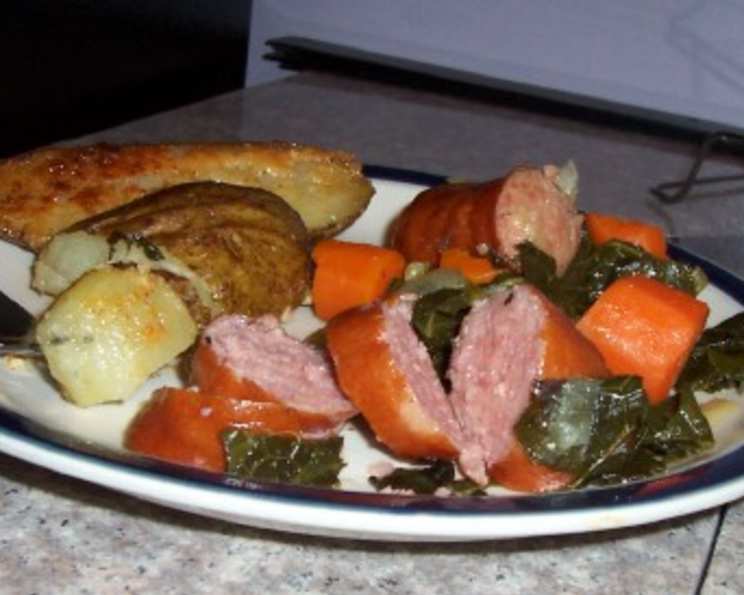
Kielbasa and Collards: A Taste of Southern Comfort
The first time I tasted kielbasa and collards, it was a revelation. I was visiting my grandmother in Charleston, South Carolina, and the smoky, earthy aromas wafted through her cozy kitchen, promising something truly special. The slightly bitter bite of the collard greens, mellowed by the rich kielbasa and sweet carrots, was a symphony of flavors that immediately transported me to the heart of Southern comfort. It was a dish that spoke of history, family, and slow-cooked goodness, a memory I cherish to this day.
Recipe Overview
- Prep Time: 20 minutes
- Cook Time: 45 minutes
- Total Time: 1 hour 5 minutes
- Servings: 8-10
- Yield: Large Pot
- Dietary Type: Varies (See Notes)
Ingredients
- 2 lbs kielbasa
- 1 bunch collard greens
- 2-3 onions, coarsely chopped
- 4 carrots, peeled and cut in chunks
- 2 cups chicken stock
- Fresh ground black pepper, to taste
Equipment Needed
- Large pot with lid
- Cutting board
- Knife
- Vegetable peeler
Instructions
-
Begin by preparing the kielbasa. Cut the kielbasa into 2-inch pieces. This size is ideal for allowing the sausage to evenly distribute its flavor throughout the dish.
-
Next, focus on the collard greens. Thoroughly clean, trim, and chop the collard greens. Removing the tough stems ensures a more pleasant texture in the final dish. A rough chop is perfectly acceptable, as the greens will cook down considerably.
-
Now, it’s time to layer the ingredients in the large pot. Place half of the chopped collard greens into the pot as the base.
-
Add half of the coarsely chopped onions over the collards. The onions will provide a foundational savory flavor.
-
Distribute half of the carrot chunks over the onions. The carrots will lend a touch of sweetness and vibrant color to the dish.
-
Place half of the kielbasa pieces on top of the carrots. Season generously with fresh ground black pepper to taste.
-
Repeat the layering process with the remaining collard greens, onions, carrots, and kielbasa. Don’t be afraid to really pile the pot high – collards cook down substantially. Add another generous grind of black pepper.
-
Pour the chicken stock over the layered ingredients. Initially, it may seem like there’s not enough liquid, but the collard greens will release moisture as they cook.
-
Cover the pot tightly with a lid and bring the mixture to a simmer over medium to medium-high heat.
-
Once simmering, reduce the heat to low and continue to simmer, stirring several times during the cooking process. This ensures even cooking and prevents the bottom from scorching.
-
Continue simmering for approximately 45 minutes, or until the collard greens are tender and the carrots are cooked through and easily pierced with a fork. Check for tenderness periodically.
-
Once the collards are tender, remove from heat and serve hot.
Expert Tips & Tricks
- For extra smoky flavor: Consider using smoked kielbasa. You can also add a smoked ham hock to the pot during the simmering process. Remember to remove the ham hock before serving.
- Spice it up: Add a pinch of red pepper flakes or a dash of your favorite hot sauce for a kick.
- Don’t overcrowd the pot: If you have a smaller pot, cook the dish in batches to ensure even cooking.
- Make it vegetarian: Substitute the kielbasa with smoked tofu or vegan sausage for a vegetarian-friendly version. Use vegetable broth instead of chicken broth.
Serving & Storage Suggestions
Serve the kielbasa and collards hot as a hearty main course. It pairs wonderfully with mashed potatoes, crusty rye or sourdough bread for soaking up the flavorful juices, or squares of cornbread.
Leftovers can be stored in an airtight container in the refrigerator for up to 3-4 days. To reheat, gently warm on the stovetop over medium heat or in the microwave until heated through. You can also freeze the leftovers for up to 2-3 months. Thaw completely in the refrigerator before reheating.
Nutritional Information
| Nutrient | Amount per Serving | % Daily Value |
|---|---|---|
| Calories | 413.6 kcal | N/A |
| Calories from Fat | 287 g | 70% |
| Total Fat | 32 g | 49% |
| Saturated Fat | 10.7 g | 53% |
| Cholesterol | 76.5 mg | 25% |
| Sodium | 1143.1 mg | 47% |
| Total Carbohydrate | 14.3 g | 4% |
| Dietary Fiber | 3.3 g | 13% |
| Sugars | 5.7 g | 22% |
| Protein | 17.4 g | 34% |
Note: Nutritional information is an estimate and can vary based on specific ingredients and portion sizes.
Variations & Substitutions
- Vegan Version: Substitute the kielbasa with a plant-based sausage alternative and use vegetable broth instead of chicken broth.
- Spicy Collards: Add a diced jalapeño pepper along with the onions for a spicy kick.
- Sweet and Savory: Add a tablespoon of brown sugar or maple syrup for a touch of sweetness.
- Different Greens: While collards are traditional, you can also use turnip greens or mustard greens, or a combination of greens.
- Smoked Turkey: Substitute the kielbasa with smoked turkey sausage for a lighter option.
FAQs (Frequently Asked Questions)
Q: Can I use frozen collard greens instead of fresh?
A: Yes, you can use frozen collard greens. Thaw them before adding them to the pot and drain off any excess water. They may require slightly less cooking time than fresh collards.
Q: How do I reduce the bitterness of collard greens?
A: Simmering them for a longer period, as this recipe does, helps to mellow their bitterness. Some people also add a touch of vinegar or lemon juice to further reduce the bitterness.
Q: Can I make this dish in a slow cooker?
A: Yes, you can. Layer the ingredients in the slow cooker as directed, pour in the chicken stock, and cook on low for 6-8 hours or on high for 3-4 hours, or until the collards are tender.
Q: How do I know when the collards are done?
A: The collards are done when they are tender and easily pierced with a fork. They should have softened considerably and lost their initial stiffness.
Q: Can I add other vegetables to this dish?
A: Absolutely! Feel free to add other vegetables such as diced potatoes, sweet potatoes, or bell peppers for added flavor and nutrition.
Final Thoughts
Kielbasa and Collards is more than just a recipe; it’s a warm embrace on a plate. It’s a dish that invites you to slow down, savor the simple pleasures, and connect with the rich culinary traditions of the South. I encourage you to try this recipe and make it your own. Experiment with different variations, share it with your loved ones, and create memories that will last a lifetime. Don’t forget a side of cornbread to soak up all the delicious juices! Enjoy!