
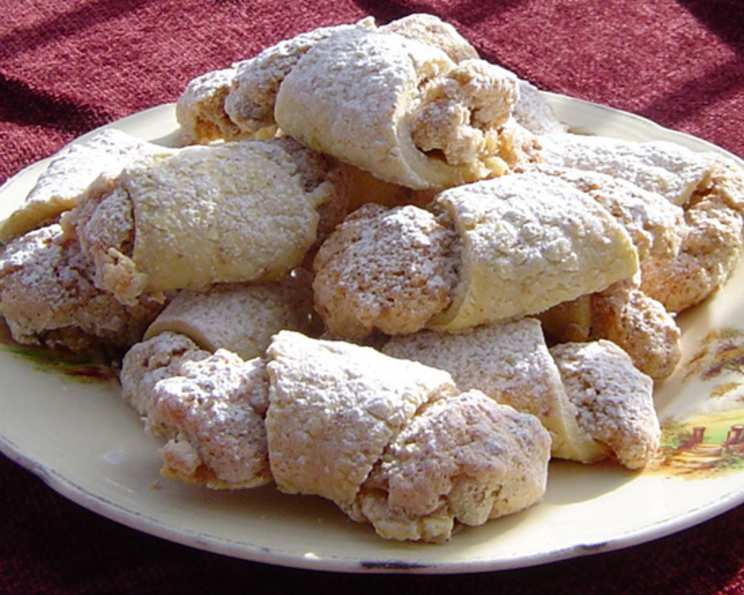
Kifle: A Taste of Yugoslavian Tradition
The scent of walnuts baking always takes me back to my grandmother’s kitchen. She wasn’t Yugoslavian, but a dear friend from Slovenia shared this recipe with her decades ago, and it quickly became a family favorite. I remember spending hours at her side, carefully rolling the dough and feeling the satisfying weight of the walnut filling in my hands. The sweet, nutty aroma that filled the house was pure magic, a promise of warm, comforting flavors to come. These Kifle were more than just cookies; they were edible memories, little crescents of love baked with care.
Recipe Overview
- Prep Time: 45 minutes
- Cook Time: 25 minutes
- Total Time: 1 hour 10 minutes (plus chilling time)
- Yields: 2 dozen cookies
- Dietary Type: Vegetarian
Ingredients
For the Dough:
- 7 g sachet active dry yeast
- 2 cups sifted flour
- ½ cup margarine
- 2 egg yolks
- ½ cup sour cream
- Confectioners’ sugar, for dusting
- Melted margarine, for greasing
For the Walnut Filling:
- 1 cup finely chopped walnuts
- ½ cup granulated sugar
- 1 teaspoon vanilla extract
- 2 egg whites, stiffly beaten
Equipment Needed
- Large mixing bowl
- Pastry blender
- Floured board
- Wax paper
- Electric mixer (for beating egg whites)
- Baking sheet
Instructions
- Begin by preparing the dough. In a large mixing bowl, combine the sifted flour and active dry yeast.
- Using a pastry blender, cut in the margarine until the mixture resembles coarse crumbs. This step is crucial for a tender, flaky dough.
- Add the egg yolks and sour cream to the flour mixture. Mix well until a dough begins to form.
- Turn the dough out onto a lightly floured board and knead until smooth, about 5 to 10 minutes. The dough should be elastic and easy to handle.
- Divide the dough into 3 equal parts. Wrap each part tightly in wax paper.
- Chill the wrapped dough in the refrigerator for at least 1 hour. This chilling time is essential; it allows the gluten to relax, making the dough easier to roll out and preventing the cookies from becoming tough.
- While the dough is chilling, prepare the walnut filling. In a medium bowl, combine the finely chopped walnuts, granulated sugar, and vanilla extract.
- In a separate, clean bowl, beat the egg whites until stiff peaks form. Gently fold the stiffly beaten egg whites into the walnut mixture. Be careful not to overmix; you want to retain the airiness of the egg whites. Set the filling aside.
- Preheat your oven to 375 degrees F (190 degrees C). Grease a baking sheet with melted margarine.
- Remove one portion of chilled dough from the refrigerator. On a board lightly sprinkled with confectioners’ sugar, roll the dough into an 8-inch circle. The confectioners’ sugar will prevent the dough from sticking and give the finished cookies a delicate sweetness.
- Using a sharp knife or pizza cutter, cut the circle into 8 pie-shaped wedges.
- Place approximately 1 tablespoon of the walnut filling at the wide end of each wedge.
- Roll up each wedge from the wide end to the point, creating a crescent shape. The filling should be neatly enclosed in the dough.
- Place the rolled cookies on the greased baking sheet, curving the ends slightly to form a more pronounced crescent shape.
- Repeat steps 10-14 with the remaining dough portions and walnut filling.
- Bake the Kifle in the preheated oven for approximately 25 minutes, or until they are golden brown. Keep a close eye on them; oven times may vary.
- Remove the baked Kifle from the oven and let them cool slightly on the baking sheet before transferring them to a wire rack to cool completely.
- Once the Kifle are completely cool, dust them generously with confectioners’ sugar. This final dusting adds a touch of elegance and sweetness.
Expert Tips & Tricks
- Achieving the Perfect Dough: The key to a tender Kifle is not overworking the dough. Knead it just until it comes together and is smooth. Over-kneading will result in tough cookies.
- Walnut Fineness: Make sure your walnuts are finely chopped. Large pieces of walnut can make the cookies difficult to roll.
- Egg White Incorporation: When folding in the egg whites, use a light hand. Overmixing will deflate the egg whites and result in a dense filling.
- Chilling Time: Don’t skimp on the chilling time! This step is crucial for easy rolling and prevents the cookies from spreading too much during baking. You can even chill the dough overnight for even better results.
- Baking Evenly: To ensure even baking, rotate the baking sheet halfway through the baking time.
Serving & Storage Suggestions
Kifle are best served at room temperature. They are delicious on their own, but they also pair well with a cup of coffee or tea. These cookies make a beautiful addition to any dessert platter, especially during the holidays.
To store Kifle, place them in an airtight container at room temperature. They will stay fresh for up to 3-4 days. You can also freeze Kifle for longer storage. Wrap them individually in plastic wrap and then place them in a freezer-safe bag or container. They can be frozen for up to 2 months. Thaw them at room temperature before serving. Reheating is not necessary, but you can warm them slightly in a low oven if desired.
Nutritional Information
| Nutrient | Amount per Serving | % Daily Value |
|---|---|---|
| Calories | 68 kcal | N/A |
| Total Fat | 4.2 g | 6% |
| Saturated Fat | 0.86 g | 4% |
| Cholesterol | 8.92 mg | 3% |
| Sodium | 26.25 mg | 1% |
| Total Carbohydrate | 6.62 g | 2% |
| Dietary Fiber | 0.33 g | 1% |
| Sugars | 2.19 g | N/A |
| Protein | 1.31 g | 3% |
Note: Nutritional information is an estimate and may vary based on specific ingredients and portion sizes.
Variations & Substitutions
- Other Nut Fillings: While walnut is the classic choice, you can substitute other nuts such as pecans, almonds, or hazelnuts.
- Jam Filling: For a fruitier twist, try using a small dollop of your favorite jam in place of the walnut filling. Apricot, raspberry, or plum jam work particularly well.
- Citrus Zest: Add a touch of citrus zest (lemon or orange) to the dough for a brighter flavor.
- Gluten-Free Option: Substitute the all-purpose flour with a gluten-free blend designed for baking. You may need to adjust the liquid slightly to achieve the right dough consistency.
- Dairy-Free Option: Substitute the margarine with a plant-based butter alternative and the sour cream with a dairy-free sour cream substitute or plain yogurt.
FAQs (Frequently Asked Questions)
Q: Why is my dough sticky?
A: Sticky dough can be caused by using too much liquid or not enough flour. Try adding a tablespoon of flour at a time until the dough becomes easier to handle. Also, make sure you are using accurate measurements.
Q: Can I make the dough ahead of time?
A: Yes, you can make the dough up to 24 hours in advance. Wrap it tightly in plastic wrap and store it in the refrigerator. Allow it to come to room temperature slightly before rolling it out.
Q: My filling is too dry. What can I do?
A: If your filling is too dry, add a teaspoon or two of milk or cream to moisten it slightly. You can also add a small amount of melted butter for extra richness.
Q: How do I prevent the filling from leaking out during baking?
A: Make sure you seal the edges of the Kifle well when rolling them up. Don’t overfill them, as too much filling can cause them to burst open during baking.
Q: Can I use a different type of yeast?
A: Yes, you can use instant yeast instead of active dry yeast. If using instant yeast, you can add it directly to the flour without proofing it first.
Final Thoughts
I hope this recipe brings as much joy to your kitchen as it has to mine. Kifle are more than just cookies; they are a delicious connection to tradition, a reminder of simpler times, and a perfect treat to share with loved ones. Don’t be afraid to experiment with different fillings or variations to make them your own. I encourage you to try this recipe and share your creations with friends and family. And please, let me know how they turn out! Enjoy the sweet taste of Yugoslavian heritage.