
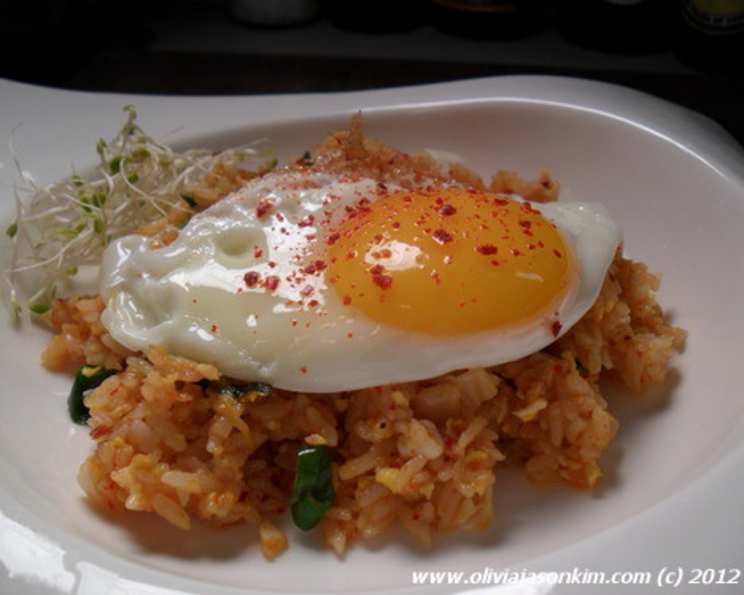
Kimchi Bokkeumbap: A Taste of Seoul in Every Bite
The sizzle of kimchi hitting a hot pan is a sound that instantly transports me back to my student days in Seoul. Late nights studying, fueled by countless bowls of this savory, spicy fried rice, shared with friends in tiny, bustling restaurants tucked away in hidden alleys. Each bite was a comforting blend of textures and flavors – the tangy kimchi, the savory rice, the richness of the egg – a taste of home away from home. Kimchi bokkeumbap wasn’t just food; it was a shared experience, a symbol of camaraderie, and a delicious reminder of the vibrant energy of the city.
Recipe Overview
- Prep Time: 15 minutes
- Cook Time: 25 minutes
- Total Time: 40 minutes
- Servings: 4
- Yields: 4 bowls
- Dietary Type: Can be Vegetarian (check kimchi ingredients), adaptable to Gluten-Free
Ingredients
- 8 tablespoons vegetable oil
- 3 tablespoons garlic, minced
- 2 tablespoons fresh ginger, minced
- ½ tablespoon coarse salt
- 2 cups sliced leeks (or green onions)
- 4 cups cooked rice (the older the better)
- 1 tablespoon red chili pepper flakes (gochugaru)
- 6 large eggs (2 eggs scrambled)
- 2 teaspoons sesame oil
- 2 teaspoons soy sauce
- 1 teaspoon sesame seeds
- ½ cup cabbage kimchi
Equipment Needed
- Small nonstick skillet
- Large skillet or wok
- Platter for serving
Instructions
-
First, prepare the scrambled eggs. Heat 4 tablespoons of vegetable oil in a small, nonstick skillet over medium-high heat. Add 2 of the 6 eggs, minced garlic, and ginger to the skillet. Cook, stirring frequently, until the eggs are partially scrambled, but still slightly soft.
-
Slide the scrambled eggs to one side of the skillet and add the cabbage kimchi. Sauté the kimchi for several minutes, stirring occasionally, until it’s slightly softened and its flavors have melded with the eggs. Avoid combining the eggs and kimchi at this stage. You want them to cook separately at first to develop their flavors.
-
Next, in a large skillet or wok, heat 3 tablespoons of vegetable oil over medium-high heat. Add the cooked rice and red pepper flakes (gochugaru) to the hot oil.
-
Cook the rice, stirring frequently to prevent sticking, for about 5 minutes, or until the rice begins to brown slightly and develop a crispy texture. Ensure the gochugaru is evenly distributed to give the rice a beautiful color and consistent spice level.
-
Taste the rice mixture and add salt if needed. Remember that the kimchi is already salty, so season carefully.
-
Gently fold the sautéed kimchi and scrambled eggs into the rice mixture, ensuring everything is evenly distributed. Continue cooking for another minute or two to meld the flavors.
-
While the rice is cooking, prepare the fried eggs. Heat the remaining 1 tablespoon of vegetable oil in a separate nonstick skillet over medium heat.
-
Crack the remaining 4 eggs into the skillet and fry them according to your preference – sunny-side up, over easy, or over hard. The runny yolk of a fried egg is a classic topping for kimchi bokkeumbap, adding richness and moisture to each bite.
-
To serve, transfer the kimchi fried rice to a platter or individual bowls. Top each serving with a fried egg.
-
Sprinkle each fried egg with a pinch of red chili pepper flakes, for an extra kick.
-
Drizzle each serving with sesame oil and soy sauce.
-
Garnish with sesame seeds and sliced leeks (or green onions) for added flavor and visual appeal. Alfalfa sprouts may also be used as garnish.
Expert Tips & Tricks
- Day-old rice is best: Freshly cooked rice tends to be too moist and can result in soggy fried rice. Day-old rice, or even rice that’s been refrigerated for a few hours, works best because it’s drier and will fry up nicely.
- Adjust the spice level: If you’re sensitive to spice, start with a smaller amount of gochugaru and add more to taste. You can also use a milder kimchi variety.
- Don’t overcrowd the pan: Cook the rice in batches if necessary to ensure even cooking and prevent the rice from steaming instead of frying.
- Get that Maillard reaction: Allow the rice to slightly brown in the pan. This caramelization adds depth of flavor and a pleasing texture to the dish.
- Kimchi juice is your friend: A splash of kimchi juice can add an extra layer of tang and flavor to the fried rice.
Serving & Storage Suggestions
Serve kimchi bokkeumbap immediately while it’s hot and the fried egg is still runny. It’s delicious on its own or as part of a larger Korean meal with side dishes (banchan) like seasoned bean sprouts, pickled radish, or spinach salad.
Leftovers can be stored in an airtight container in the refrigerator for up to 2-3 days. Reheat in a skillet over medium heat, stirring occasionally, until heated through. You may need to add a splash of oil or water to prevent sticking. Microwaving is also an option, but the texture may not be as good. Unfortunately, kimchi bokkeumbap does not freeze well as the rice texture degrades significantly.
Nutritional Information
| Nutrient | Amount per Serving | % Daily Value |
|---|---|---|
| Calories | 660 kcal | N/A |
| Calories from Fat | 340 kcal | N/A |
| Total Fat | 37.8 g | 58% |
| Saturated Fat | 6.4 g | 32% |
| Cholesterol | 279 mg | 93% |
| Sodium | 1189.6 mg | 49% |
| Total Carbohydrate | 64 g | 21% |
| Dietary Fiber | 2.4 g | 9% |
| Sugars | 2.3 g | N/A |
| Protein | 15.7 g | 31% |
Note: Nutritional information is an estimate and can vary based on specific ingredients and portion sizes.
Variations & Substitutions
- Protein Power: Add cooked beef, pork, chicken, or tofu for extra protein.
- Vegetarian Delight: Ensure your kimchi is vegetarian (some contain fish sauce). Omit meat or use tofu.
- Spice It Up: For an extra kick, add a dollop of gochujang (Korean chili paste) to the fried rice.
- Cheese Please: Some people enjoy adding a sprinkle of mozzarella or cheddar cheese to their kimchi bokkeumbap.
- Seafood Sensation: Shrimp or squid make a delicious addition to this dish.
- Vegan Option: Substitute eggs with plant-based egg alternatives or add extra firm tofu.
- Gluten-Free: Use gluten-free soy sauce (tamari) and ensure all other ingredients are gluten-free.
FAQs (Frequently Asked Questions)
Q: Can I use freshly made rice instead of day-old rice?
A: While day-old rice is preferred for its drier texture, you can use freshly made rice if necessary. Spread it out on a baking sheet to cool and dry slightly before frying.
Q: What if I don’t have leeks?
A: Green onions are a perfectly acceptable substitute for leeks.
Q: Can I make this ahead of time?
A: The individual components (scrambled eggs, kimchi, rice) can be prepared ahead of time and stored separately. Combine and fry everything just before serving for the best results.
Q: My kimchi is very sour. Can I still use it?
A: Yes! Sour kimchi is actually ideal for kimchi bokkeumbap, as its acidity adds a tangy flavor to the dish.
Q: What is Gochugaru?
A: Gochugaru is Korean chili pepper flakes. It is traditionally dried Korean peppers that are crushed into flakes. It adds spicy, smoky, and sweet notes to the dish. If unavailable, you may substitute with other chili flakes, but will change the overall flavor of the dish.
Final Thoughts
Kimchi bokkeumbap is more than just a recipe; it’s a gateway to Korean cuisine and a reminder that simple ingredients, when combined with care and a little bit of love, can create something truly special. Don’t be afraid to experiment with different ingredients and customize the recipe to your liking. I encourage you to try making this comforting and flavorful dish at home and share it with your friends and family. And if you’re feeling adventurous, try pairing it with a refreshing glass of Korean rice wine (makgeolli) for the ultimate Korean culinary experience! Enjoy!