
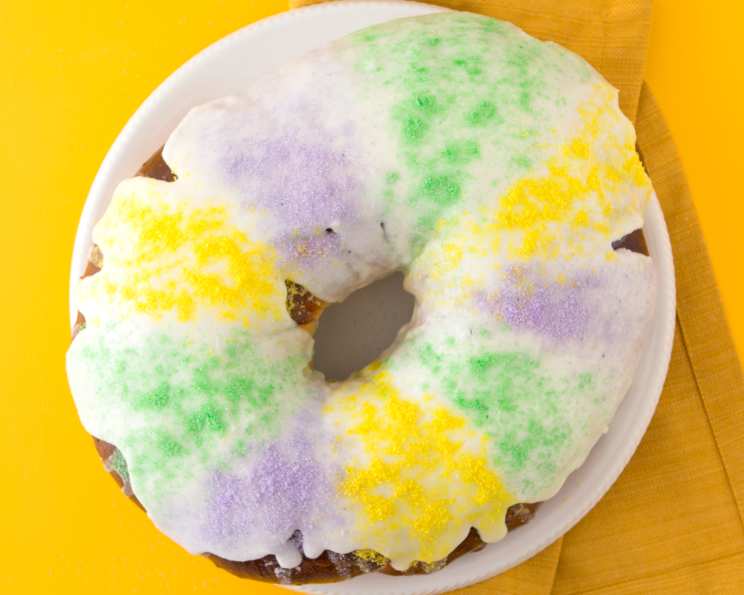
King Cake: A Taste of New Orleans Tradition
The first time I sank my teeth into a King Cake was during my culinary school externship in New Orleans. The explosion of sugary sweetness, the slight tang of citrus, and the vibrant colors swirling together took me completely by surprise. More than just a dessert, it was a symbol of celebration, community, and the magic of Mardi Gras, a feeling I’ll never forget. That first bite sparked a deep fascination with this unique pastry and its place in the city’s rich culinary tapestry.
Recipe Overview
- Prep Time: 2 hours
- Cook Time: 25-35 minutes
- Total Time: 3 hours 35 minutes
- Servings: 10-12
- Yield: 1 King Cake
- Dietary Type: Not specified
Ingredients
- 1/2 cup water (110 to 115 degrees)
- 2 packages active dry yeast
- 1/2 cup sugar
- 1 teaspoon sugar
- 3 1/2 – 4 1/2 cups flour, unsifted
- 1 teaspoon nutmeg
- 2 teaspoons salt
- 1 teaspoon lemon zest
- 1/2 cup warm milk
- 5 egg yolks
- 1/2 – 1 cup butter, cut into slices and softened
- 2 tablespoons softened butter
- 1 tablespoon milk
- 1 egg, slightly beaten with the milk
- 1 teaspoon cinnamon
- Colored sugars (green, purple, and yellow)
- Green food coloring paste
- Purple food coloring paste
- Yellow food coloring paste
- 12 tablespoons sugar
- Plastic baby figurine (optional, for traditional baking)
Icing:
- 3 cups confectioners’ sugar
- 1/4 cup lemon juice
- 3 – 6 tablespoons water
Equipment Needed
- Small shallow bowl
- Large mixing bowl
- Wooden spoon
- Pastry brush
- Large bowl
- Kitchen towel
- Large baking sheet
- Wire rack
Instructions
- In a small shallow bowl, pour the warm water and sprinkle the yeast and 2 teaspoons of sugar over it.
- Let the mixture rest for three minutes, then mix thoroughly.
- Place the bowl in a warm place for ten minutes, or until the yeast bubbles up and the mixture nearly doubles in volume. This indicates the yeast is active and ready to use.
- In a large mixing bowl, combine 3 1/2 cups of flour, the remaining sugar, nutmeg, and salt. Sift these dry ingredients together for an even distribution of flavors.
- Stir in the lemon zest.
- Create a well in the center of the dry ingredient mixture.
- Pour in the yeast mixture and the warm milk.
- Add the egg yolks.
- Using a wooden spoon, slowly incorporate the dry ingredients into the wet ingredients until a smooth dough forms.
- Gradually beat in 8 tablespoons of the softened butter, one tablespoon at a time. Continue beating for 2 minutes or until the dough can be formed into a medium-soft ball. This step helps create a rich and tender crumb.
- Place the ball of dough on a lightly floured surface and knead like bread.
- During kneading, add up to 1 cup more of flour (1 tablespoon at a time) sprinkled over the dough, until the dough is no longer sticky.
- Continue to knead for 10 minutes more until the dough is shiny and elastic. The kneading process develops the gluten, which provides the cake with its structure.
- Use a pastry brush to coat the inside of a large bowl evenly with one tablespoon of softened butter.
- Place the dough ball in the bowl and rotate it until the entire surface is buttered. This prevents the dough from drying out as it rises.
- Cover the bowl with a moderately thick kitchen towel and place it in a draft-free spot for about 1-1/2 hours, or until the dough doubles in volume.
- Use a pastry brush to coat a large baking sheet with one tablespoon of butter and set aside.
- Once the dough has doubled, remove it from the bowl and place it on a lightly floured surface.
- Using your fist, punch the dough down with a heavy blow to release the air.
- Sprinkle the cinnamon evenly over the top of the dough.
- Pat and shake the dough into a cylinder shape.
- Twist the dough to form a curled cylinder and loop the cylinder onto the buttered baking sheet.
- Pinch the ends together to complete the circle.
- Cover the dough with a towel and set it in a draft-free spot for 45 minutes until the circle of dough doubles in volume again. This is the second rise, which gives the cake its airy texture.
- Preheat the oven to 375 degrees Fahrenheit.
- Brush the top and sides of the cake with the egg wash (egg beaten with milk). This creates a glossy, golden-brown crust.
- Bake on the middle rack of the oven for 25 to 35 minutes until golden brown.
- Place the cake on a wire rack to cool completely.
- If desired, at this time, carefully “hide” the plastic baby figurine inside the cake by gently pushing it into the bottom of the cake.
Colored Sugars:
- Squeeze a small dot of green food coloring paste into the palm of your hand.
- Sprinkle 2 tablespoons of sugar over the paste and rub together quickly until the sugar is evenly colored.
- Place this mixture on wax paper.
- Wash your hands thoroughly to remove any color residue before repeating the process for the other two colors (purple and yellow).
- Set the colored sugars aside.
Icing:
- In a bowl, combine the confectioners’ sugar, lemon juice, and 3 tablespoons of water.
- Mix until smooth.
- If the icing is too stiff, add more water (1 tablespoon at a time) until it reaches a spreadable consistency.
Assembly:
- Spread the icing evenly over the top of the cooled cake.
- Immediately sprinkle the colored sugars in individual rows, consisting of about two rows of green, purple, and yellow.
- Allow the icing to set slightly before serving.
Expert Tips & Tricks
- Temperature is Key: Ensure the water for the yeast is between 110-115 degrees Fahrenheit. Too hot, and you’ll kill the yeast; too cold, and it won’t activate properly. Use a thermometer to be precise.
- Don’t Over-Knead: Over-kneading can result in a tough cake. Aim for a smooth, elastic dough, but stop when it reaches that point.
- Proofing Patience: Give the dough enough time to rise in a warm, draft-free environment. This is crucial for a light and airy texture. If your kitchen is cold, place the bowl in a slightly warmed oven (turned off!) or near a warm appliance.
- Flavor Boost: Add a teaspoon of vanilla extract to the icing for extra flavor depth.
- Make Ahead: The dough can be made a day ahead and refrigerated after the first rise. Punch it down, wrap it well, and let it come to room temperature before shaping and baking.
Serving & Storage Suggestions
Serve the King Cake in 2-3 inch slices. It is traditionally enjoyed on King’s Day (January 6th) and throughout the Mardi Gras season. The person who finds the baby in their slice is said to have good luck and is traditionally responsible for hosting the next King Cake party.
Store leftover King Cake in an airtight container at room temperature for up to 2 days. The cake is best enjoyed fresh, as the icing may soften over time. To freeze, wrap slices individually in plastic wrap and then place them in a freezer-safe bag. Thaw at room temperature before serving. Reheating is not recommended, as it can dry out the cake.
Nutritional Information
| Nutrient | Amount per Serving | % Daily Value |
|---|---|---|
| Calories | 548.4 kcal | N/A |
| Calories from Fat | 136 g | 25% |
| Total Fat | 15.2 g | 23% |
| Saturated Fat | 8.6 g | 43% |
| Cholesterol | 134 mg | 44% |
| Sodium | 587.1 mg | 24% |
| Total Carbohydrate | 97.2 g | 32% |
| Dietary Fiber | 1.8 g | 7% |
| Sugars | 61.1 g | N/A |
| Protein | 7.6 g | 15% |
Note: Nutritional information is an estimate and may vary based on specific ingredients and portion sizes.
Variations & Substitutions
- Citrus Zest: Experiment with different citrus zests like orange or lime for a unique flavor profile.
- Filling: Add a filling of cream cheese, fruit preserves, or chocolate ganache before baking for an extra indulgent treat.
- Spices: Adjust the spices to your liking. Cardamom, ginger, or allspice can be added for a warmer, more complex flavor.
- Gluten-Free: Substitute a gluten-free flour blend for the all-purpose flour. You may need to adjust the liquid content to achieve the right dough consistency.
- Dairy-Free: Use a plant-based milk alternative (such as almond or oat milk) and a dairy-free butter substitute.
FAQs (Frequently Asked Questions)
Q: What does the baby in the King Cake symbolize?
A: The baby symbolizes baby Jesus and is hidden in the cake as a fun tradition. Whoever finds the baby is said to have good luck and traditionally hosts the next King Cake party.
Q: Can I use instant yeast instead of active dry yeast?
A: Yes, you can. Add the instant yeast directly to the dry ingredients without proofing it first.
Q: Why is my dough not rising?
A: Make sure your yeast is fresh and the water is the correct temperature (110-115°F). Also, ensure that the dough is in a warm, draft-free location.
Q: Can I make this cake ahead of time?
A: Yes, the dough can be made a day ahead and refrigerated after the first rise. Punch it down, wrap it well, and let it come to room temperature before shaping and baking.
Q: What if I don’t have lemon juice for the icing?
A: You can substitute with water or another citrus juice, such as orange or lime juice, for a slightly different flavor.
Final Thoughts
Making a King Cake is more than just baking; it’s a way to participate in a vibrant cultural tradition. Don’t be intimidated by the process – each step is a celebration in itself. Embrace the joy of creating something delicious and beautiful, and share it with friends and family. Laissez les bons temps rouler! (Let the good times roll!)