
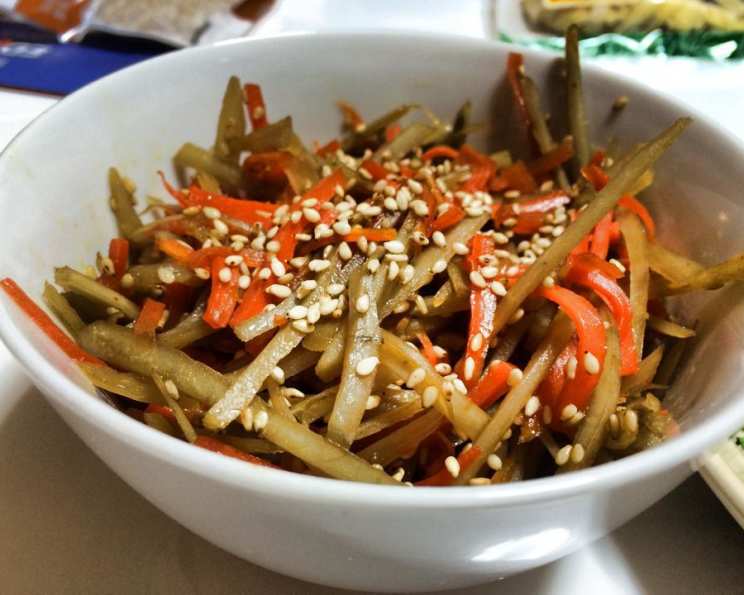
Kinpira Gobo: A Taste of Japanese Comfort
The first time I encountered kinpira gobo, it was a small, unassuming side dish on a much larger, meticulously arranged bento box. I was a young culinary student, overwhelmed by the intricacies of Japanese cuisine, but that humble combination of earthy burdock root and sweet carrot, slicked with sesame oil and a hint of chili, was an instant revelation. It was the perfect balance of textures – the slight chew of the gobo against the tender carrot – and a flavor profile that was both comforting and surprisingly complex. It transformed my understanding of what simple ingredients could achieve, and I’ve been making it ever since.
Recipe Overview
- Prep Time: 20 minutes
- Cook Time: 15 minutes
- Total Time: 35 minutes
- Servings: 3-4
- Yield: About 2 cups
- Dietary Type: Vegan
Ingredients
- 1 burdock root (gobo in Japanese)
- 1/3 carrot
- 1 tablespoon sesame oil
- 1 tablespoon white sesame seeds, roasted
- Chili powder (or Korean chili threads, ichimitogarashi, ito togarashi) (optional)
Seasonings:
- ¾ cup dashi stock
- 2 tablespoons sake
- 1 tablespoon sugar
- 1 tablespoon mirin
- 1 ½ tablespoons soy sauce
Equipment Needed
- Cutting board
- Knife
- Large bowl
- Frying pan or wok
- Measuring spoons and cups
Instructions
- Prepare the Burdock Root: Begin by thoroughly peeling the burdock root. Then, diagonally slice the peeled root into thin pieces, about 2 inches in length. Stack a few of these sliced strips together and cut them into thin, matchstick-like pieces. This julienning process is key to the dish’s texture.
- Soak the Burdock Root: Immediately place the julienned gobo into a large bowl filled with water. You can also add a single drop of vinegar to the water; this helps prevent discoloration. Change the water several times, until the water remains clear. Keep the burdock root submerged in water until you’re ready to cook. This soaking process removes excess starch and bitterness from the root.
- Prepare the Carrot: Cut the carrot into matchbox-sized strips, similar in size and shape to the gobo.
- Stir-fry the Vegetables: Heat the sesame oil in a frying pan or wok over medium-high heat. Add the drained burdock root to the pan and stir-fry for a few minutes, until it begins to soften slightly.
- Add the Carrot: Add the carrot to the pan with the burdock root and continue to stir-fry for another few minutes, until the carrot is slightly tender but still retains some bite.
- Add Seasonings: Pour in the dashi stock, sake, sugar, mirin, and soy sauce into the pan. Bring the mixture to a simmer, then reduce the heat to medium.
- Braise the Vegetables: Continue to cook, stirring occasionally, until most of the liquid evaporates. This process usually takes about 8-10 minutes. The vegetables should be glistening with a flavorful glaze.
- Finish and Serve: Once the liquid is almost completely gone, add the remaining sesame oil and sprinkle the roasted sesame seeds over the kinpira gobo. If desired, add a pinch of chili powder or ichimitogarashi for a touch of heat. Stir well to combine. Serve immediately or at room temperature.
Expert Tips & Tricks
- Julienning Made Easy: While a mandoline with a julienne blade can expedite the cutting process, be extremely careful when using one. Always use the hand guard to protect your fingers. If you prefer, you can also use a vegetable peeler to create thin strips, then stack and cut them into matchsticks.
- Don’t Overcook: The key to perfect kinpira gobo is to retain a slight bite in both the burdock root and the carrot. Avoid overcooking, which will result in a mushy texture.
- Toast Your Sesame Seeds: Toasting the sesame seeds before adding them to the dish enhances their nutty flavor. Simply dry-toast them in a pan over medium heat until lightly golden and fragrant.
- Adjust the Sweetness: The amount of sugar can be adjusted to suit your taste. If you prefer a less sweet dish, reduce the amount of sugar slightly.
- Make Ahead: Kinpira gobo can be made a day or two in advance. The flavors actually meld and deepen over time. Store it in an airtight container in the refrigerator.
Serving & Storage Suggestions
Kinpira gobo is a versatile dish that can be served in a variety of ways. It’s a classic side dish in Japanese cuisine, often included in bento boxes or served alongside grilled fish or meat. It can also be enjoyed as a topping for rice bowls, a filling for sushi rolls, or even as a snack on its own.
To store leftovers, transfer the kinpira gobo to an airtight container and refrigerate for up to 3-4 days. To reheat, gently warm it in a pan over medium heat or microwave it until heated through. It’s best enjoyed warm or at room temperature. Freezing is not recommended as it can affect the texture of the vegetables.
Nutritional Information
| Nutrient | Amount per Serving | % Daily Value |
|---|---|---|
| Calories | 120 kcal | 6% |
| Total Fat | 7g | 9% |
| Saturated Fat | 1g | 5% |
| Cholesterol | 0mg | 0% |
| Sodium | 600mg | 25% |
| Total Carbohydrate | 8g | 3% |
| Dietary Fiber | 1g | 4% |
| Sugars | 5g | N/A |
| Protein | 2g | 4% |
Note: Nutritional information is an estimate and may vary based on specific ingredients and cooking methods.
Variations & Substitutions
- Spicy Kinpira: For a spicier version, add a pinch of red pepper flakes or a dash of gochujang (Korean chili paste) to the pan along with the seasonings.
- Vegetarian Dashi: If you don’t have dashi stock on hand, you can substitute it with vegetable broth or water. However, the dashi stock provides a unique umami flavor that enhances the dish.
- Different Vegetables: Feel free to experiment with other root vegetables, such as parsnips or celeriac, in addition to or in place of the carrot.
- Tofu Kinpira: Add cubed and pan-fried tofu for extra protein and texture.
FAQs (Frequently Asked Questions)
Q: What is gobo, and where can I find it?
A: Gobo, or burdock root, is a long, slender root vegetable with a slightly earthy and sweet flavor. You can usually find it in Asian supermarkets, particularly Japanese or Korean stores.
Q: Can I use pre-cut vegetables to save time?
A: While pre-cut vegetables can save time, freshly cut vegetables will yield the best flavor and texture. The matchstick shape is also important for the dish’s characteristic appearance.
Q: How do I know when the kinpira gobo is cooked properly?
A: The vegetables should be tender-crisp, meaning they are cooked through but still have a slight bite. The liquid should have mostly evaporated, leaving a glossy glaze on the vegetables.
Q: Can I make this dish without sake or mirin?
A: Sake and mirin add depth and sweetness to the dish. If you don’t have them, you can substitute with a small amount of dry sherry or rice vinegar (for sake) and a pinch of sugar (for mirin).
Q: Is it necessary to soak the burdock root?
A: Yes, soaking the burdock root is important to remove excess starch and bitterness, which will improve the overall flavor and texture of the dish.
Final Thoughts
Kinpira gobo is more than just a simple side dish; it’s a celebration of humble ingredients transformed into something truly special. Don’t be intimidated by the slightly unusual burdock root – once you’ve tasted the combination of earthy sweetness and savory umami, you’ll understand why this dish is a beloved staple in Japanese cuisine. I encourage you to try this recipe and experience the comforting flavors of kinpira gobo for yourself. Serve it alongside your favorite Japanese dishes or enjoy it as a healthy and flavorful snack. I’d love to hear your feedback and any creative variations you come up with!