
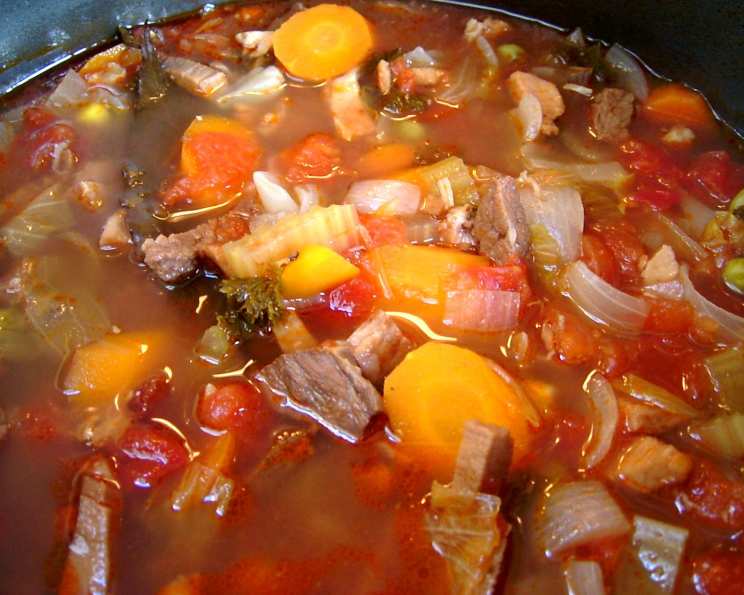
Kitchen Sink Stew: A Culinary Embrace of Leftovers
My grandmother, Nana Elsie, was the queen of resourcefulness. Nothing went to waste in her kitchen. I vividly remember the aroma of simmering stews emanating from her cozy home on chilly autumn evenings. Each pot was a unique creation, a symphony of flavors born from the week’s leftovers. This “Kitchen Sink Stew,” as I affectionately call it, is an homage to her practical magic, a warm and comforting dish that transforms humble ingredients into a hearty and unforgettable meal. It’s more than just a recipe; it’s a celebration of thrift, creativity, and the love that goes into nourishing those we care about.
Recipe Overview
- Prep Time: 20 minutes
- Cook Time: 1 hour 45 minutes
- Total Time: 2 hours 5 minutes
- Servings: 4-6
- Yield: 1 large pot
- Dietary Type: Varies (can be adapted to be gluten-free, dairy-free)
Ingredients
- 5 cups cooked meat, cut into bite-size pieces (beef, pork, chicken, or lamb – a mixture is great!)
- 1 1/2 cups carrots, sliced
- 1 cup onion, chopped
- 3/4 cup celery, chopped
- 3/4 cup greens (spinach, lettuce, cabbage, kale, etc.)
- 1/4 cup frozen corn
- 1/4 cup frozen peas
- 1 (400g) can chopped tomatoes
- 3 cloves garlic, minced (or 1/2 tsp garlic powder)
- 4 cups water
- 1 beef bouillon cube
- 1/2 cup red wine
- 1 tablespoon Worcestershire sauce
- 1/2 teaspoon Old Bay Seasoning
- 1 bay leaf
- 1/4 cup fresh parsley, leafy part only, chopped
- 1/2 teaspoon salt
- Fresh ground black pepper, to taste
To Add Later:
- 2 potatoes, cut into bite-size pieces
- 1/2 cup cooked pasta (orzos or any other small shaped pasta)
- 1/2 cup cooked rice
Equipment Needed
- Large stew pot or Dutch oven
- Cutting board
- Knife
- Measuring cups and spoons
Instructions
- Begin by gathering all your ingredients. Chop the carrots, onion, celery, and parsley. Mince the garlic. Ensure the cooked meat is cut into bite-sized pieces.
- In a large stew pot or Dutch oven, combine the cooked meat, carrots, onion, celery, greens, frozen corn, frozen peas, chopped tomatoes, garlic (or garlic powder), water, beef bouillon cube, red wine, Worcestershire sauce, Old Bay Seasoning, bay leaf, fresh parsley, salt, and black pepper.
- Cover the pot and place it on a burner over medium-high heat. Bring the mixture to a boil.
- Once boiling, reduce the heat to the lowest setting possible. If necessary, move the pot to the smallest burner to achieve a gentle simmer.
- Simmer the stew for 1 to 1 1/2 hours. This slow simmering allows the flavors to meld together beautifully.
- If using potatoes, add them to the stew during the last 20-30 minutes of cooking time. Continue to simmer until the potatoes are tender and easily pierced with a fork.
- If using cooked pasta or cooked rice, add them during the last few minutes of cooking, just long enough to heat them through. Adding them too early will cause them to become mushy.
- Once the potatoes are tender (if using) and the pasta or rice is heated through (if using), remove the bay leaf before serving.
- Serve the Kitchen Sink Stew hot with crusty bread and butter or dinner rolls for dipping.
Expert Tips & Tricks
- Don’t be afraid to experiment! This recipe is incredibly forgiving. Use whatever vegetables and cooked meats you have on hand.
- For a thicker stew, you can whisk together a tablespoon of cornstarch with two tablespoons of cold water and stir it into the stew during the last 15 minutes of cooking.
- If you don’t have red wine, you can substitute it with an equal amount of beef broth or tomato juice.
- To deepen the flavor, consider browning the meat and vegetables in a little olive oil before adding the liquid. This step is optional but adds a rich, caramelized note to the stew.
- Make-ahead Tip: This stew tastes even better the next day! The flavors have more time to meld together. Prepare the stew a day in advance and refrigerate it. Reheat gently before serving.
- Ingredient Swap: If you’re not a fan of Old Bay Seasoning, you can substitute it with your favorite spice blend, such as Italian seasoning or a chili powder blend.
Serving & Storage Suggestions
Serve your Kitchen Sink Stew hot, ladled into bowls, with a side of crusty bread or warm rolls for soaking up the delicious broth. A dollop of sour cream or a sprinkle of fresh herbs can also elevate the presentation.
Storage: Leftover stew should be cooled completely before transferring it to an airtight container and refrigerating. It will keep in the refrigerator for up to 3-4 days.
Freezing: For longer storage, the stew can be frozen. Portion it into freezer-safe containers or bags, leaving some space for expansion. It can be frozen for up to 2-3 months. Thaw overnight in the refrigerator before reheating.
Reheating: Reheat the stew gently in a saucepan over medium heat, stirring occasionally, until heated through. You can also reheat it in the microwave, but be sure to stir it every minute to ensure even heating.
Nutritional Information
Note: Nutritional information is an estimate and can vary based on specific ingredients and portion sizes.
| Nutrient | Amount per Serving | % Daily Value |
|---|---|---|
| Calories | 320 kcal | 16% |
| Total Fat | 12g | 18% |
| Saturated Fat | 4g | 20% |
| Cholesterol | 75mg | 25% |
| Sodium | 850mg | 37% |
| Total Carbohydrate | 30g | 10% |
| Dietary Fiber | 5g | 20% |
| Sugars | 7g | |
| Protein | 25g | 50% |
Variations & Substitutions
- Gluten-Free: Ensure that the Worcestershire sauce is gluten-free, or substitute with coconut aminos. Omit the pasta or use a gluten-free pasta alternative.
- Vegetarian/Vegan: Replace the meat with hearty vegetables like mushrooms, sweet potatoes, and beans. Use vegetable broth instead of water and beef bouillon.
- Spicy Kick: Add a pinch of red pepper flakes or a dash of hot sauce for a spicy kick.
- Creamy Stew: Stir in a dollop of sour cream or Greek yogurt (or a dairy-free alternative) at the end of cooking for a creamier texture.
- Seasonal Adaptation: In the fall, add diced butternut squash or pumpkin. In the spring, use asparagus or peas.
FAQs (Frequently Asked Questions)
Q: Can I use canned vegetables instead of frozen or fresh?
A: Yes, you can substitute canned vegetables. Just be sure to drain and rinse them before adding them to the stew.
Q: What if I don’t have any cooked meat on hand?
A: You can brown diced raw meat in the pot before adding the other ingredients. Be sure to cook it thoroughly.
Q: Can I make this in a slow cooker?
A: Yes! Combine all the ingredients in a slow cooker and cook on low for 6-8 hours or on high for 3-4 hours. Add the potatoes during the last 2-3 hours and the pasta or rice during the last 30 minutes.
Q: How can I prevent the potatoes from getting mushy?
A: Cut the potatoes into larger pieces and add them only during the last 20-30 minutes of cooking.
Q: Can I add other herbs and spices?
A: Absolutely! Feel free to experiment with your favorite herbs and spices, such as thyme, rosemary, or smoked paprika.
Final Thoughts
This Kitchen Sink Stew is more than just a recipe; it’s an invitation to embrace the art of resourceful cooking and create a comforting meal from what you have on hand. It’s a chance to connect with the past, honor the legacy of thrifty cooks like my Nana Elsie, and create a dish that is both satisfying and deeply personal. So, gather your ingredients, get creative, and enjoy the process of transforming leftovers into a delicious and heartwarming stew. Don’t hesitate to share your own variations and feedback – I’d love to hear what you create! Consider pairing this stew with a crisp green salad and a glass of your favorite red wine for a complete and satisfying meal.