
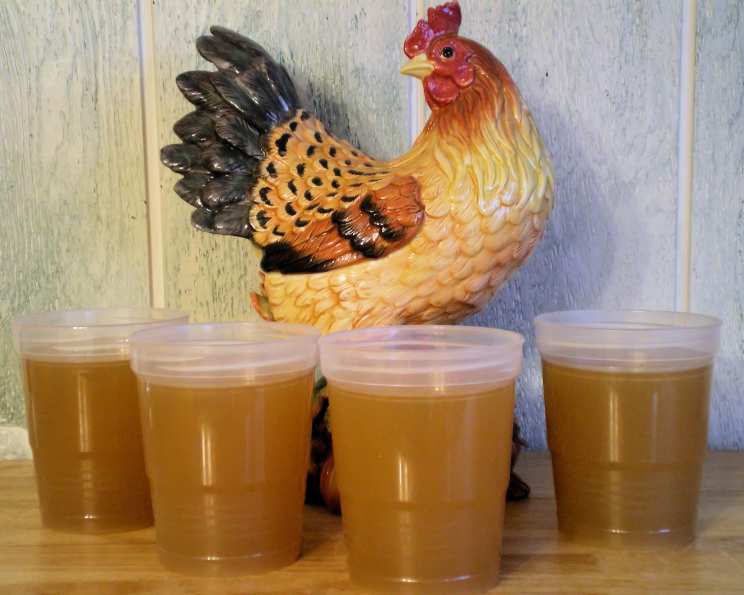
Kittencal’s Best Chicken Stock/Broth (Crock Pot Option)
The aroma of simmering chicken stock transports me back to my grandmother’s kitchen. I remember watching her, mesmerized, as she’d carefully skim the foam from the surface of a massive pot bubbling away on the stove. The rich, golden liquid she’d eventually ladle out was the foundation for countless comforting meals, from soul-warming chicken noodle soup to delicate sauces that elevated simple roasted vegetables. Now, years later, I carry on that tradition, always ensuring a supply of homemade stock is ready in my freezer, a testament to the simple magic of transforming humble ingredients into liquid gold.
Recipe Overview
- Prep Time: 20 minutes
- Cook Time (Stovetop): 5-6 hours
- Cook Time (Crock Pot): 9-12 hours
- Total Time: 28 hours (includes chilling)
- Servings: 12-15
- Yield: Varies based on pot size
- Dietary Type: Gluten-Free, Dairy-Free
Ingredients
- 4 lbs uncooked chicken pieces (bone and skin on, or use 1 large chicken carcass along with chicken pieces)
- 2 large onions, do not peel the skin off, and cut in large pieces
- 2 large unpeeled carrots, washed
- 2 large celery ribs, cut in half
- 10-12 peppercorns
- 1 head garlic, broken into cloves (can leave the skin on)
- 2 tablespoons salt (or to taste)
- Cold water, to cover all ingredients
Equipment Needed
- Extra large stock pot
- Crock pot (optional)
- Large strainer
- Cheesecloth (optional)
- Plastic freezer containers
Instructions
-
Begin by placing the chicken pieces and/or carcass (or a turkey carcass, if using) into an extra large stock pot.
-
Add the remaining ingredients to the pot: the quartered onions (skin on), unpeeled carrots, celery ribs, peppercorns, and garlic cloves (skin on).
-
Fill the pot with cold water until the ingredients are covered, leaving about a quarter of the pot empty at the top to prevent boiling over.
-
Place the stock pot on the stove over high heat. Cover and bring the mixture to a full boil.
-
Once boiling, immediately reduce the heat to a very gentle simmer. It is important to maintain a low simmer to avoid a cloudy stock.
-
As the stock simmers, use a spoon or ladle to carefully remove any fat or scum that rises to the surface of the water. Skimming regularly will result in a clearer, cleaner-tasting stock.
-
(Optional) At this stage, you can transfer the contents of the stock pot to a crock pot.
-
Continue to simmer the stock, covered with a lid. If using the stove top, simmer on low heat for approximately 4-5 hours. If using a crock pot, simmer on the LOW setting for approximately 9-12 hours. The longer it simmers, the richer and more flavorful the stock will become.
-
After the simmering time, taste the stock and adjust the salt to your preference. Remember that the flavor will concentrate slightly as it cools.
-
Turn off the heat and allow the pot (or crock pot) to sit at room temperature until completely cooled. Crucially, DO NOT REMOVE THE BONES OR VEGETABLES during this cooling period. This allows the flavors to continue to meld and deepen.
-
Once the mixture has reached room temperature, transfer the entire pot (with all the ingredients still inside) to the refrigerator and chill overnight.
-
The next day, remove the pot from the refrigerator. The stock will have a jelly-like consistency due to the collagen extracted from the bones.
-
Remove any fat that has solidified on the top of the stock. This fat can be discarded, or saved for cooking purposes (it adds great flavor to roasted vegetables).
-
Gently heat the stock again until it returns to a liquid state. This makes it easier to strain.
-
Carefully remove all the chicken pieces, bones, and vegetables from the stock.
-
Using a large strainer, strain the stock to remove any remaining solids. For an even clearer stock, you can strain it again through a cheesecloth-lined strainer.
-
Allow the strained stock to cool completely before transferring it to freezer-safe containers.
-
Pour the cooled stock into plastic freezer containers, leaving about an inch of headspace to allow for expansion during freezing. I find that 2-cup and 4-cup containers are versatile for future use.
-
Label the containers with the date and contents, and store them in the freezer until ready to use.
Expert Tips & Tricks
- Roast the bones: Roasting the chicken bones before making stock will add a deeper, richer, and more complex flavor. Simply toss the bones with a little oil and roast in a 400°F (200°C) oven for about 30-40 minutes, or until golden brown.
- Don’t skip the chilling step: Chilling the stock overnight is crucial for removing the fat, which contributes to a cleaner flavor and appearance.
- Add herbs: For an even more flavorful stock, add fresh herbs like parsley, thyme, or bay leaf during the last hour of simmering.
- Use vegetable scraps: Save vegetable scraps like onion ends, carrot peels, and celery trimmings in a freezer bag. When you make stock, add these scraps to the pot for extra flavor.
- Don’t over-boil: A rolling boil will emulsify the fat and create a cloudy stock. A gentle simmer is key.
Serving & Storage Suggestions
This homemade chicken stock is the perfect base for countless dishes. Use it to make hearty soups, flavorful sauces, delicate risottos, or to braise meats and vegetables. It elevates the simplest dishes to a new level of deliciousness.
- Storage: Cooled stock can be stored in the refrigerator for up to 3-4 days. For longer storage, freeze in airtight containers for up to 6 months.
- Reheating: Frozen stock can be defrosted in the refrigerator overnight or quickly defrosted in the microwave. Once defrosted, use immediately.
- Serving Suggestions: Use as a base for chicken noodle soup, matzo ball soup, French onion soup, or chicken and dumplings.
Nutritional Information
| Nutrient | Amount per Serving | % Daily Value |
|---|---|---|
| Calories | 222 kcal | N/A |
| Total Fat | 13.9g | 21% |
| Saturated Fat | 4g | 19% |
| Cholesterol | 69mg | 23% |
| Sodium | 1245.8mg | 51% |
| Total Carbohydrate | 5.5g | 1% |
| Dietary Fiber | 1.1g | 4% |
| Sugars | 1.9g | N/A |
| Protein | 17.9g | 35% |
Variations & Substitutions
- Turkey Stock: Replace the chicken pieces with a turkey carcass or leftover turkey bones.
- Vegetable Stock: Omit the chicken and use a variety of vegetables like mushrooms, leeks, and parsnips.
- Herb Variations: Experiment with different herbs like rosemary, sage, or oregano to customize the flavor.
- Spicy Stock: Add a chili pepper or a pinch of red pepper flakes for a subtle kick.
- Asian-Inspired Stock: Add ginger, garlic, and soy sauce for an Asian-inspired flavor profile.
FAQs (Frequently Asked Questions)
Q: Why is it important to use cold water when making stock?
A: Cold water helps to slowly extract the flavors from the bones and vegetables, resulting in a more flavorful stock.
Q: Can I use already cooked chicken bones to make stock?
A: Yes, you can use cooked chicken bones, such as those from a roasted chicken. They will add a richer, more roasted flavor to the stock.
Q: How do I prevent my stock from becoming cloudy?
A: Maintain a gentle simmer, avoid boiling, and skim off any scum that rises to the surface.
Q: Is it necessary to chill the stock overnight?
A: Chilling the stock overnight allows the fat to solidify, making it easier to remove. This results in a cleaner-tasting stock.
Q: How long can I store homemade chicken stock in the freezer?
A: Homemade chicken stock can be stored in the freezer for up to 6 months.
Final Thoughts
Making your own chicken stock might seem like a labor of love, but the incredible depth of flavor it adds to your cooking is undeniably worth the effort. Don’t be intimidated; this recipe is straightforward, and the crock pot option makes it even easier. So gather your ingredients, embrace the process, and prepare to be amazed by the superior taste of homemade stock. I encourage you to try this recipe and adapt it to your own preferences. Share your feedback, and maybe even pair it with a crusty loaf of bread for dipping!