
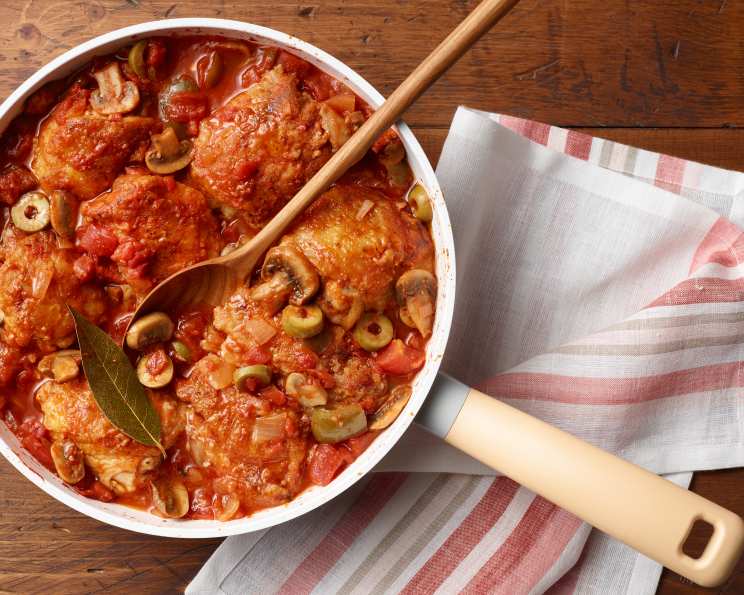
Kittencal’s Chicken Cacciatore: A Taste of Home
I remember vividly the first time I tasted Chicken Cacciatore. It wasn’t in a fancy restaurant, but at my Italian grandmother’s modest kitchen table. The aroma of simmering tomatoes, garlic, and herbs filled the air, a promise of comfort and warmth. Nonna’s version, like this one, was a rustic symphony of flavors, a dish that spoke of family, tradition, and love poured into every bite. That memory is forever etched in my mind, making every pot of Chicken Cacciatore a journey back to that cherished kitchen.
Recipe Overview
- Prep Time: 20 minutes
- Cook Time: 1 hour 35 minutes
- Total Time: 1 hour 55 minutes
- Servings: 4-6
- Yield: Variable, depending on sauce thickness
- Dietary Type: Generally Gluten-Free (check labels), Dairy-Free
Ingredients
- 8 bone-in chicken thighs (can reduce if desired)
- 1/2 cup all-purpose flour
- 1 teaspoon garlic powder
- 6 tablespoons olive oil
- 1/2 lb fresh mushrooms, sliced (or use a 10-ounce can sliced mushrooms, drained)
- 1 medium onion, chopped
- 1 medium green bell pepper, seeded and chopped
- 2 tablespoons fresh minced garlic
- 1/4 – 1/2 teaspoon crushed red pepper flakes
- 1 teaspoon dried oregano
- 1 teaspoon dried basil
- 3 tablespoons tomato paste (1/2 small can)
- 1 (28 ounce) can diced tomatoes, undrained
- 3/4 cup chicken broth
- 1/3 cup dry white wine
- 1/3 – 1/2 cup sliced green olives (you may omit if desired)
- 1 teaspoon seasoning salt (or use white salt, or to taste)
- Fresh ground black pepper to taste
- 1 large bay leaf (to taste)
Equipment Needed
- Large Skillet or Dutch Oven
- Shallow bowl
- Measuring cups and spoons
- Cutting board
- Knife
- Tongs
Instructions
- Heat the olive oil in a large skillet or Dutch oven over medium-high heat. You’ll want enough oil to generously coat the bottom of the pan, ensuring even browning of the chicken.
- In a shallow bowl, combine the all-purpose flour and garlic powder. This seasoned flour will create a light crust on the chicken, helping to seal in moisture and add flavor to the sauce.
- Dredge each piece of chicken lightly in the flour mixture, making sure to shake off any excess. Too much flour can result in a gummy texture.
- Carefully place the chicken in the hot oil, ensuring not to overcrowd the pan. Cook over medium-high heat on both sides until just lightly browned, about 4 minutes per side. The goal here isn’t to fully cook the chicken, but to develop a flavorful crust. Remove the browned chicken to a plate and set aside.
- Add the mushrooms, onions, and green bell pepper to the skillet. Cook, stirring occasionally, for about 3-4 minutes, or until just softened. Be sure to scrape up any browned bits from the bottom of the skillet; these add depth of flavor to the sauce. This process is called fond development.
- Add the fresh garlic, crushed red pepper flakes, oregano, and basil to the skillet. Cook, stirring constantly, for 2 minutes, until fragrant. Be careful not to burn the garlic, as this will make it bitter.
- Stir in the tomato paste. Cook, stirring constantly, for 2 minutes. This step is crucial for caramelizing the tomato paste, which deepens its flavor and adds richness to the sauce.
- Pour in the diced tomatoes (with their juice), chicken broth, and white wine. Add the green olives, seasoning salt, and bay leaf. Bring the mixture to a boil.
- Reduce the heat to low and simmer, covered, for about 15 minutes, stirring occasionally to blend the flavors. This allows the sauce to start melding together before adding the chicken back in.
- Return the browned chicken to the skillet. Carefully turn the chicken pieces to coat them evenly with the sauce.
- Reduce the heat to low and simmer, covered, for about 1 hour and 15 minutes, stirring occasionally and turning the chicken pieces a few times during cooking. This slow simmering process ensures that the chicken becomes incredibly tender and the sauce develops its full, complex flavor.
- About halfway through the cooking time, season the sauce with additional salt (if needed) and freshly ground black pepper to taste.
- Serve hot over cooked pasta, rice, or polenta.
Expert Tips & Tricks
- Browning is key: Don’t skip the step of browning the chicken. It adds a depth of flavor that you won’t get otherwise. Make sure your pan is hot enough before adding the chicken, and don’t overcrowd it.
- Quality tomatoes matter: Using good-quality canned diced Italian tomatoes will significantly enhance the flavor of the dish. Look for brands that use San Marzano tomatoes for the best results.
- Control the heat: Adjust the amount of crushed red pepper flakes to suit your heat preference. If you’re sensitive to spice, start with a smaller amount and add more to taste.
- Wine selection: A dry white wine like Pinot Grigio or Sauvignon Blanc works best in this recipe. Avoid sweet wines, as they will throw off the balance of flavors.
- Thicken the sauce: If you prefer a thicker sauce, you can remove the lid during the last 15-20 minutes of cooking to allow some of the liquid to evaporate.
Serving & Storage Suggestions
Chicken Cacciatore is traditionally served over cooked pasta, such as spaghetti, penne, or linguine. A sprinkle of freshly grated Parmesan cheese adds a final touch of flavor and richness. It also pairs well with creamy polenta or a side of crusty bread for soaking up the delicious sauce.
Leftovers can be stored in an airtight container in the refrigerator for up to 3-4 days. To reheat, gently warm the Chicken Cacciatore in a saucepan over low heat, or in the microwave. You may need to add a splash of chicken broth or water to prevent it from drying out.
For longer storage, Chicken Cacciatore can be frozen for up to 2-3 months. Thaw it in the refrigerator overnight before reheating. Keep in mind that the texture of the vegetables may change slightly after freezing.
Nutritional Information
(Note: Values are approximate and can vary based on specific ingredients and portion sizes.)
| Nutrient | Amount per Serving | % Daily Value |
|---|---|---|
| Calories | 650 kcal | 33% |
| Total Fat | 40g | 62% |
| Saturated Fat | 10g | 50% |
| Cholesterol | 150mg | 50% |
| Sodium | 600mg | 25% |
| Total Carbohydrate | 30g | 10% |
| Dietary Fiber | 5g | 20% |
| Sugars | 10g | N/A |
| Protein | 40g | 80% |
Variations & Substitutions
- Gluten-Free: Use gluten-free all-purpose flour for coating the chicken and ensure that your chicken broth is gluten-free. Serve over gluten-free pasta or polenta.
- Vegetarian Cacciatore: Substitute the chicken with firm tofu or a mix of hearty vegetables like eggplant, zucchini, and bell peppers.
- Spicy Cacciatore: Add more crushed red pepper flakes or a pinch of cayenne pepper for an extra kick.
- Mushroom Variety: Experiment with different types of mushrooms, such as cremini, shiitake, or oyster mushrooms, for a more complex flavor.
- Herbs: Fresh herbs like rosemary or thyme can be added along with the oregano and basil for a more aromatic dish.
FAQs (Frequently Asked Questions)
Q: Can I use chicken breasts instead of thighs?
A: While thighs are preferred for their juiciness, you can use chicken breasts. Be mindful not to overcook them, as they tend to dry out more easily. Reduce the simmering time accordingly.
Q: Can I make this in a slow cooker?
A: Yes, you can adapt this recipe for a slow cooker. Brown the chicken as instructed, then transfer all the ingredients to the slow cooker. Cook on low for 6-8 hours or on high for 3-4 hours.
Q: Can I use canned mushrooms instead of fresh?
A: Yes, you can use canned mushrooms. Drain them well before adding them to the skillet. The flavor won’t be quite as intense as fresh mushrooms, but it’s a convenient substitute.
Q: Do I have to use white wine?
A: No, you can substitute the white wine with more chicken broth if you prefer. The wine adds acidity and depth of flavor, but the dish will still be delicious without it.
Q: Can I add other vegetables?
A: Absolutely! Feel free to add other vegetables like carrots, celery, or even kale to the dish. Adjust the cooking time as needed to ensure the vegetables are cooked through.
Final Thoughts
Chicken Cacciatore is more than just a recipe; it’s an invitation to create a comforting, flavorful meal that brings people together. I urge you to try this recipe, adapt it to your own preferences, and share it with your loved ones. Don’t be afraid to experiment with different ingredients or techniques to make it your own. Pair it with a robust Italian red wine and a simple green salad for a complete and satisfying meal. Buon appetito!