
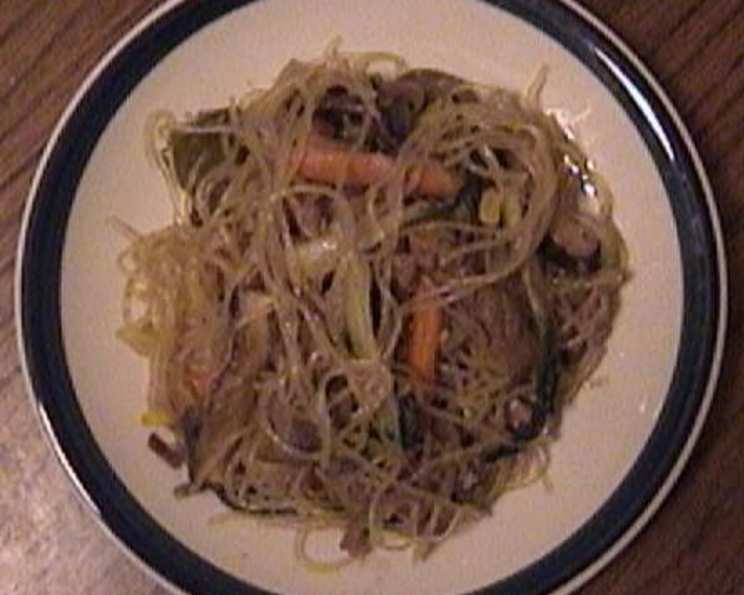
Korean Beef & Vegetables with Noodles – Chap Jae: A Symphony of Flavors
The aroma of sesame oil and soy sauce still transports me back to Mrs. Park’s bustling kitchen during my culinary apprenticeship. She was a master of Korean cuisine, and her Chap Jae was legendary. I remember watching in awe as she transformed simple ingredients into a vibrant, flavorful dish that danced on the palate – a perfect harmony of savory beef, crisp vegetables, and delicate glass noodles, all glistening with that signature umami-rich sauce. This recipe is my attempt to capture that magic and share it with you.
Recipe Overview
- Prep Time: 20 minutes
- Cook Time: 25 minutes
- Total Time: 45 minutes
- Servings: 6
- Dietary Type: Gluten-Free (with Tamari)
Ingredients
- 8 ounces ground beef
- 8 ounces cellophane noodles (also known as glass noodles or sweet potato noodles)
- 1 (10 ounce) package frozen chopped spinach
- 1 (15 ounce) can straw mushrooms, drained
- 1 1/2 teaspoons minced garlic
- 1/2 cup chopped onion
- 1/2 cup chopped green onion
- 1 cup thinly sliced carrot
- 1 cup thinly sliced zucchini
- 1 tablespoon sesame seeds
- 1 tablespoon sesame oil
- 1/4 cup soy sauce (or Tamari for gluten-free option)
- 3 tablespoons sugar
- Cooking oil (vegetable, canola, or avocado oil)
Equipment Needed
- Wok or large skillet
- Large pot or bowl
- Colander or strainer
Instructions
-
First, prepare the ground beef. Heat a small amount of cooking oil in your wok or large skillet over medium-high heat. Add the ground beef and brown it, breaking it up with a spatula. Crumble and cook the beef until it is fully cooked through. Once cooked, remove the beef from the wok and set it aside in a bowl.
-
Next, hydrate the cellophane noodles. Place the cellophane noodles in a large pot or bowl. Pour very hot water over the noodles, ensuring they are completely submerged. Let the noodles soak for 5-10 minutes, or until they become soft and pliable. Once softened, drain the noodles thoroughly and cut them into 3-4 inch lengths using kitchen shears. This makes them easier to eat.
-
While the noodles are soaking, prepare the spinach. Cook the frozen chopped spinach according to the package directions. Once cooked, drain the spinach well. Then, rinse the spinach in cold water to stop the cooking process. Drain the spinach again, this time squeezing it with your hands or a clean kitchen towel to remove as much excess water as possible. This step is crucial to prevent a watery final dish.
-
Now, stir-fry the vegetables. Return the wok to medium-high heat and add a small amount of fresh cooking oil. Add the minced garlic, zucchini, onions, green onions, and carrots to the wok. Stir-fry the vegetables until they are crisp-tender. You want them to retain some bite, not become completely soft. This usually takes about 5-7 minutes.
-
Combine all ingredients. Add the cooked ground beef, noodles, spinach, and straw mushrooms to the wok with the stir-fried vegetables.
-
Create the flavor explosion. Pour the sesame seeds, sesame oil, soy sauce (or Tamari), and sugar over the mixture in the wok. Mix everything well, ensuring that the sauce coats all the ingredients evenly.
-
Heat through and serve. Continue to cook the mixture, stirring frequently, until everything is heated through and the flavors have melded together. This should take about 3-5 minutes. Serve immediately.
Expert Tips & Tricks
- Don’t overcrowd the wok: Stir-fry the vegetables in batches if necessary to ensure they cook evenly and don’t steam.
- Adjust sweetness: Taste the sauce and adjust the amount of sugar to your preference. Some people prefer a sweeter Chap Jae, while others prefer a more savory flavor.
- Noodle texture: Be careful not to oversoak the noodles. Oversoaked noodles will become mushy.
- Beef Marinade: Marinating the ground beef in a mixture of soy sauce, garlic, and a touch of ginger before cooking can add an extra layer of flavor.
- Vegetable Variety: Feel free to experiment with other vegetables like bell peppers or mushrooms.
- Spice it up: Add a pinch of red pepper flakes for a touch of heat.
Serving & Storage Suggestions
Serve the Chap Jae hot, garnished with extra sesame seeds and sliced green onions, if desired. It can be served as a main course or as a side dish alongside other Korean delicacies like kimchi or bulgogi.
To store leftovers, allow the Chap Jae to cool completely before transferring it to an airtight container. It can be stored in the refrigerator for up to 3 days. To reheat, microwave or stir-fry the Chap Jae until heated through. Be aware that the noodles may become slightly softer upon reheating. Freezing is not recommended as it can significantly alter the texture of the noodles.
Nutritional Information
| Nutrient | Amount per Serving | % Daily Value |
|---|---|---|
| Calories | 330.8 kcal | N/A |
| Calories from Fat | 86 g | 26% |
| Total Fat | 9.6 g | 14% |
| Saturated Fat | 2.9 g | 14% |
| Cholesterol | 25.4 mg | 8% |
| Sodium | 1024.8 mg | 42% |
| Total Carbohydrate | 49.9 g | 16% |
| Dietary Fiber | 4.9 g | 19% |
| Sugars | 8.9 g | 35% |
| Protein | 13.9 g | 27% |
Note: Nutritional information is an estimate and may vary based on specific ingredients and cooking methods.
Variations & Substitutions
- Vegetarian/Vegan: Replace the ground beef with crumbled tofu or plant-based ground meat substitute.
- Gluten-Free: Use Tamari instead of soy sauce to ensure the dish is gluten-free.
- Protein: Substitute the ground beef with thinly sliced steak, chicken, or shrimp.
- Vegetables: Use different vegetables depending on what you have on hand. Bell peppers, shiitake mushrooms, or snow peas would be great additions.
- Spicy: Add a tablespoon of gochujang (Korean chili paste) to the sauce for a spicy kick.
- Sweet Potato: Some chefs add a touch of grated sweet potato directly to the mix for extra sweetness and depth.
FAQs (Frequently Asked Questions)
Q: Can I make this dish ahead of time?
A: While it’s best served fresh, you can prepare the individual components (meat, vegetables, noodles) ahead of time and combine them just before serving.
Q: Are cellophane noodles the same as rice noodles?
A: No, cellophane noodles (also known as glass noodles) are made from sweet potato starch, while rice noodles are made from rice flour. They have different textures and flavors.
Q: Can I use dried mushrooms instead of straw mushrooms?
A: Yes, but be sure to rehydrate them properly before adding them to the dish. Soak them in hot water for about 30 minutes, then drain and slice.
Q: How can I prevent the noodles from sticking together?
A: Toss the noodles with a little sesame oil after draining to prevent them from clumping.
Q: Is there a substitute for sesame oil?
A: While sesame oil is crucial for the authentic flavor, you can use a neutral oil like vegetable oil or canola oil as a last resort, but it will lack the distinct nutty flavor.
Final Thoughts
Chap Jae is more than just a recipe; it’s an experience – a culinary journey that blends textures and flavors in perfect harmony. Don’t be intimidated by the ingredient list. Once you have everything prepped, the stir-frying process is quick and rewarding. I encourage you to try this recipe and adapt it to your liking. Experiment with different vegetables, proteins, and levels of spice to create your own signature Chap Jae. And please, share your creations and feedback – I’d love to hear how it turns out! Enjoy it with a side of kimchi and a chilled Korean beer for the full experience.