
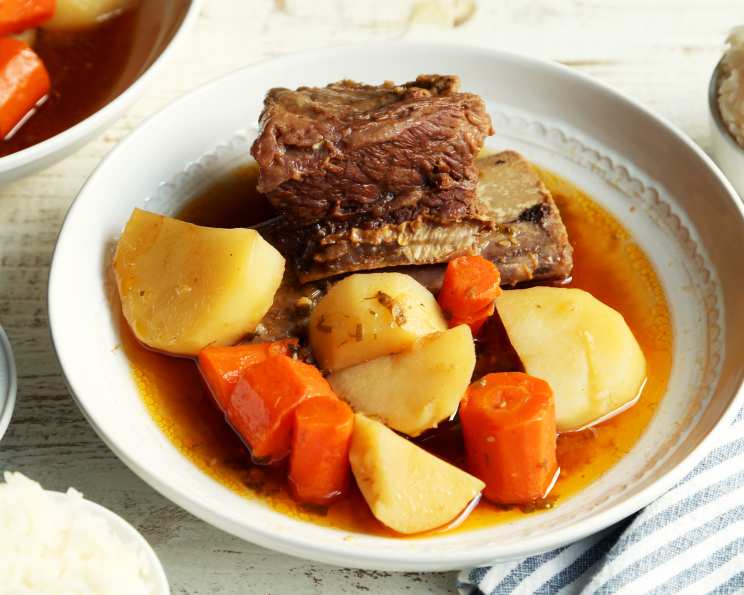
Korean Braised Short Ribs (Galbi Jim): A Taste of Home
The aroma of galbi jim instantly transports me back to my halmeoni’s (grandmother’s) kitchen. I can almost see her now, meticulously arranging the bone-in short ribs in a large, earthenware pot, the air thick with the savory-sweet fragrance of soy sauce, garlic, and a hint of spice. Her galbi jim was legendary – fall-off-the-bone tender and bursting with umami that warmed you from the inside out. It wasn’t just a meal; it was a symbol of love, tradition, and family gatherings filled with laughter and stories. This recipe is my attempt to capture that same magic, with a touch of my own personality, of course!
Recipe Overview
- Prep Time: 20 minutes
- Cook Time: 1 hour 45 minutes
- Total Time: 2 hours 5 minutes
- Servings: 4
- Yield: About 6 cups
- Dietary Type: Varies (can be made gluten-free with tamari)
Ingredients
- 3 tablespoons sugar
- 1/4 cup soy sauce (or tamari for gluten-free)
- 1/4 cup sherry wine
- 1-2 tablespoons gochujang (or Sriracha, or your favorite hot sauce to taste)
- 1 tablespoon mirin (or 1 Tbsp honey)
- 3 garlic cloves, finely chopped
- 1/2 small onion, grated
- 3 scallions, finely chopped
- 1 tablespoon sesame seeds
- 1 tablespoon sesame oil
- 1/2 Asian pear, peeled and chopped
- 1 1/2 lbs beef short ribs, bone-in (about 4)
- 2 small potatoes, peeled and cut into chunks
- 2 medium carrots, peeled and cut into chunks
Equipment Needed
- Large pot with a tight-fitting lid
- Cutting board
- Sharp knife
- Grater
- Measuring cups and spoons
Instructions
-
In a medium bowl, whisk together the sugar, soy sauce, sherry wine, gochujang (or Sriracha), mirin (or honey), chopped garlic, grated onion, chopped scallions, sesame seeds, and sesame oil. This creates the flavorful marinade that will transform the short ribs.
-
Peel and chop the Asian pear into small pieces. Add the chopped pear to the marinade. The enzymes in the pear help to tenderize the meat and add a subtle sweetness.
-
Prepare the short ribs by scoring the meat in a crosshatch pattern. This allows the marinade to penetrate deeper and helps to prevent the ribs from curling during cooking.
-
Pour the prepared marinade over the scored short ribs in a large bowl or resealable bag. Ensure that the ribs are well coated with the marinade.
-
Marinate the ribs in the refrigerator for at least one hour, or preferably overnight. While marinating is optional, it significantly enhances the flavor and tenderness of the meat. Longer marinating times will result in a more flavorful and tender dish.
-
After marinating, pour the ribs and marinade into a large pot set over high heat.
-
Check the liquid level. It should come at least halfway up to the level of the ribs. If necessary, add water to reach the desired level.
-
Bring the liquid to a full boil, then reduce the heat to low.
-
Cover the pot with a tight-fitting lid and simmer for 90 minutes to 1 hour, or until the meat is very tender and almost falling off the bone. Check the ribs periodically and add more water if the liquid reduces too much.
-
After the ribs have simmered for about an hour, peel and chop the potatoes and carrots into bite-sized chunks.
-
Add the Asian pear, potato, and carrot to the pot with the ribs. Cover and continue to simmer for approximately 30 minutes, or until the vegetables are tender.
-
Once the ribs are tender and the vegetables are cooked through, remove from heat.
-
Serve the galbi jim hot, garnished with extra scallions and sesame seeds if desired. Serve with rice to soak up the delicious braising liquid.
Expert Tips & Tricks
- Browning the ribs: For an even deeper, richer flavor, try browning the short ribs in a skillet before adding them to the pot. This will create a beautiful crust and enhance the overall flavor of the dish. Just be sure not to overcrowd the pan.
- Using a pressure cooker: To significantly reduce cooking time, you can use a pressure cooker or Instant Pot. Follow the recipe up to step 6, then pressure cook on high for 30-40 minutes, followed by a natural pressure release. Then add the vegetables and cook for another 5 minutes on high pressure, followed by a quick pressure release.
- Adjusting the spice level: If you prefer a milder flavor, reduce the amount of gochujang or Sriracha. For a spicier dish, add a pinch of red pepper flakes or a finely chopped chili pepper to the marinade.
- Thickening the sauce: If you prefer a thicker sauce, you can remove the ribs and vegetables from the pot after cooking and reduce the remaining braising liquid over medium-high heat until it reaches your desired consistency. Be careful not to burn the sauce.
- Make Ahead: The braised short ribs can be prepared a day or two in advance. The flavors actually intensify overnight. Simply store it in an airtight container in the refrigerator.
Serving & Storage Suggestions
Serve the galbi jim hot, ideally over a bed of freshly cooked rice. Garnish with extra chopped scallions and a sprinkle of sesame seeds for added visual appeal and flavor. For a complete Korean meal, serve with side dishes like kimchi, pickled vegetables, and Korean spinach salad (shigmchi namul).
Leftover galbi jim can be stored in an airtight container in the refrigerator for up to 3-4 days. To reheat, gently warm it in a pot on the stovetop over low heat, or microwave in short intervals until heated through. If the sauce has thickened too much during storage, add a splash of water or broth to thin it out. While freezing is possible, it may affect the texture of the vegetables.
Nutritional Information
Note: Nutritional information is an estimate and may vary based on specific ingredients and portion sizes.
| Nutrient | Amount per Serving | % Daily Value |
|---|---|---|
| Calories | 450 kcal | 23% |
| Total Fat | 25g | 38% |
| Saturated Fat | 10g | 50% |
| Cholesterol | 80mg | 27% |
| Sodium | 700mg | 30% |
| Total Carbohydrate | 30g | 10% |
| Dietary Fiber | 3g | 12% |
| Sugars | 15g | — |
| Protein | 25g | 50% |
Variations & Substitutions
- Gluten-Free: Use tamari instead of soy sauce to make this dish gluten-free.
- Vegetarian Option: While traditionally made with short ribs, you can adapt this recipe for a vegetarian version using firm tofu or seitan. Be sure to adjust the cooking time accordingly.
- Vegetable Variations: Feel free to add other vegetables to the dish, such as mushrooms, daikon radish, or sweet potatoes.
- Spicy Galbi Jim: For extra heat, add a tablespoon of gochugaru (Korean chili flakes) to the marinade.
- Apple Variation: If you don’t have any Asian pear, you may substitute with a regular apple.
FAQs (Frequently Asked Questions)
Q: Can I use boneless short ribs for this recipe?
A: While bone-in short ribs are traditionally used for more flavor, boneless short ribs will also work. Reduce the cooking time slightly, as boneless ribs tend to cook faster.
Q: How do I know when the short ribs are done?
A: The short ribs are done when they are very tender and easily pull apart with a fork. The meat should almost be falling off the bone.
Q: Can I make this recipe in a slow cooker?
A: Yes, you can adapt this recipe for a slow cooker. Combine all ingredients in the slow cooker and cook on low for 6-8 hours, or on high for 3-4 hours, or until the meat is tender.
Q: What’s the best way to reheat leftover galbi jim?
A: Gently reheat leftover galbi jim in a pot on the stovetop over low heat, or microwave in short intervals until heated through. Add a splash of water or broth if the sauce has thickened too much.
Q: Where can I find gochujang?
A: Gochujang is a Korean chili paste that can be found in most Asian grocery stores or online. You can substitute it with Sriracha or another hot sauce if needed, but the flavor will be slightly different.
Final Thoughts
I hope this galbi jim recipe brings as much joy to your table as it does to mine. The rich, savory flavors and melt-in-your-mouth tenderness are sure to impress your family and friends. Don’t be afraid to experiment with the spice level and add your own personal touch to make it your own. So gather your ingredients, put on some music, and get ready to create a culinary masterpiece! Enjoy, and please share your feedback – I’d love to hear how it turns out! Consider serving it with a crisp, dry Riesling to cut through the richness of the dish.