
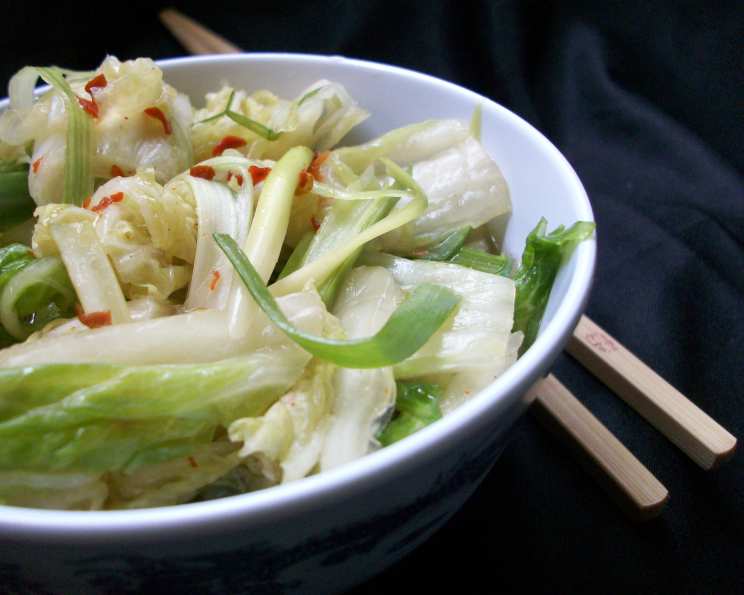
Homemade Korean Cabbage Kimchi: A Taste of Tradition
The first time I tasted truly exceptional kimchi, I was a wide-eyed culinary student visiting a tiny, bustling restaurant in Seoul. The spicy, fermented aroma filled the air, promising something extraordinary. The ajumma (owner) placed a small ceramic dish of it before me, a vibrant mosaic of bright red cabbage glistening with savory sauce. That first bite—the explosion of tangy, spicy, and umami flavors—completely transformed my understanding of fermentation. It was more than just preserved cabbage; it was a culinary symphony, a taste of Korean history and heart. From that moment on, I was determined to master the art of kimchi making.
Recipe Overview
- Prep Time: 20 minutes
- Fermenting Time: 3-6 days
- Total Time: 3-6 days, 20 minutes
- Yields: 2-quart jar
- Dietary Type: Vegan
Ingredients
- 3 tablespoons pickling salt
- 1 teaspoon pickling salt
- 6 cups water
- 2 lbs Chinese cabbage (Napa), cut into 2-inch squares
- 6 scallions, cut into 2-inch lengths, then slivered
- 1 1/2 tablespoons minced fresh ginger
- 2 tablespoons Korean red pepper powder (gochugaru), or 1 1/2 tablespoons crushed red pepper flakes (adjust to your spice preference)
- 1 teaspoon sugar
Equipment Needed
- Large bowl, crock, or nonreactive pot
- Plate to weigh down the cabbage
- 2-quart jar
- Freezer bag
Instructions
-
Begin by preparing the brine. In a large bowl, crock, or nonreactive pot, dissolve 3 tablespoons of pickling salt in 6 cups of water. Stir until the salt is completely dissolved. This brine is crucial for drawing out excess moisture from the cabbage and creating the perfect environment for fermentation.
-
Prepare the Napa cabbage by cutting it into approximately 2-inch squares. This size allows for even brining and makes the finished kimchi easier to eat.
-
Submerge the cut cabbage in the saltwater brine. Ensure all the cabbage is fully immersed.
-
To keep the cabbage submerged, place a plate directly on top of the cabbage inside the bowl. Weigh the plate down with a heavy object, such as a jar filled with water or a couple of cans. This ensures the cabbage is properly brined.
-
Let the cabbage stand in the brine for 12 hours. During this time, the salt will draw out moisture and soften the cabbage, preparing it for fermentation.
-
After the brining period, drain the cabbage thoroughly, but reserve the brine. You will need some of it later to ensure the kimchi is submerged during fermentation.
-
In a separate bowl, combine the drained cabbage with the remaining ingredients: 6 slivered scallions, 1 1/2 tablespoons of minced fresh ginger, 2 tablespoons of Korean red pepper powder (gochugaru) or 1 1/2 tablespoons of crushed red pepper flakes (adjust to your spice preference), 1 teaspoon of sugar, and 1 teaspoon of pickling salt.
-
Thoroughly mix all the ingredients, ensuring that the red pepper powder is evenly distributed. Use your hands to massage the mixture into the cabbage, helping to release its flavors.
-
Pack the seasoned cabbage mixture tightly into a clean 2-quart jar. Press down firmly to eliminate any air pockets.
-
Pour enough of the reserved brine over the cabbage to completely cover it. Leaving the cabbage exposed to air can lead to mold growth.
-
To create an airtight seal, push a clean freezer bag into the mouth of the jar, making sure it touches the surface of the brine. Pour the remaining brine into the bag and seal it tightly. This creates a barrier that prevents air from reaching the kimchi, while still allowing the release of gasses produced during fermentation.
-
Let the kimchi ferment in a cool place, at a temperature no higher than 68°F (20°C), for 3 to 6 days. The fermentation time will depend on the ambient temperature and your personal preference for sourness. Taste the kimchi daily after the third day.
-
Once the kimchi has reached your desired level of sourness, remove the brine bag, cap the jar tightly, and transfer it to the refrigerator.
-
Store the kimchi in the refrigerator, where it will keep for months. The flavor will continue to develop and become more complex over time.
Expert Tips & Tricks
- Adjusting the Spice Level: The amount of red pepper is crucial and can be adjusted to your spice preference. Start with a smaller amount and add more until you reach your desired heat level. Remember, the spice will intensify during fermentation.
- Using Fish Sauce or Shrimp Paste (Optional): For a more authentic flavor, consider adding a tablespoon of fish sauce or a teaspoon of fermented shrimp paste to the mixture. These ingredients add a savory umami depth. (Note: This would make the recipe no longer vegan.)
- Controlling Fermentation: The fermentation process is heavily influenced by temperature. Warmer temperatures will speed up fermentation, while cooler temperatures will slow it down. Keep an eye on your kimchi and taste it daily to monitor its progress.
- Burping the Jar: During fermentation, gasses are produced. If you’re using a tightly sealed jar, consider “burping” it daily by briefly opening the lid to release the pressure.
- Wear gloves: When mixing the kimchi with the spice paste, wearing gloves will prevent your hands from staining and burning.
Serving & Storage Suggestions
Serve your homemade kimchi chilled as a side dish with Korean barbecue, rice dishes, stews, or even as a topping for tacos and sandwiches. It’s also a fantastic addition to fried rice or kimchi jjigae (kimchi stew).
Store the finished kimchi in the refrigerator in an airtight container. It will continue to ferment slowly in the fridge, but the cold temperature will significantly slow down the process. Kimchi can last for several months in the refrigerator, with the flavor becoming more complex and sour over time.
Nutritional Information
Please note that these values are estimates and can vary based on specific ingredients and measurements used.
| Nutrient | Amount per Serving | % Daily Value |
|---|---|---|
| Calories | 25 kcal | 1% |
| Total Fat | 0.1 g | 0% |
| Saturated Fat | 0 g | 0% |
| Cholesterol | 0 mg | 0% |
| Sodium | 1500 mg | 63% |
| Total Carbohydrate | 4 g | 1% |
| Dietary Fiber | 1 g | 4% |
| Sugars | 2 g | 4% |
| Protein | 1 g | 2% |
Variations & Substitutions
- Radish Kimchi (Kkakdugi): Substitute diced Korean radish for the Napa cabbage for a different texture and flavor.
- Cucumber Kimchi (Oi Sobagi): Use small cucumbers stuffed with a kimchi paste for a refreshing summer variation.
- Vegan Fish Sauce Substitute: Use a combination of seaweed flakes, soy sauce, and mushroom broth to mimic the umami flavor of fish sauce for a completely vegan kimchi.
- Spice Level Adjustment: For a milder kimchi, reduce the amount of red pepper powder or flakes. For a spicier kimchi, add a small amount of gochujang (Korean chili paste).
FAQs (Frequently Asked Questions)
Q: How do I know when my kimchi is ready?
A: The best way to determine readiness is by tasting it. After 3 days of fermentation, taste the kimchi daily. It should have a noticeably sour and tangy flavor, with a slight fizz.
Q: Can I use regular salt instead of pickling salt?
A: Pickling salt is preferred because it doesn’t contain iodine or anti-caking agents, which can affect the fermentation process and flavor of the kimchi. If you must use regular salt, make sure it’s non-iodized.
Q: What if my kimchi develops mold?
A: If you see mold growing on the surface of the kimchi, discard it. Mold indicates that the fermentation process has gone wrong, and the kimchi is no longer safe to eat. Using the bag filled with brine helps to prevent this.
Q: How long will kimchi last in the refrigerator?
A: Kimchi can last for several months in the refrigerator. The flavor will continue to develop and become more sour over time.
Q: Is the fizz in kimchi normal?
A: Yes, the fizz is a natural byproduct of the fermentation process. It’s caused by the release of carbon dioxide as the bacteria convert sugars into lactic acid.
Final Thoughts
Making your own Korean cabbage kimchi is a rewarding culinary adventure. It’s a chance to connect with a centuries-old tradition and create a flavorful, probiotic-rich staple that will enhance your meals. Don’t be intimidated by the fermentation process—it’s easier than you think! Embrace the unique flavors and textures of kimchi, and don’t be afraid to experiment with variations to suit your taste. I encourage you to try this recipe, share your creations, and enjoy the delightful and complex flavors of homemade kimchi!