
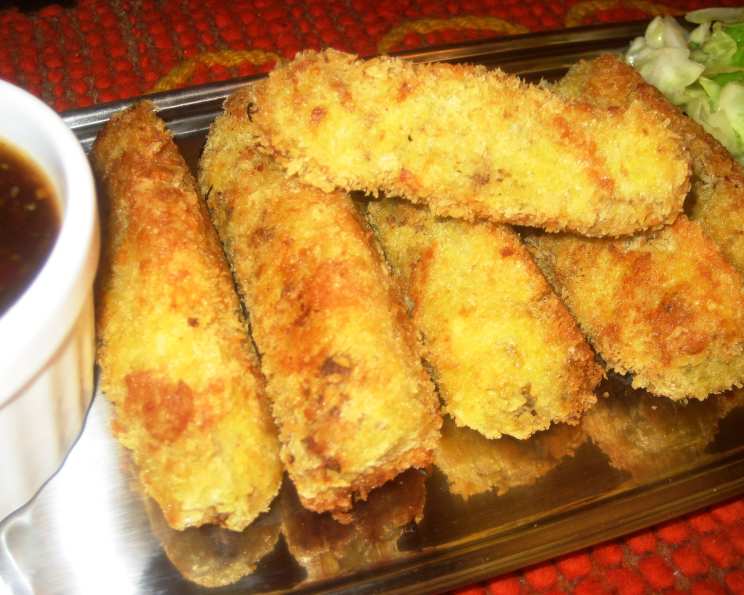
Korokke with Tonkatsu Sauce: Crispy Japanese Comfort Food
The first time I tasted korokke, I was wandering through a bustling Tokyo street market, the air thick with the scent of grilling yakitori and sweet soy sauce. A vendor, his face etched with decades of experience, handed me a piping-hot, golden-brown croquette. The crispy exterior gave way to a creamy, savory potato and beef filling, and the tangy-sweet Tonkatsu sauce drizzled on top was pure umami magic. It was an explosion of textures and flavors – a simple street food that spoke volumes about Japanese culinary ingenuity. From that moment, I was hooked, determined to recreate this delectable treat in my own kitchen.
Recipe Overview
- Prep Time: 30 minutes
- Cook Time: 20 minutes
- Total Time: 50 minutes
- Servings: 4
- Yield: 16 korokke
- Dietary Type: Not Gluten-Free, Contains Dairy
Ingredients
- 1 lb potato, peeled and diced
- ¼ lb ground beef
- ½ medium onion, finely chopped
- 1-2 teaspoon curry powder (to taste)
- Salt
- Pepper
- Freshly grated nutmeg, to taste
- 2 eggs, beaten
- ½ cup flour
- 2 cups panko breadcrumbs or 2 cups unseasoned breadcrumbs
- 3 cups peanut oil (for deep-frying)
- 2 cups shredded cabbage
For the Tonkatsu Sauce:
- 1 teaspoon dry yellow mustard powder
- 4 teaspoons sake (rice wine) or 4 teaspoons dry sherry
- ¼ cup ketchup
- 4 teaspoons rice wine vinegar
- 4 teaspoons soy sauce
- 4 teaspoons Worcestershire sauce
- 4 teaspoons sugar
- ¼ teaspoon ground allspice
- ⅛ teaspoon ground cloves
- ½ teaspoon minced garlic
Equipment Needed
- Large pot
- Heavy skillet
- Potato masher
- Mixing bowls
- Wok or deep fryer
- Slotted spoon or spider
- Paper towels
- Waxed paper or cookie sheet
Instructions
-
Begin by preparing the potatoes. Place the diced potatoes in a large pot, cover with salted water, and bring to a boil. Boil until the potatoes are tender and easily pierced with a fork, approximately 10-15 minutes.
-
While the potatoes are cooking, prepare the meat mixture. In a heavy skillet over medium heat, crumble the ground beef and cook, stirring frequently, until it begins to brown. Drain off any excess grease.
-
Add the finely chopped onion to the skillet with the browned beef and sauté until the onion is softened and translucent, about 5 minutes.
-
Season the meat and onion mixture. Add salt, pepper, freshly grated nutmeg, and curry powder to the skillet. The amount of curry powder can be adjusted to your personal preference. Cook for a few minutes, stirring constantly, to allow the flavors to meld. Remove the skillet from the heat and set aside.
-
Once the potatoes are cooked, drain them thoroughly and return them to the pot. Use a potato masher to mash the potatoes until they are smooth and free of lumps.
-
Combine the meat mixture and mashed potatoes. Add the meat and onion mixture to the mashed potatoes and mix thoroughly until well combined.
-
In a small bowl, beat the eggs until light and frothy. Take one-quarter of the beaten egg and add it to the potato and meat mixture. This will help bind the mixture together. Blend thoroughly until the egg is evenly distributed.
-
Divide the potato and meat mixture into 16 equal portions. This will ensure that each korokke is the same size and cooks evenly.
-
Shape each portion into a small sausage shape, about 2-3 inches long. Ensure the shapes are uniform for even cooking.
-
Prepare a breading station with three shallow dishes. In the first dish, place the flour. In the second dish, place the remaining beaten egg. In the third dish, place the panko breadcrumbs (or unseasoned breadcrumbs).
-
Dredge each shaped portion in flour, ensuring that it is evenly coated. Shake off any excess flour.
-
Dip each floured portion into the beaten egg, making sure it is completely coated. Allow any excess egg to drip off.
-
Coat each egg-dipped croquette with panko breadcrumbs, pressing gently to help the breadcrumbs adhere. Make sure the entire surface is covered for maximum crispness.
-
Arrange the breaded korokke on a waxed paper-covered tray or cookie sheet.
-
Refrigerate the breaded korokke for at least 2 hours. This chilling period is crucial as it helps the korokke hold their shape during deep-frying and ensures a crispier result. You can even refrigerate them overnight.
-
Heat peanut oil in a wok or deep fryer to 350°F (175°C). The oil should be deep enough to fully submerge the korokke. If you don’t have a thermometer, heat the oil until it shimmers and a small piece of bread dropped into the oil browns in about 30 seconds.
-
Deep-fry the korokke a couple at a time, being careful not to overcrowd the wok or deep fryer. Fry for 2-3 minutes per side, or until they are lightly browned and crispy.
-
Use a slotted spoon or spider to remove the fried korokke from the oil and place them on a plate lined with paper towels to drain off any excess oil. Keep the fried korokke warm in a low oven (around 200°F or 95°C) while you fry the remaining korokke.
-
Repeat with the remaining korokke until all are fried.
-
Serve the korokke immediately over a bed of shredded cabbage and drizzle with Tonkatsu sauce.
To make the Tonkatsu Sauce:
-
In a medium-sized glass or plastic bowl, combine the dry yellow mustard powder and sake (or dry sherry).
-
Whisk until smooth, ensuring there are no lumps of mustard powder remaining.
-
Add the remaining ingredients (ketchup, rice wine vinegar, soy sauce, Worcestershire sauce, sugar, ground allspice, minced garlic, and ground cloves) to the bowl.
-
Mix well until all ingredients are thoroughly blended and the sauce is smooth and uniform.
Expert Tips & Tricks
- Double-breading: For an extra crispy crust, try double-breading the korokke. After the initial breading, dip them back into the egg and then into the breadcrumbs again.
- Freezing: Uncooked, breaded korokke can be frozen for up to 2 months. Freeze them on a baking sheet until solid, then transfer them to a freezer bag. Fry them directly from frozen, adding a few minutes to the cooking time.
- Breadcrumb Alternatives: If you don’t have panko breadcrumbs, you can use regular breadcrumbs or even crushed cornflakes for a different texture.
- Flavor Boost: Add a tablespoon of Dijon mustard to the potato and meat mixture for a more complex flavor.
- Keep Warm: Place the cooked Korokke on a wire rack in a preheated oven at 200°F (95°C) to keep them warm and crispy while you fry the rest.
Serving & Storage Suggestions
Serve korokke immediately while they are still hot and crispy. They are traditionally served over a bed of shredded cabbage, which provides a refreshing contrast to the richness of the croquettes. Drizzle generously with Tonkatsu sauce. You can also serve them with a side of Japanese mustard (karashi) for an extra kick.
Leftover korokke can be stored in an airtight container in the refrigerator for up to 3 days. Reheat them in a preheated oven at 350°F (175°C) for about 10-15 minutes, or until heated through and crispy. You can also reheat them in an air fryer for a similar result. Microwaving is not recommended as it will make them soggy.
Nutritional Information
| Nutrient | Amount per Serving | % Daily Value |
|---|---|---|
| Calories | 480 kcal | 24% |
| Total Fat | 28g | 43% |
| Saturated Fat | 8g | 40% |
| Cholesterol | 105mg | 35% |
| Sodium | 450mg | 19% |
| Carbohydrates | 45g | 15% |
| Fiber | 4g | 16% |
| Sugar | 8g | – |
| Protein | 15g | 30% |
Note: Nutritional information is an estimate and may vary based on specific ingredients and portion sizes.
Variations & Substitutions
- Vegetarian Korokke: Substitute the ground beef with finely diced mushrooms, lentils, or crumbled tofu.
- Sweet Potato Korokke: Use sweet potatoes instead of regular potatoes for a sweeter flavor and vibrant color.
- Curry Korokke: Increase the amount of curry powder or use a Japanese curry roux for a more intense curry flavor.
- Gluten-Free Korokke: Use gluten-free flour and panko breadcrumbs.
- Seafood Korokke: Replace the ground beef with cooked shrimp or crab meat.
- Different Dipping Sauces: Experiment with different dipping sauces such as Japanese mayonnaise (kewpie), sriracha mayo, or a sweet chili sauce.
FAQs (Frequently Asked Questions)
Q: Why do I need to refrigerate the korokke before frying?
A: Refrigerating the breaded korokke helps the breadcrumbs adhere better and prevents them from falling off during frying. It also firms up the potato mixture, making it easier to handle and ensuring a crispier crust.
Q: Can I bake the korokke instead of deep-frying them?
A: Yes, you can bake them for a healthier option. Preheat your oven to 400°F (200°C), place the breaded korokke on a baking sheet lined with parchment paper, and spray them with cooking oil. Bake for about 20-25 minutes, or until golden brown, flipping halfway through.
Q: Can I use a different type of oil for deep-frying?
A: Yes, you can use other high-heat oils such as canola oil, vegetable oil, or grapeseed oil. Peanut oil is preferred for its neutral flavor and high smoke point.
Q: How do I prevent the korokke from falling apart during frying?
A: Make sure the potato mixture is not too wet and that you chill the korokke thoroughly before frying. Also, avoid overcrowding the wok or deep fryer, as this can lower the oil temperature and cause the korokke to fall apart.
Q: Can I make the Tonkatsu sauce ahead of time?
A: Absolutely! The Tonkatsu sauce can be made ahead of time and stored in an airtight container in the refrigerator for up to a week. The flavors will actually meld and improve over time.
Final Thoughts
Korokke, with its crispy exterior and comforting, savory filling, is more than just a Japanese snack; it’s a culinary hug. Don’t be intimidated by the steps – each one contributes to the final symphony of flavors and textures. I encourage you to gather your ingredients, put on some music, and embark on this delightful cooking adventure. Once you master the basics, feel free to experiment with different fillings and sauces to create your own signature korokke. And when you finally take that first bite, I hope it brings you as much joy as it brought me on that bustling Tokyo street. Please, share your creations and feedback! What variations did you try? What sauce did you find perfect? Bon appétit, or as they say in Japan, Itadakimasu!