
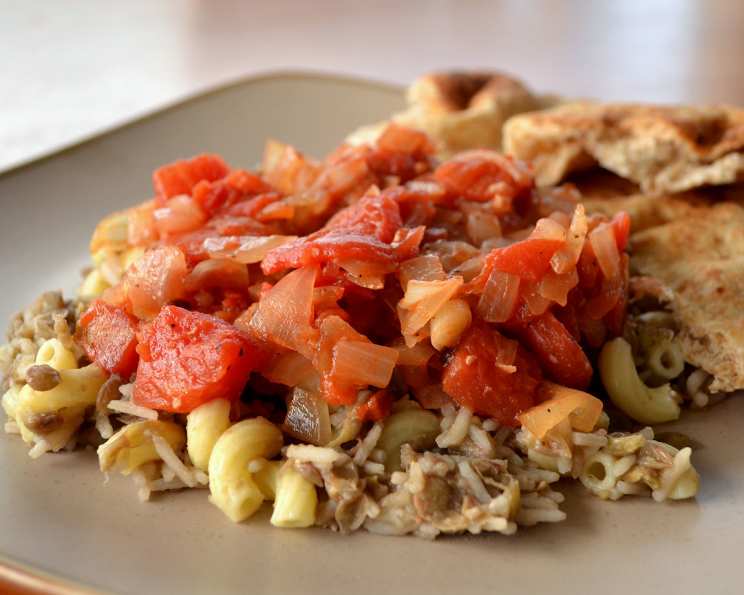
Koshari: An Egyptian Street Food Delight
The first time I tasted Koshari was from a bustling street vendor in Cairo, the air thick with the scent of spices and car exhaust. I watched, mesmerized, as he layered the seemingly disparate ingredients—lentils, rice, pasta, crispy onions—into a paper bowl, drenching it all in a vibrant tomato sauce. That first bite was an explosion of textures and flavors: the comforting familiarity of rice and pasta, the earthy lentils, the tangy sauce, and the satisfying crunch of fried onions. It was cheap, filling, and utterly delicious—a culinary snapshot of Egypt itself.
Recipe Overview
- Prep Time: 20 minutes
- Cook Time: 35 minutes
- Total Time: 55 minutes
- Servings: 6
- Dietary Type: Vegan
Ingredients
- 1 cup brown lentils
- 1 cup basmati rice
- 1 cup uncooked pasta (small shells or elbow macaroni is best)
- 2 large onions, diced
- 4 cloves garlic, minced
- 2 tablespoons oil
- 1 (400 g) can chopped tomatoes
- 1⁄4 teaspoon crushed red chili pepper flakes (or more to taste)
- Salt and black pepper
Equipment Needed
- Large pot
- Medium pot
- Frying pan
- Food processor (optional)
Instructions
- Begin by cooking the brown lentils. Place them in a large pot and cover them with just over a litre of salted water. Bring the water to a boil over high heat.
- Once boiling, reduce the heat to low, cover the pot, and simmer for 15-30 minutes. The exact cooking time will depend on the type of lentils you’re using, so check for tenderness. They should be soft but not mushy.
- When the lentils are nearly tender, add the basmati rice to the pot with the lentils. Continue to simmer, covered, until the rice is cooked through and the water is absorbed. Add more water if necessary to prevent sticking. Keep a close eye and stir occasionally.
- While the lentils and rice are cooking, prepare the pasta. In a separate medium pot, cook the macaroni according to package directions until al dente.
- Once the pasta is cooked, rinse it under cold water to stop the cooking process and prevent sticking. Then, strain it well.
- Now, let’s make the tomato sauce. Heat the oil in a large frying pan over medium heat. Add the diced onions and minced garlic.
- Fry the onions and garlic until they are golden brown and softened, stirring frequently to prevent burning. This step is crucial for developing the sauce’s rich flavor.
- Add the can of chopped tomatoes to the pan along with the crushed red chili pepper flakes, salt, and pepper to taste.
- Let the tomato sauce bubble gently for 10-20 minutes, or until it has thickened and resembles a rich, concentrated sauce. Stir occasionally to prevent sticking.
- For a smoother sauce, you can use a food processor to blitz the sauce until smooth. Alternatively, you can leave it as is for a more rustic texture. This is purely a matter of personal preference.
- In the pot with the lentils and rice, mix in the cooked macaroni. Gently combine all the ingredients.
- To serve, place a generous portion of the lentil, rice, and macaroni mixture on each plate. Top with a spoonful or two of the tomato sauce.
- If desired, sprinkle with more hot chili powder or add extra salt and pepper to taste.
Expert Tips & Tricks
- Lentil Choice: Brown lentils hold their shape best for this dish. Red lentils tend to become mushy.
- Onion Perfection: Don’t rush the onions! Cooking them until deeply golden is key to a rich, sweet flavor.
- Sauce Thickness: Adjust the simmering time for the tomato sauce to achieve your desired consistency. For a thicker sauce, simmer longer.
- Make-Ahead Magic: The lentil and rice mixture, pasta, and tomato sauce can all be prepared ahead of time. Store them separately in the refrigerator and combine just before serving.
- Spice It Up: For a bolder flavor, add a pinch of cumin or coriander to the tomato sauce.
Serving & Storage Suggestions
Koshari is best served immediately while the components are still warm. Arrange the lentil mixture on a plate, generously top with the tomato sauce, and garnish with a sprinkle of extra chili flakes (optional).
Leftovers can be stored in an airtight container in the refrigerator for up to 3 days. Reheat in the microwave or on the stovetop. You may need to add a splash of water to the lentil mixture to prevent it from drying out.
Koshari is not ideal for freezing as the texture of the pasta and rice may change upon thawing.
Nutritional Information
| Nutrient | Amount per Serving | % Daily Value |
|---|---|---|
| Calories | 360 kcal | 18% |
| Total Fat | 6.2g | 9% |
| Saturated Fat | 0.9g | 4% |
| Cholesterol | 0mg | 0% |
| Sodium | 12.5mg | 0% |
| Total Carbohydrate | 62.6g | 20% |
| Dietary Fiber | 13.1g | 52% |
| Sugars | 5.2g | 20% |
| Protein | 14g | 28% |
Variations & Substitutions
- Gluten-Free Koshari: Use gluten-free pasta and ensure the chopped tomatoes are gluten-free.
- Spicy Koshari: Increase the amount of crushed red pepper flakes or add a pinch of cayenne pepper to the tomato sauce. A dash of hot sauce can also be added at the end.
- Lemon-Garlic Dressing: Some variations include a lemon-garlic dressing drizzled over the koshari for extra zing. Simply whisk together lemon juice, minced garlic, and a pinch of salt.
- Black Beans: For a different flavor profile, try using black beans instead of lentils.
FAQs (Frequently Asked Questions)
Q: Can I use different types of pasta?
A: Yes, you can use any small pasta shape you like, such as ditalini or elbow macaroni. Just be sure to cook it al dente.
Q: How can I make this dish more flavorful?
A: Sautéing the onions and garlic until deeply golden is crucial for developing a rich flavor. You can also add spices like cumin or coriander to the tomato sauce.
Q: Can I make this ahead of time?
A: Yes, you can prepare the lentils and rice mixture, pasta, and tomato sauce ahead of time and store them separately in the refrigerator. Combine them just before serving.
Q: Is Koshari typically served hot or cold?
A: Koshari is traditionally served warm, with the lentil mixture and tomato sauce heated through.
Q: What can I add to make it even more authentic?
A: Try adding a sprinkle of duqqa (an Egyptian spice blend made with nuts, seeds, and spices) for an extra layer of flavor and texture.
Final Thoughts
Koshari is more than just a meal; it’s a vibrant tapestry of flavors and textures that captures the essence of Egyptian street food. It’s a celebration of simple ingredients transformed into something truly special. Don’t be intimidated by the list of components – each one plays a vital role in creating the symphony of tastes that makes Koshari so unforgettable. So, gather your ingredients, embrace the process, and prepare to be transported to the bustling streets of Cairo with every bite. I encourage you to try this recipe, and please share your own variations and experiences with me. Sahtein! (Bon appétit!)