
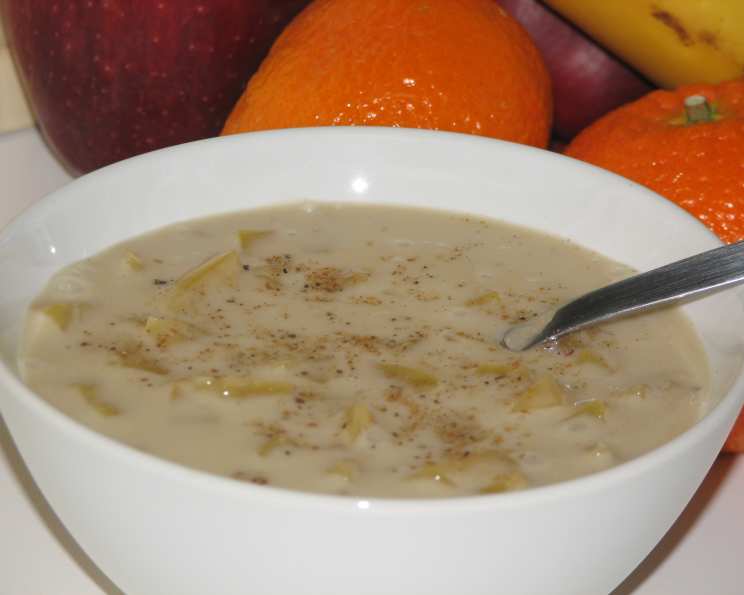
Kujje Payasa: A Taste of Home
The scent of jackfruit always transports me back to my grandmother’s kitchen in Karnataka. During the monsoon season, the air would be thick with humidity and the sweet, almost cloying aroma of the ripening fruit. She’d expertly wield her large knife, hacking into the spiky green exterior to reveal the golden, fragrant bulbs within. While most of the fruit would be enjoyed fresh, a portion was always reserved for making Kujje Payasa, a dessert that tasted of sunshine and childhood. The simmering coconut milk, the melting jaggery, and that unmistakable jackfruit aroma – it was, and still is, pure magic.
Recipe Overview
- Prep Time: 10 minutes
- Cook Time: 40 minutes
- Total Time: 50 minutes
- Servings: 4
- Dietary Type: Vegetarian
Ingredients
- 1 (8 ounce) can jackfruit
- 1 (14 ounce) can light coconut milk
- 8 tablespoons dark brown sugar
- ¼ teaspoon fresh ground cardamom
Equipment Needed
- Medium saucepan
- Measuring cups and spoons
- Grater or spice grinder (for cardamom)
- Knife and cutting board
Instructions
- Begin by heating the coconut milk in a medium saucepan over medium heat. Be careful not to let it boil; a gentle simmer is ideal.
- Next, prepare the jackfruit. If you’re using canned jackfruit, which is what I typically use since fresh jackfruit can be difficult to find, drain it well. The cans usually indicate the drained weight. Rinse the jackfruit under cold water to remove any excess syrup.
- Once rinsed, dice the jackfruit into small, bite-sized pieces. This will ensure that it cooks evenly and incorporates well into the payasa.
- Add the diced jackfruit and dark brown sugar to the saucepan with the simmering coconut milk.
- Reduce the heat to medium-low, and cook, stirring frequently, until the jackfruit is tender. This typically takes about 40 minutes. The key is to stir often to prevent the payasa from sticking to the bottom of the pan and burning.
- As the payasa cooks, the coconut milk will thicken slightly and the jackfruit will soften. After about 35 minutes, begin testing the jackfruit for tenderness with a fork. It should be easily pierced.
- In the last five minutes of cooking, stir in the fresh ground cardamom. The cardamom adds a warm, fragrant note that complements the sweetness of the jackfruit and brown sugar beautifully.
- Once the jackfruit is tender and the flavors have melded, remove the saucepan from the heat.
- Serve the Kujje Payasa either warm or chilled, according to your preference.
Note: If you are fortunate enough to have access to fresh, ripe jackfruit, by all means, use it! Look for a firm, not floppy, fruit. And don’t discard the seeds; they can be roasted and eaten like chestnuts.
Expert Tips & Tricks
- For a richer flavor, consider using full-fat coconut milk instead of light coconut milk. This will result in a creamier and more decadent payasa.
- Adjust the sweetness to your liking. Taste the payasa as it cooks and add more brown sugar if needed. Keep in mind that the jackfruit itself contributes to the overall sweetness of the dish.
- To prevent sticking, use a heavy-bottomed saucepan. This will help distribute the heat evenly and reduce the risk of burning.
- If you don’t have fresh cardamom, you can use ground cardamom, but the flavor won’t be quite as vibrant. Start with 1/8 teaspoon of ground cardamom and adjust to taste.
- For a smoother texture, you can blend a portion of the cooked jackfruit with the coconut milk before adding the cardamom. This will create a creamier consistency.
- Toasting the cardamom seeds before grinding them will enhance their flavor. Simply dry-toast the seeds in a pan over medium heat for a few minutes until fragrant.
Serving & Storage Suggestions
Kujje Payasa can be served warm or chilled, depending on your preference. It makes a delightful dessert on its own, or you can serve it with a dollop of whipped cream (dairy or non-dairy) or a sprinkle of chopped nuts.
To store leftover payasa, let it cool completely and then transfer it to an airtight container. It can be stored in the refrigerator for up to 3 days.
To reheat, simply warm the payasa gently in a saucepan over low heat, stirring occasionally. You can also microwave it in short bursts, stirring in between, until heated through. Do not freeze.
Nutritional Information
| Nutrient | Amount per Serving | % Daily Value |
|---|---|---|
| Calories | 210 kcal | 11% |
| Total Fat | 8g | 10% |
| Saturated Fat | 7g | 35% |
| Cholesterol | 0mg | 0% |
| Sodium | 15mg | 1% |
| Total Carbohydrate | 35g | 13% |
| Dietary Fiber | 2g | 7% |
| Sugars | 25g | – |
| Protein | 1g | 2% |
Note: Nutritional information is an estimate and may vary based on specific ingredients and portion sizes.
Variations & Substitutions
- Jaggery: For a more authentic flavor, substitute dark brown sugar with grated jaggery. Jaggery is an unrefined sugar traditionally used in Indian cuisine.
- Nuts: Add chopped cashews, almonds, or pistachios for extra texture and flavor. Toast the nuts lightly before adding them to the payasa.
- Spices: Experiment with other spices such as nutmeg, ginger, or cloves. A small pinch of each can add depth and complexity to the flavor profile.
- Vegan: This recipe is naturally vegan. Make sure to use plant-based whipped cream if serving with a topping.
- Different fruits: While this is a jackfruit payasa, you can adapt this recipe for other fruits such as mango, banana, or pineapple. Adjust the cooking time accordingly.
FAQs (Frequently Asked Questions)
Q: Can I use frozen jackfruit?
A: Yes, you can use frozen jackfruit. Thaw it completely before using it in the recipe. Make sure to drain any excess water after thawing.
Q: Is it necessary to rinse the canned jackfruit?
A: Yes, it’s recommended to rinse the canned jackfruit to remove any excess syrup. This will help prevent the payasa from becoming overly sweet.
Q: How do I know when the jackfruit is cooked through?
A: The jackfruit is cooked through when it is tender and easily pierced with a fork. It should also have softened and absorbed some of the coconut milk.
Q: Can I make this recipe ahead of time?
A: Yes, you can make Kujje Payasa ahead of time. In fact, the flavors often meld together even better after it has been refrigerated for a few hours.
Q: What if my payasa is too thick?
A: If your payasa becomes too thick, simply add a little more coconut milk to thin it out to your desired consistency.
Final Thoughts
Kujje Payasa is more than just a dessert; it’s a taste of tradition and a reminder of home. I encourage you to try this recipe and experience the unique flavors of jackfruit combined with the creamy richness of coconut milk and the warmth of cardamom. Whether you serve it warm on a chilly evening or chilled on a hot summer day, I hope this dish brings you as much joy as it brings me. Don’t hesitate to experiment with variations to make it your own, and please share your feedback! Perhaps pair it with a cup of strong, South Indian filter coffee for the perfect ending to a meal. Happy cooking!