
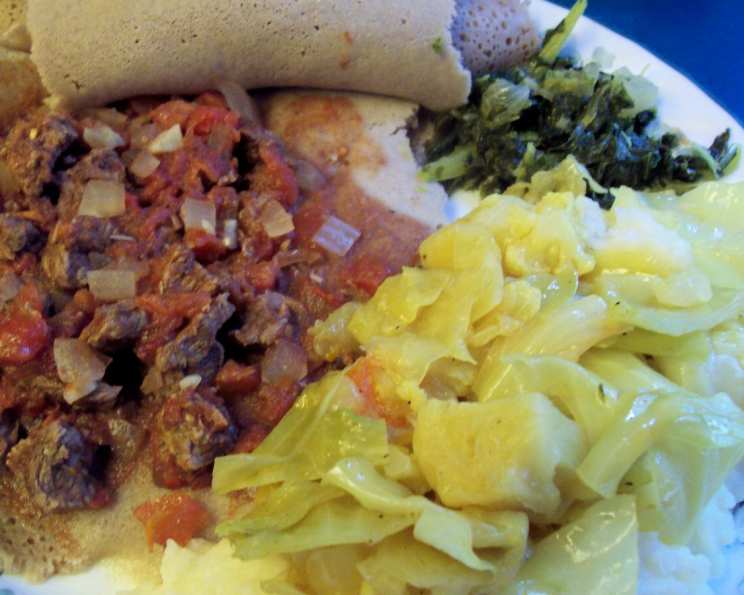
Kulu’wa: An Eritrean Culinary Gem
The aroma still lingers in my memory: a blend of savory beef, earthy spices, and the slightly tangy scent of injera bread. It takes me back to a small Eritrean restaurant I stumbled upon years ago in a quiet corner of my city. I remember being immediately drawn in by the warmth radiating from the place and the promise of flavors I had never encountered before. This Kulu’wa recipe is reminiscent of that very first encounter, a taste of East Africa that I’m excited to recreate and share with you.
Recipe Overview
- Prep Time: 10 minutes
- Cook Time: 15 minutes
- Total Time: 25 minutes
- Servings: 4
- Dietary Type: Dairy-Free
Ingredients
- 3 tablespoons butter (or Tegelese Tesmi (Eritrean Herb Butter))
- 1 medium onion, chopped
- 1 (14 ounce) can tomatoes, chopped
- 2 garlic cloves, chopped
- ½ teaspoon berbere (or ½ teaspoon hot sauce)
- 1 lb top round steak, cut into small cubes
- ½ teaspoon salt
- ½ teaspoon pepper
Equipment Needed
- Large skillet or frying pan
- Cutting board
- Knife
- Measuring spoons
Instructions
- Heat the butter in a large skillet over medium heat. Once melted, add the chopped onion and sauté for about 5 minutes, or until softened and translucent. Be careful not to burn the butter; adjust heat as needed.
- Add the chopped tomatoes, chopped garlic, and berbere (or hot sauce) to the skillet. Stir well to combine the ingredients.
- Add the top round steak cubes to the skillet. Sauté for about 10 minutes, stirring frequently, until the meat is cooked through and browned on all sides. Ensure the meat is cooked to your desired level of doneness.
- Season with salt and pepper. Stir to ensure the meat is evenly coated with the seasonings. Taste and adjust seasoning if needed.
- Serve hot, traditionally on injera or with sourdough bread.
Expert Tips & Tricks
- For a richer flavor, use Tegelese Tesmi, an Eritrean herb butter, instead of regular butter. The infused herbs will elevate the dish.
- If you don’t have berbere, you can create a similar spice blend by combining paprika, cayenne pepper, ginger, garlic powder, coriander, cumin, and allspice. Adjust the cayenne pepper to your desired level of spiciness.
- To ensure the meat is tender, don’t overcrowd the pan. Work in batches if necessary.
- For a deeper flavor, marinate the cubed steak in a mixture of berbere, garlic, and a little oil for at least 30 minutes before cooking.
- Don’t overcook the meat, as it can become tough. Aim for medium-rare to medium for the best texture.
- If the sauce becomes too thick, add a splash of water or beef broth to thin it out.
- For a vegetarian option, substitute the beef with portobello mushrooms or other hearty vegetables.
Serving & Storage Suggestions
Kulu’wa is traditionally served on injera, a spongy flatbread that acts as both the plate and utensil. Tear off pieces of injera and use them to scoop up the flavorful meat mixture. Sourdough bread is also a delicious and readily available alternative. Garnish with fresh parsley or cilantro for a pop of color.
Leftovers can be stored in an airtight container in the refrigerator for up to 3 days. To reheat, gently warm in a skillet over medium heat, adding a splash of water or broth if needed to prevent drying. While freezing is possible, it may slightly alter the texture of the meat. If freezing, store in an airtight container for up to 2 months. Thaw overnight in the refrigerator before reheating.
Nutritional Information
| Nutrient | Amount per Serving | % Daily Value |
|---|---|---|
| Calories | 320 kcal | 16% |
| Total Fat | 20g | 31% |
| Saturated Fat | 10g | 50% |
| Cholesterol | 100mg | 33% |
| Sodium | 450mg | 19% |
| Total Carbohydrate | 8g | 3% |
| Dietary Fiber | 2g | 8% |
| Sugars | 4g | – |
| Protein | 28g | 56% |
Nutritional information is an estimate and may vary based on specific ingredients and preparation methods.
Variations & Substitutions
- Spicier Kulu’wa: Increase the amount of berbere or hot sauce to your liking. Add a pinch of cayenne pepper for an extra kick.
- Vegetable Kulu’wa: Replace the beef with 1 pound of diced portobello mushrooms, eggplant, or a mix of your favorite vegetables.
- Tomato-Free Kulu’wa: Use an equal amount of beef broth or vegetable broth in place of the chopped tomatoes. Add a tablespoon of tomato paste for a concentrated tomato flavor.
- Herbaceous Kulu’wa: Incorporate fresh herbs like rosemary, thyme, or oregano for a more complex flavor profile. Add them towards the end of the cooking process to preserve their freshness.
- Kulu’wa with Potatoes: Add diced potatoes along with the meat and cook until tender. This will make the dish heartier and more filling.
FAQs (Frequently Asked Questions)
Q: What is Berbere?
A: Berbere is a complex spice blend that is essential to Eritrean and Ethiopian cuisine. It typically includes chili peppers, garlic, ginger, basil, korarima, rue, ajwain or radhuni, and nigella. It is responsible for the distinctive flavor and heat of many dishes.
Q: Can I use a different cut of beef?
A: While top round steak is recommended for its tenderness and relatively low fat content, you can substitute it with other lean cuts of beef, such as sirloin or flank steak. Just be sure to cut the meat into small cubes for even cooking.
Q: How do I know when the meat is cooked through?
A: The internal temperature of the beef should reach 145°F (63°C) for medium-rare, 160°F (71°C) for medium, or 170°F (77°C) for well-done. Use a meat thermometer to ensure accuracy.
Q: Can I make this dish ahead of time?
A: Yes, you can prepare the Kulu’wa up to 24 hours in advance. Store it in an airtight container in the refrigerator and reheat before serving.
Q: What kind of bread is injera?
A: Injera is a spongy, slightly sour flatbread made from teff flour, a grain native to Eritrea and Ethiopia. It’s a staple food in these countries and is used as both a plate and utensil to eat stews and other dishes.
Final Thoughts
Kulu’wa is more than just a recipe; it’s a culinary journey to the heart of Eritrea. This dish embodies the warmth, vibrancy, and unique flavors of East African cuisine. I hope this recipe inspires you to experiment with new spices and ingredients, and to share the deliciousness of Kulu’wa with your friends and family. Serve with a side of roasted vegetables, a refreshing salad, or a glass of Tej (Ethiopian honey wine) for a truly authentic experience. Don’t hesitate to share your feedback and any personal tweaks you’ve made – I’d love to hear about your culinary adventures!