
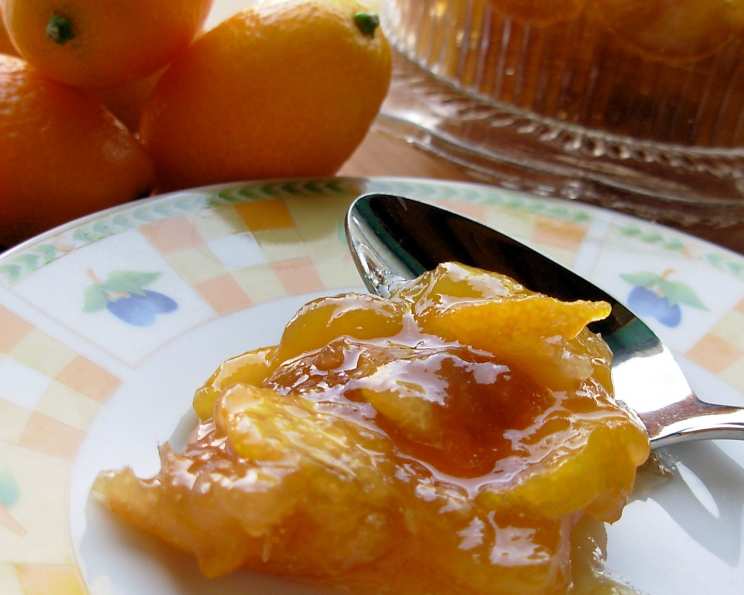
The Sunshine in a Jar: Homemade Kumquat Marmalade
I can still recall the vibrant aroma that filled my grandmother’s kitchen each winter. It wasn’t the scent of pine or holiday spices, but something far more exotic: the sweet, tangy, and slightly bitter perfume of kumquat marmalade simmering on the stove. She had a small kumquat tree in her sunroom, and every year, its tiny, jewel-like fruits would be transformed into this golden preserve. That marmalade, spread on warm toast on a cold morning, was pure comfort and sunshine bottled in a jar, a taste of her love that I’ll always cherish.
Recipe Overview
- Prep Time: 20 minutes (plus 2 days standing)
- Cook Time: 45 minutes
- Total Time: 2 days, 1 hour, 5 minutes
- Yield: Approximately 2 1/4 cups
- Servings: 36 (approx. 1 tbsp per serving)
- Dietary Type: Vegan (depending on brandy choice)
Ingredients
- 2 cups kumquats, sliced (some seeds removed)
- 4 cups water
- 1 1/2 cups sugar
- 1-2 tablespoons brandy (optional)
Equipment Needed
- Large saucepan
- Large bowl
- Cooking pot
- Sterilized jars with lids
- Slotted spoon or strainer (optional)
Instructions
- Begin by carefully slicing the kumquats into thin rounds. As you slice, remove any visible seeds you can easily access. Don’t worry about getting every single one; a few seeds won’t ruin the marmalade, and removing them all is nearly impossible.
- Place the sliced kumquats into a large saucepan that is suitable for stovetop cooking.
- Pour 4 cups of water over the kumquats. Ensure the fruit is fully submerged.
- Allow the mixture to stand, covered, at room temperature overnight (approximately 12-24 hours). This crucial step allows the kumquats to soften and release their pectin, which is essential for the marmalade to set properly.
- The next day, place the saucepan containing the kumquat and water mixture onto the stovetop. Bring the mixture to a boil over medium-high heat.
- Once boiling, reduce the heat to medium-low and simmer gently until the kumquats are tender. This may take approximately 20-30 minutes, depending on the size and ripeness of the fruit. Check for tenderness by piercing a slice of kumquat with a fork; it should be easily pierced with minimal resistance.
- Carefully pour the cooked kumquat mixture (both the fruit and the water) into a large bowl.
- Let this mixture stand again, covered, at room temperature overnight (another 12-24 hours). This second resting period further softens the peel and allows the flavors to meld.
- On the third day, transfer the kumquat and water mixture from the bowl to a clean cooking pot.
- Add 1 1/2 cups of sugar to the pot.
- If desired, stir in 1-2 tablespoons of brandy. The brandy adds a subtle warmth and depth of flavor to the marmalade, complementing the citrus notes beautifully. It’s entirely optional, so feel free to omit it if you prefer.
- Bring the mixture to a boil over medium-high heat, stirring frequently to prevent the sugar from sticking to the bottom of the pot and burning.
- Once boiling, reduce the heat to medium and continue to boil, stirring occasionally, until the marmalade reaches the jelling point. This can take approximately 45 minutes, but the exact time will vary depending on the heat and the pectin content of the kumquats.
- Test for jelling by placing a small spoonful of the hot marmalade onto a chilled plate. Return the plate to the freezer for 1-2 minutes. Push the marmalade with your finger. If it wrinkles and forms a skin, it is ready. Alternatively, use a candy thermometer: the setting point for marmalade is 220°F (104°C).
- Once the marmalade has reached the jelling point, remove it from the heat. Let it stand for a few minutes to allow any foam to dissipate.
- Carefully pour the hot marmalade into warm, sterilized jars, leaving about 1/4 inch of headspace at the top.
- Seal the jars immediately with sterilized lids.
- If desired, process the filled jars in a boiling water bath for 10 minutes to ensure a longer shelf life. Follow proper canning procedures for safe preservation. Alternatively, store the sealed jars in the refrigerator; once opened they must be stored in the refrigerator.
Expert Tips & Tricks
- Pectin Boost: If you’re concerned about the marmalade setting properly, add a tablespoon of lemon juice along with the sugar. Lemon juice is high in pectin and will help the marmalade thicken.
- Bitterness Control: Kumquat peels can be somewhat bitter. To reduce bitterness, blanch the sliced kumquats in boiling water for 2-3 minutes before the initial overnight soaking. Drain well before proceeding with the recipe.
- Seed Situation: If you really dislike the idea of any seeds in your marmalade, consider using a fine-mesh sieve to strain the mixture after the first boiling, before adding the sugar. This will remove the seeds and some of the pulp, resulting in a clearer marmalade.
- Jar Sterilization: To sterilize your jars, wash them thoroughly with hot, soapy water. Rinse well and then place them in a boiling water bath for 10 minutes. Remove the jars carefully and let them air dry on a clean towel, or place them in a low oven (200°F/93°C) to keep them warm until ready to fill.
Serving & Storage Suggestions
Kumquat marmalade is incredibly versatile. It’s delicious spread on toast, scones, or muffins. Use it as a glaze for roasted meats or poultry, or as a filling for thumbprint cookies. A spoonful stirred into yogurt or oatmeal adds a bright, citrusy note.
Unopened jars of properly processed marmalade can be stored in a cool, dark place for up to a year. Once opened, store the marmalade in the refrigerator, where it will keep for several weeks.
Nutritional Information
(Estimated per 1 tablespoon serving)
| Nutrient | Amount per Serving | % Daily Value* |
|---|---|---|
| Calories | 32 kcal | 2% |
| Total Fat | 0 g | 0% |
| Saturated Fat | 0 g | 0% |
| Cholesterol | 0 mg | 0% |
| Sodium | 0.9 mg | 0% |
| Total Carbohydrate | 8.3 g | 3% |
| Dietary Fiber | 0 g | 0% |
| Sugars | 8.3 g | 33% |
| Protein | 0 g | 0% |
*Percent Daily Values are based on a 2,000 calorie diet.
Variations & Substitutions
- Spiced Kumquat Marmalade: Add a cinnamon stick, a star anise, or a few cloves to the pot while the marmalade is simmering for a warm, spiced flavor.
- Kumquat and Ginger Marmalade: Finely chop or grate about an inch of fresh ginger and add it to the pot along with the sugar.
- Citrus Medley Marmalade: Combine kumquats with other citrus fruits like oranges, lemons, or grapefruits for a more complex flavor profile. Adjust the sugar accordingly, as some citrus fruits are sweeter than others.
FAQs (Frequently Asked Questions)
Q: Why does the recipe require two days of standing time?
A: The standing time is crucial for softening the kumquat peels and extracting the pectin, which helps the marmalade set properly. It also allows the flavors to meld and mellow.
Q: Can I use frozen kumquats?
A: Yes, you can use frozen kumquats. Thaw them completely before slicing and proceeding with the recipe.
Q: My marmalade didn’t set. What did I do wrong?
A: Several factors can prevent marmalade from setting, including insufficient pectin, not enough sugar, or not cooking it long enough. Try boiling it for a few more minutes and retesting for jelling.
Q: Can I use a different type of alcohol instead of brandy?
A: Yes, you can substitute other types of alcohol, such as rum, Grand Marnier, or Cointreau. Choose one that complements the citrus flavor of the kumquats.
Q: How long does homemade marmalade last?
A: Properly processed and sealed jars of marmalade can last for up to a year in a cool, dark place. Once opened, store it in the refrigerator for several weeks.
Final Thoughts
I hope this recipe inspires you to try making your own kumquat marmalade. It’s a rewarding process that yields a truly special and delicious result. Whether you have access to your own kumquat tree or find them at your local market, this marmalade is a wonderful way to capture the bright, tangy flavors of winter. Share it with friends and family, or simply enjoy it yourself as a little taste of sunshine on a dreary day. Don’t be afraid to experiment with variations and find your perfect marmalade recipe. And most importantly, have fun!