
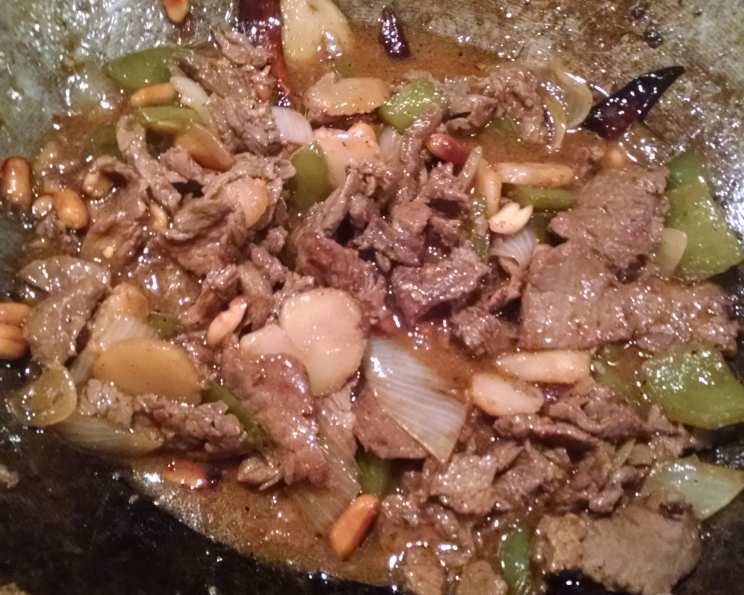
Kung Pao Beef: A Fiery Wok-Seared Delight
I can still vividly remember the first time I tasted Kung Pao Beef. It was in a small, bustling restaurant in Chicago’s Chinatown, the air thick with the aroma of chili oil and sizzling spices. The dish arrived, a vibrant medley of colors and textures, and that first bite was an explosion of flavor – the tender beef, the crunchy peanuts, the fiery kick of the chili peppers, all perfectly balanced with a hint of sweetness. It was love at first bite, and I knew I had to learn how to recreate this culinary masterpiece myself.
Recipe Overview
- Prep Time: 20 minutes
- Cook Time: 20 minutes
- Total Time: 40 minutes
- Servings: 4
- Yield: About 4 servings
- Dietary Type: Potentially Gluten-Free (check soy sauce and chili paste ingredients)
Ingredients
- 1 1⁄2 lbs flank steak, partially frozen
- 1⁄2 teaspoon salt
- 1 egg white
- 1 tablespoon cornstarch
- 4 tablespoons peanut oil, divided
- 1⁄2 cup dry roasted peanuts
- 10 whole dried red chili peppers
- 1 red bell pepper, cut into pieces
- 2 green onions, cut in 1/2 inch pieces
- 4 cloves garlic, minced
- 1⁄2 tablespoon grated ginger
- 1⁄2 cup water chestnuts, diced (may use jicama)
- Steamed rice, for serving
For the Sauce:
- 1 teaspoon chili paste with garlic
- 2 tablespoons soy sauce
- 1 tablespoon rice wine or 1 tablespoon dry sherry
- 1 teaspoon rice vinegar
- 1 teaspoon sugar
- 1⁄4 cup chicken broth
- 1 teaspoon cornstarch
- 2 teaspoons dark sesame oil
Equipment Needed
- Wok or large skillet
- Cutting board
- Sharp knife
- Small bowl
- Mixing bowl
Instructions
- Prepare the Beef: While the flank steak is partially frozen, slice it diagonally, across the grain, into thin slices. This is crucial for achieving tender beef that readily absorbs the flavors of the sauce.
- Marinate the Beef: In a mixing bowl, combine the sliced beef with salt, egg white, and cornstarch. Toss everything together until the beef is well coated. The egg white will help tenderize the meat, while the cornstarch acts as a binder, creating a silky texture when cooked. Let this mixture sit while you prepare the other ingredients.
- Prepare the Sauce: In a small bowl, whisk together all the ingredients for the sauce: chili paste with garlic, soy sauce, rice wine (or dry sherry), rice vinegar, sugar, chicken broth, cornstarch, and dark sesame oil. Set this sauce aside; having it ready to go is essential for a quick and efficient cooking process.
- Stir-Fry the Beef: Heat 2 tablespoons of peanut oil in your wok (or large skillet) over high heat. Once the oil is shimmering, add the marinated beef. Stir-fry until the beef is just browned, but not fully cooked. It should still be slightly pink inside. Remove the beef from the wok and set it aside.
- Toast the Peanuts and Chilies: Add the remaining 2 tablespoons of peanut oil to the wok. Add the dry roasted peanuts and dried red chili peppers. Cook, stirring constantly, until the chili peppers turn dark, releasing their aromatic heat. Be careful not to burn them, as this will impart a bitter taste.
- Remove and Reserve: Remove the peanuts and chili peppers from the wok and place them with the cooked beef.
- Sauté the Vegetables: If needed, add a little more peanut oil to the wok. Add the red bell pepper and cook for one minute, stirring constantly. Then, reduce the heat to medium. Add the green onions, ginger, and garlic to the bell peppers and cook for a few moments, until fragrant, but do not let the garlic burn.
- Combine and Finish: Add the cooked beef and peanut/pepper mixture back into the wok with the vegetables. Stir to blend everything together.
- Add Water Chestnuts and Sauce: Add the diced water chestnuts (or chopped jicama if you prefer) to the wok. Pour in the prepared sauce mixture and cook, stirring constantly, until the sauce thickens and everything is heated through. This should only take a minute or two.
- Serve: Serve the Kung Pao Beef immediately over steamed rice.
Expert Tips & Tricks
- Freezing the Beef: Partially freezing the flank steak makes it much easier to slice thinly and evenly. About 20-30 minutes in the freezer before slicing is ideal.
- Wok Hei: The characteristic smoky flavor of wok cooking, “wok hei,” is achieved by using high heat and tossing the ingredients frequently. Make sure your wok is screaming hot before adding the oil.
- Adjusting the Heat: The number of chili peppers can be adjusted to control the spiciness of the dish. For a milder flavor, use fewer chilies or remove the seeds before cooking.
- Ingredient Prep is Key: Having all of your ingredients prepped and ready to go before you start cooking is crucial for success with stir-fries. This allows you to focus on the cooking process and prevents ingredients from burning.
- Toasting Peanuts: For enhanced flavor toast the peanuts lightly in a dry pan before using. Watch carefully to avoid burning.
Serving & Storage Suggestions
Serve Kung Pao Beef hot and fresh over a bed of steamed rice. Garnish with extra chopped green onions and a sprinkle of sesame seeds for added visual appeal.
Leftovers can be stored in an airtight container in the refrigerator for up to 3 days. To reheat, simply microwave or stir-fry in a pan until heated through. You may need to add a splash of water or chicken broth to loosen the sauce if it has thickened too much. Kung Pao Beef is not ideally suited for freezing as the vegetables can become mushy upon thawing.
Nutritional Information
| Nutrient | Amount per Serving | % Daily Value |
|---|---|---|
| Calories | 653 kcal | N/A |
| Calories from Fat | 398 kcal | N/A |
| Total Fat | 44.3 g | 68% |
| Saturated Fat | 10.5 g | 52% |
| Cholesterol | 69.7 mg | 23% |
| Sodium | 1183.3 mg | 49% |
| Total Carbohydrate | 18.8 g | 6% |
| Dietary Fiber | 4.1 g | 16% |
| Sugars | 5.2 g | N/A |
| Protein | 46 g | 92% |
Note: Nutritional information is an estimate and may vary based on specific ingredients and portion sizes.
Variations & Substitutions
- Kung Pao Chicken or Shrimp: As mentioned before, this recipe can easily be adapted for chicken or shrimp. Simply substitute the beef with bite-sized pieces of chicken breast or peeled and deveined shrimp. Reduce the cooking time accordingly, as chicken and shrimp cook more quickly than beef.
- Vegetarian Kung Pao: For a vegetarian option, substitute the beef with firm tofu, pressed to remove excess water and cut into cubes. You can also add other vegetables, such as broccoli florets, snap peas, or mushrooms.
- Gluten-Free: Ensure that the soy sauce and chili paste you use are gluten-free. Tamari is a good gluten-free alternative to soy sauce.
- Cashews: Substitute cashews for the peanuts if you have a peanut allergy or simply prefer the taste of cashews.
- Spice Level: Adjust the amount of chili paste or dried red peppers to achieve your desired level of spiciness. You can also use chili oil for an extra kick.
FAQs (Frequently Asked Questions)
Q: Can I make this ahead of time?
A: While Kung Pao Beef is best served fresh, you can prepare the sauce and marinate the beef ahead of time. Store them separately in the refrigerator and combine them just before cooking.
Q: How do I prevent the beef from becoming tough?
A: Slicing the beef thinly against the grain and marinating it with egg white and cornstarch will help to tenderize the meat. Avoid overcooking the beef, as this will also make it tough.
Q: Can I use different types of vinegar?
A: Rice vinegar is traditionally used in Kung Pao Beef, but you can substitute it with apple cider vinegar or white vinegar if needed. The flavor will be slightly different, so adjust the amount to your liking.
Q: What’s the best way to reheat leftovers?
A: Reheat leftovers in a skillet or wok over medium heat, adding a splash of water or chicken broth if the sauce has thickened too much. Microwaving is also an option, but the texture may not be as good.
Q: Where can I find dried red chili peppers?
A: Dried red chili peppers are available in most Asian grocery stores and some supermarkets. You can also order them online.
Final Thoughts
Kung Pao Beef is more than just a dish; it’s an experience – a symphony of flavors and textures that dance on your palate. I encourage you to try this recipe and bring the vibrant tastes of Sichuan cuisine into your own kitchen. Don’t be afraid to experiment with the ingredients and adjust the spice level to your preference. And if you do make it, please share your creations and feedback! Perhaps pair it with a crisp, dry Riesling to complement the spice and sweetness of the dish.