
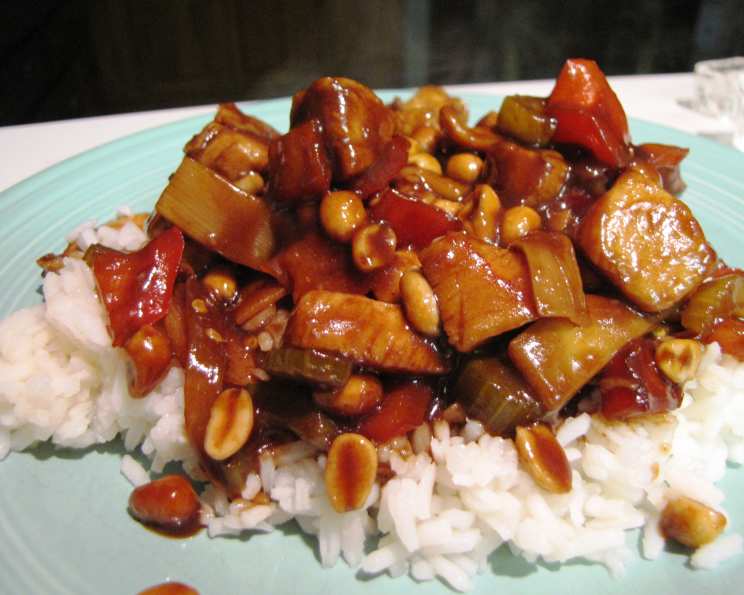
Kung Pao Chicken: A Culinary Journey with Martin Yan’s Classic
The sizzle of the wok, the fragrant aroma of chilies dancing in hot oil, the satisfying crunch of peanuts – these sensory memories instantly transport me back to my early days in culinary school. Kung Pao Chicken was one of the first dishes I truly mastered, a testament to its perfect balance of sweet, savory, and spicy flavors. It wasn’t just a recipe; it was an introduction to the magic of Chinese cuisine and the art of stir-frying, a technique I’ve cherished ever since. This version, inspired by the legendary Martin Yan, is a timeless classic that continues to impress.
Recipe Overview
- Prep Time: 15 minutes
- Cook Time: 5 minutes
- Total Time: 20 minutes
- Servings: 4
- Dietary Type: Gluten-Free (if using gluten-free soy sauce)
Ingredients
For the Marinade:
- 2 tablespoons oyster sauce
- 1 teaspoon cornstarch
- ¾ lb boneless, skinless chicken, cut into 1-inch pieces
For the Sauce:
- ¼ cup Chinese black vinegar (or ¼ cup balsamic vinegar)
- ¼ cup chicken broth
- 3 tablespoons Chinese rice wine (or 3 tablespoons dry sherry)
- 2 tablespoons hoisin sauce
- 1 tablespoon soy sauce
- 2 teaspoons sesame oil
- 2 teaspoons chili-garlic sauce
- 2 teaspoons sugar
To Finish:
- 2 ½ tablespoons cooking oil
- 8 small dried red chilies
- 4 teaspoons minced garlic
- 2 stalks celery, diced
- ½ red bell pepper, cut into 1-inch squares
- 1 (8 ounce) can sliced bamboo shoots, drained
- 2 teaspoons cornstarch dissolved in 1 tablespoon water
- ⅓ cup roasted peanuts
Equipment Needed
- Wok or large skillet
- Mixing bowls
Instructions
-
In a medium bowl, combine the oyster sauce and cornstarch for the marinade. Add the chicken pieces and stir well to ensure each piece is thoroughly coated. Allow the chicken to marinate for at least 10 minutes. This tenderizes the chicken and infuses it with flavor.
-
While the chicken marinates, prepare the sauce. In a separate bowl, whisk together the Chinese black vinegar (or balsamic vinegar), chicken broth, Chinese rice wine (or dry sherry), hoisin sauce, soy sauce, sesame oil, chili-garlic sauce, and sugar. Set aside for later. A well-balanced sauce is key to the success of Kung Pao Chicken.
-
Place a wok (or large skillet) over high heat. Once the wok is very hot, add 2 tablespoons of the cooking oil, swirling to coat the sides of the wok. This helps prevent the ingredients from sticking and ensures even cooking.
-
Add the dried red chilies to the hot oil and cook, stirring constantly, for about 10 seconds, or until fragrant. Be careful not to burn the chilies, as this will make them bitter. Their aroma should fill the kitchen with a spicy warmth.
-
Add the marinated chicken to the wok and stir-fry for approximately 2 minutes, or until the chicken is lightly browned and cooked through. The high heat ensures that the chicken sears quickly, locking in its juices.
-
Remove the chicken and chilies from the wok and set aside. This prevents overcooking of the chicken while you prepare the vegetables.
-
Add the remaining ½ tablespoon of cooking oil to the wok, again swirling to coat the sides. Add the minced garlic and cook, stirring, for about 10 seconds, or until fragrant. Watch closely to prevent the garlic from burning.
-
Add the diced celery, red bell pepper, and bamboo shoots to the wok. Stir-fry for approximately 1 ½ minutes, or until the vegetables are tender-crisp. The goal is to retain a slight crunch in the vegetables.
-
Return the chicken and chilies to the wok. Stir-fry for 1 minute to combine all the ingredients and allow the flavors to meld.
-
Pour the prepared sauce over the chicken and vegetables in the wok. Bring the sauce to a boil, stirring constantly.
-
Add the cornstarch solution (cornstarch dissolved in water) to the wok. Cook, stirring continuously, until the sauce boils and thickens, creating a glossy coating over the chicken and vegetables. The cornstarch slurry ensures a luscious, clingy sauce.
-
Finally, add the roasted peanuts to the wok and stir to coat evenly with the sauce. Serve immediately. The peanuts add a delightful crunch and nutty flavor to the dish.
Expert Tips & Tricks
- Marinating Time: While the recipe calls for a 10-minute marinade, a longer marinating time (up to an hour) will result in even more tender and flavorful chicken.
- Chili Control: Adjust the number of dried red chilies to control the spiciness of the dish. For a milder flavor, remove the seeds from the chilies before cooking.
- Wok Hei: “Wok hei” refers to the slightly smoky, charred flavor that is characteristic of authentic stir-fries. To achieve this at home, ensure your wok is screaming hot before adding the oil and ingredients. Work in batches if necessary to avoid overcrowding the wok.
- Sauce Consistency: If the sauce becomes too thick, add a tablespoon or two of chicken broth to thin it out.
Serving & Storage Suggestions
Kung Pao Chicken is best served immediately over steamed rice or noodles. Garnish with extra roasted peanuts and chopped scallions for a pop of color and flavor. Leftovers can be stored in an airtight container in the refrigerator for up to 3 days. Reheat gently in a wok or microwave until heated through. A splash of chicken broth during reheating can help restore the sauce’s consistency. Freezing is not recommended as the texture of the chicken and vegetables may suffer.
Nutritional Information
| Nutrient | Amount per Serving | % Daily Value |
|---|---|---|
| Calories | 415 kcal | N/A |
| Calories from Fat | 210 kcal | N/A |
| Total Fat | 23.4 g | 35% |
| Saturated Fat | 3.4 g | 16% |
| Cholesterol | 54.9 mg | 18% |
| Sodium | 953 mg | 39% |
| Total Carbohydrate | 24.6 g | 8% |
| Dietary Fiber | 5 g | 19% |
| Sugars | 12.2 g | N/A |
| Protein | 27.3 g | 54% |
Note: Nutritional information is an estimate and may vary based on specific ingredients and preparation methods.
Variations & Substitutions
- Vegetarian Kung Pao: Substitute the chicken with extra-firm tofu, tempeh, or a variety of vegetables such as mushrooms, zucchini, and eggplant.
- Nut Allergy: Replace the peanuts with roasted cashews or sunflower seeds.
- Gluten-Free: Use gluten-free soy sauce and tamari to make this dish gluten-free.
- Spicier Version: Add more chili-garlic sauce or a pinch of Sichuan peppercorns for an extra kick.
- Regional Adaptations: Incorporate seasonal vegetables or local ingredients to create your own unique twist on this classic dish.
FAQs (Frequently Asked Questions)
Q: Can I use a different type of vinegar if I don’t have Chinese black vinegar?
A: Yes, balsamic vinegar is a good substitute. It offers a similar depth of flavor, although it will be slightly sweeter. You can also use rice vinegar, but reduce the amount of sugar in the sauce accordingly.
Q: How do I prevent the chicken from drying out?
A: Marinating the chicken is key to keeping it moist and tender. Also, be sure not to overcook it in the wok. High heat and quick cooking times are essential.
Q: Can I prepare the sauce ahead of time?
A: Absolutely! The sauce can be prepared up to a day in advance and stored in an airtight container in the refrigerator. This will save you time when you’re ready to cook the dish.
Q: What if I don’t have a wok?
A: While a wok is ideal for stir-frying, a large skillet or frying pan can also be used. Just make sure it’s large enough to accommodate all the ingredients without overcrowding.
Q: How do I store and reheat leftover Kung Pao Chicken?
A: Store leftovers in an airtight container in the refrigerator for up to 3 days. Reheat gently in a wok, skillet, or microwave until heated through. Add a splash of chicken broth or water during reheating to maintain moisture.
Final Thoughts
Kung Pao Chicken is more than just a recipe; it’s an experience. The symphony of flavors, the dynamic cooking process, and the satisfying result make it a dish that is both rewarding to create and delightful to eat. So, gather your ingredients, fire up your wok, and embark on this culinary adventure. Don’t be afraid to experiment with variations and substitutions to make it your own. And most importantly, savor every delicious bite! Perhaps, serve it with a crisp, dry Riesling to cut through the richness and spice. I’d love to hear about your experience and any unique twists you’ve added – happy cooking!