
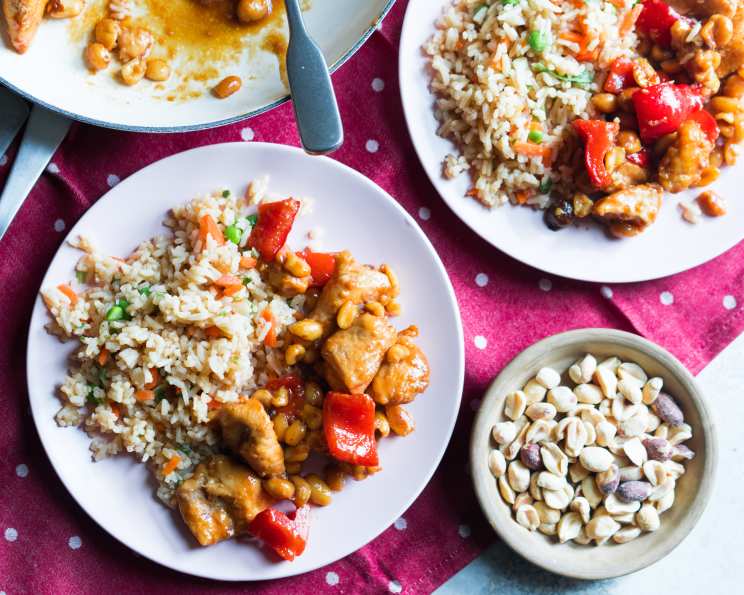
Kung Pao Chicken: A Fiery Stir-Fry Classic
My earliest memories of Kung Pao Chicken are tied to the bustling take-out joint near my childhood home. The scent of sizzling spices and peanuts would waft out the door, beckoning me in with the promise of a sweet, savory, and spicy adventure. That first bite—the tender chicken, the crunchy peanuts, the tingling heat of the chili peppers—was a revelation, sparking a lifelong love affair with this iconic dish. Now, years later, I’m excited to share my take on this classic, a recipe that brings that same magic to my own kitchen.
Recipe Overview
- Prep Time: 10 minutes
- Cook Time: 12 minutes
- Total Time: 22 minutes
- Servings: 3-4
- Dietary Type: None Specified
Ingredients
- 1 lb boneless skinless chicken breast, cut into 1 inch pieces
- 1 tablespoon cornstarch
- 2 teaspoons light sesame oil or 2 teaspoons vegetable oil
- 3 tablespoons green onions, chopped with tops
- 2 garlic cloves, minced
- 1/4 – 1 1/2 teaspoon crushed red pepper flakes (to your own taste)
- 1/2 teaspoon powdered ginger (can use fresh grated if preferred)
- 2 tablespoons rice wine vinegar
- 2 tablespoons soy sauce
- 2 teaspoons sugar
- 1/3 cup dry roasted peanuts
- 4 cups cooked rice, hot
Equipment Needed
- Small bowl
- Large non-stick skillet or wok
Instructions
-
In a small bowl, combine the chicken and cornstarch. Toss to coat, ensuring each piece is evenly covered. This will help the chicken to brown nicely and create a slight thickening for the sauce.
-
Heat the oil in a large non-stick skillet or wok over medium heat. Make sure the pan is hot before adding the chicken to prevent sticking.
-
Add the chicken to the hot skillet. Stir-fry for 5-7 minutes, or until the chicken is no longer pink in the center. Be careful not to overcrowd the pan, as this will steam the chicken instead of browning it. If necessary, cook in batches. Once cooked through, remove the chicken from the heat and set aside.
-
Add the green onions, garlic, red pepper flakes, and ginger to the skillet. Stir-fry for about 15 seconds, until fragrant. Be careful not to burn the garlic. The aroma should be intense and appetizing.
-
Remove the skillet from the heat.
-
In a separate small bowl, combine the rice wine vinegar, soy sauce, and sugar. Stir well until the sugar is dissolved. This creates the base for the sweet, tangy, and savory sauce that defines Kung Pao Chicken.
-
Add the sauce mixture to the skillet and bring to a simmer over medium heat.
-
Return the chicken to the skillet and stir to coat it evenly with the sauce. Make sure every piece is glistening with the flavorful mixture.
-
Stir in the peanuts.
-
Heat thoroughly, stirring occasionally, until the sauce thickens slightly and the chicken is heated through. This should only take a minute or two. The peanuts will also become slightly toasted, enhancing their flavor.
-
Serve hot over cooked rice.
Expert Tips & Tricks
- Chicken Prep is Key: Ensure the chicken is cut into uniformly sized pieces for even cooking. Patting the chicken dry before tossing with cornstarch also promotes better browning.
- Spice Level Adjustment: The amount of crushed red pepper flakes can be easily adjusted to your preference. Start with a smaller amount (1/4 teaspoon) and add more to taste. For a milder flavor, remove the seeds from the chili flakes.
- Fresh Ginger Boost: While the recipe calls for powdered ginger, fresh grated ginger will provide a brighter and more vibrant flavor. Use about 1 teaspoon of freshly grated ginger as a substitute.
- Peanut Perfection: Toast the peanuts in a dry skillet before adding them to the dish for an extra layer of nutty flavor. Watch them carefully, as they can burn quickly.
- Make-Ahead Tip: The sauce can be prepared a day in advance and stored in the refrigerator. This will save time during the cooking process.
- Wok It Out: If you have a wok, using it will elevate the authenticity of the dish. The wok’s shape allows for even heat distribution and better stir-frying.
Serving & Storage Suggestions
Kung Pao Chicken is best served hot, immediately after cooking, over a bed of steaming cooked rice. Garnish with extra chopped green onions and a sprinkle of peanuts for added visual appeal.
Leftovers can be stored in an airtight container in the refrigerator for up to 3-4 days. To reheat, simply microwave until heated through, or stir-fry in a skillet over medium heat, adding a splash of water or chicken broth if needed to prevent drying out.
Freezing is also an option. Store in an airtight container for up to 2-3 months. Thaw overnight in the refrigerator before reheating. The texture of the chicken and peanuts may be slightly altered after freezing.
Nutritional Information
| Nutrient | Amount per Serving | % Daily Value |
|---|---|---|
| Calories | 703.3 kcal | N/A |
| Calories from Fat | N/A | 26% |
| Total Fat | 20 g | 30% |
| Saturated Fat | 3.2 g | 15% |
| Cholesterol | 96.8 mg | 32% |
| Sodium | 1052.6 mg | 43% |
| Total Carbohydrate | 83.6 g | 27% |
| Dietary Fiber | 3.1 g | 12% |
| Sugars | 4.2 g | 17% |
| Protein | 45.5 g | 91% |
Variations & Substitutions
- Spicy Sichuan Style: Add a tablespoon of Sichuan peppercorns to the oil along with the aromatics for a truly authentic and numbing Sichuan experience. Be sure to remove the peppercorns before serving.
- Vegetarian Kung Pao: Substitute the chicken with firm tofu, tempeh, or even large portobello mushroom pieces. Adjust the cooking time accordingly.
- Cashew Craze: Swap the peanuts for cashews or other nuts for a different textural and flavor profile.
- Gluten-Free Adaptation: Use tamari instead of soy sauce to make this dish gluten-free.
- Vegetable Boost: Add other vegetables like bell peppers, zucchini, or water chestnuts to the stir-fry for added nutrients and flavor.
- Sweetener Alternatives: Use honey or maple syrup in place of sugar for a more natural sweetener.
FAQs (Frequently Asked Questions)
Q: Can I use chicken thighs instead of chicken breast?
A: Yes, you can! Chicken thighs will add more flavor and stay moist, but may require a slightly longer cooking time.
Q: How do I prevent the chicken from sticking to the pan?
A: Make sure your pan is hot before adding the chicken, and don’t overcrowd it. Cooking in batches helps ensure proper browning and prevents sticking.
Q: Can I make this recipe ahead of time?
A: The sauce can be made ahead of time, but it’s best to cook the chicken just before serving to prevent it from becoming dry.
Q: What if I don’t have rice wine vinegar?
A: You can substitute it with apple cider vinegar or white vinegar, but use a little less (about 1.5 tablespoons) as these vinegars are more acidic.
Q: How do I store leftovers?
A: Store leftovers in an airtight container in the refrigerator for up to 3-4 days. Reheat thoroughly before serving.
Final Thoughts
This Kung Pao Chicken recipe is more than just a quick and easy meal; it’s a gateway to a world of bold flavors and textures. Don’t be afraid to experiment with the spice level and ingredient substitutions to create your own signature version. So, grab your wok, gather your ingredients, and embark on a culinary adventure that will tantalize your taste buds and leave you craving more! This classic dish is sure to become a regular on your dinner table. Enjoy!