
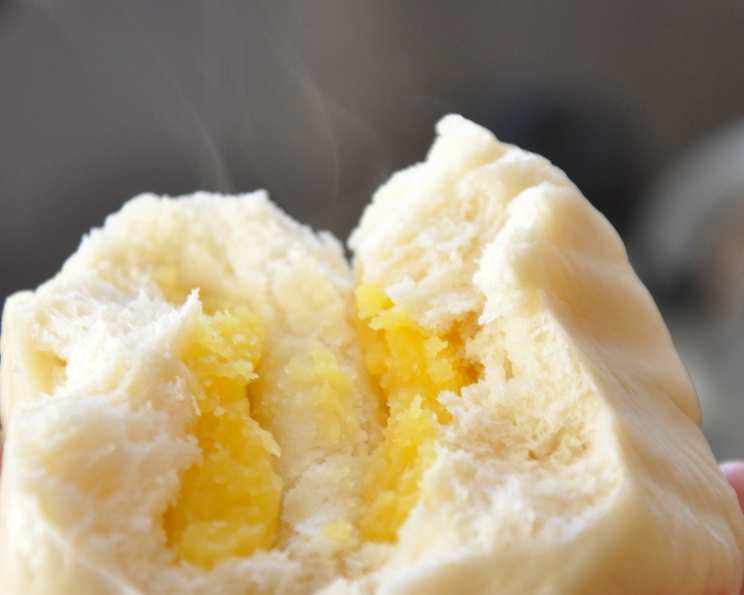
Lai Wong Bao: A Journey to Custard Heaven
The first time I tasted Lai Wong Bao, or custard buns, was in a bustling dim sum restaurant in Hong Kong, the air thick with the aroma of steaming bamboo baskets and the lively chatter of families. I remember biting into the fluffy, slightly sweet bun and being utterly captivated by the molten, golden custard that oozed out. It was an explosion of flavors – a perfect balance of savory and sweet, rich and delicate. Since then, I’ve been on a quest to recreate that magic in my own kitchen, and after countless attempts, I’m thrilled to share this recipe with you.
Recipe Overview
- Prep Time: 2 hours
- Cook Time: 15 minutes
- Total Time: 2 hours 15 minutes
- Servings: 12
- Yield: 12 buns
- Dietary Type: Not specified
Ingredients
- For the Dough:
- 170g cake flour
- 170g Hong Kong flour (see note below)
- ¼ teaspoon salt
- 45g caster sugar
- 1 ½ teaspoons instant yeast
- 160g water
- 10g shortening
- For the Custard Filling:
- 10g custard powder
- 50g wheat starch (tungmin flour)
- 100ml milk
- 50g butter
- 1 large egg, slightly beaten
Ingredient Notes:
- Hong Kong flour, also known as water lily flour, is a low-protein flour that helps create a whiter, softer bun. If you can’t find it, you can substitute with all-purpose flour, but the buns may not be as white.
Equipment Needed
- Mixing bowls
- Nonstick pan
- Rolling pin
- Parchment paper
- Steamer
Instructions
- Sift together the cake flour, Hong Kong flour, and salt into a large mixing bowl. This ensures a light and airy texture for the buns.
- In a separate bowl, combine the caster sugar, instant yeast, and water. Stir until the sugar and yeast are dissolved.
- Pour the wet ingredients into the bowl with the dry ingredients. Blend with a spatula or dough hook until a shaggy dough forms.
- Knead the dough on a lightly floured surface for about 5-7 minutes, until it starts to come together into a cohesive mass.
- Add the shortening and continue to knead for another 8-10 minutes, until the dough is smooth, elastic, and no longer sticky. The dough should be soft and pliable.
- Place the dough in a lightly oiled bowl, turning to coat. Cover the bowl with plastic wrap or a damp cloth and let it prove in a warm place for 60-90 minutes, or until doubled in size. This is a crucial step for developing the light and fluffy texture of the buns.
- While the dough is proving, prepare the custard filling. In a nonstick pan, combine the custard powder, wheat starch, and caster sugar. Make sure there are no lumps.
- Gradually add the milk to the dry ingredients, stirring constantly over low heat to prevent lumps from forming.
- Add the butter and continue to stir until the butter is completely dissolved and the mixture is smooth and thickened.
- Turn off the heat and continue stirring vigorously while gradually adding the slightly beaten egg. This prevents the egg from scrambling and ensures a smooth, creamy custard.
- Transfer the custard filling to a bowl, cover with plastic wrap (pressing the plastic wrap directly onto the surface of the custard to prevent a skin from forming), and let it cool completely.
- Once the dough has doubled in size, gently punch it down to release the air.
- Divide the dough into 12 equal portions, approximately 40-45g each. Shape each portion into a smooth ball.
- Cover the dough balls with a damp cloth or plastic wrap to prevent them from drying out.
- Using a rolling pin, roll out each dough ball into a thin circle, about 3-4 inches in diameter. Make sure the edges are thinner than the center. This helps to create a nice, even bun.
- Place a generous spoonful of the cooled custard filling in the center of the dough circle.
- Gather the edges of the dough up and around the filling, pinching them together to seal the bun completely. Ensure there are no holes or gaps, as the custard will leak out during steaming.
- Place the sealed buns on squares of parchment paper to prevent them from sticking to the steamer basket.
- Repeat steps 15-18 for the remaining dough and filling.
- Arrange the buns in the steamer basket, leaving enough space between them to allow for expansion during steaming.
- Prove the buns for another 15-20 minutes. This allows them to puff up slightly and become even lighter.
- Bring a large pot of water to a rapid boil.
- Place the steamer basket with the buns over the boiling water.
- Steam the custard buns over rapid boiling water for 10-15 minutes, or until they are cooked through and the dough is springy to the touch. Be careful not to oversteam, as this can make the buns soggy.
- Remove the steamer basket from the pot and let the buns cool slightly before serving.
- Enjoy your homemade Lai Wong Bao!
Expert Tips & Tricks
- For extra-soft buns: Use a tangzhong (water roux) method. Mix a small portion of the flour and water together and cook it into a thick paste before adding it to the rest of the ingredients. This helps to create a more hydrated and tender dough.
- To prevent the custard from leaking: Ensure the buns are sealed tightly and do not have any holes.
- To achieve a smooth custard: Sift the custard powder and wheat starch together before adding the milk. This helps to prevent lumps from forming.
- For a richer custard: Use heavy cream instead of milk.
- To make ahead: Prepare the dough and filling separately and store them in the refrigerator overnight. Assemble and steam the buns the next day.
Serving & Storage Suggestions
Serve Lai Wong Bao warm, ideally fresh from the steamer. The buns are best enjoyed on the same day they are made, but they can be stored in an airtight container in the refrigerator for up to 2 days.
To reheat, steam the buns for a few minutes until warmed through. You can also microwave them for a short period, but be careful not to overcook them, as they can become tough. Freezing is not recommended, as it can affect the texture of the buns.
Nutritional Information
| Nutrient | Amount per Serving | % Daily Value |
|---|---|---|
| Calories | 250 kcal | 13% |
| Total Fat | 10g | 15% |
| Saturated Fat | 6g | 30% |
| Cholesterol | 40mg | 13% |
| Sodium | 100mg | 4% |
| Total Carbohydrate | 35g | 12% |
| Dietary Fiber | 1g | 4% |
| Sugars | 8g | |
| Protein | 5g | 10% |
Note: Nutritional information is an estimate and may vary depending on specific ingredients and portion sizes.
Variations & Substitutions
- Gluten-free Lai Wong Bao: Use a gluten-free flour blend for the dough and ensure the custard powder and wheat starch are also gluten-free.
- Vegan Lai Wong Bao: Substitute the milk with plant-based milk (such as almond or soy milk), the butter with vegan butter, and the egg with an egg replacer or a mixture of cornstarch and water.
- Flavored Custard: Add a teaspoon of vanilla extract, almond extract, or other flavorings to the custard filling. You can also incorporate matcha powder for a green tea custard.
- Black Sesame Lai Wong Bao: Add black sesame paste to the custard filling for a nutty and aromatic twist.
FAQs (Frequently Asked Questions)
Q: Why are my buns not as white as the ones I get in restaurants?
A: The use of Hong Kong flour contributes to the whiteness of the buns. If you are using all-purpose flour, they will be slightly less white.
Q: My custard filling is too runny. What did I do wrong?
A: Ensure you cook the custard filling over low heat and stir constantly until it thickens properly. Also, make sure the custard has cooled completely before filling the buns.
Q: How do I prevent the buns from sticking to the steamer basket?
A: Place the buns on squares of parchment paper before steaming. This will prevent them from sticking and make them easier to remove.
Q: Can I bake these buns instead of steaming them?
A: While steaming is traditional, you can bake them at 350°F (175°C) for about 15-20 minutes, or until golden brown. However, the texture will be slightly different – the steamed buns will be softer and fluffier.
Q: My buns deflated after steaming. What happened?
A: Over-proofing or over-steaming can cause the buns to deflate. Make sure to proof them for the recommended time and avoid over-steaming them.
Final Thoughts
Now that you’re armed with this detailed recipe, I encourage you to embark on your own Lai Wong Bao adventure. Don’t be intimidated by the multiple steps; each one is simple and rewarding. The aroma of freshly steamed buns filling your kitchen, the taste of that warm, molten custard… it’s an experience you won’t soon forget. Share your creations with friends and family, and feel free to experiment with different flavors and variations. Happy baking!