
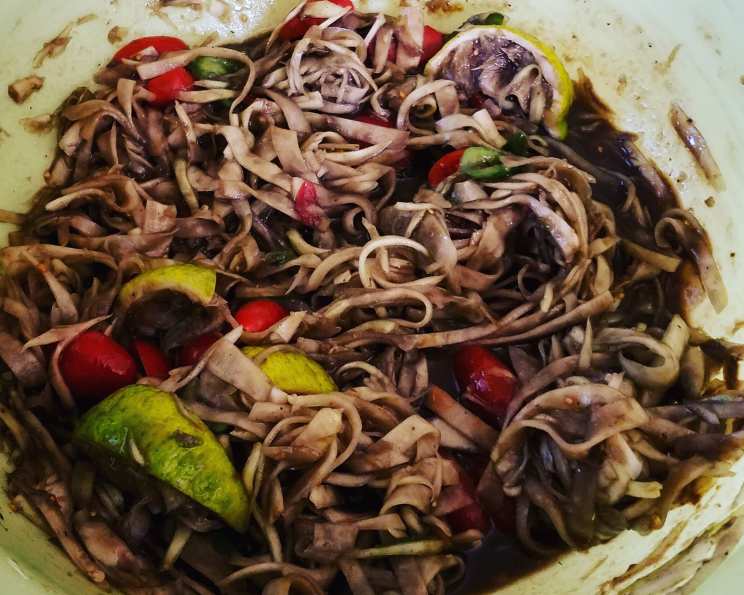
Tum Mak Hoong: Unlocking the Vibrant Flavors of Lao Papaya Salad
My grandmother’s hands, gnarled and strong from years of working the land, moved with practiced grace as she wielded the large mortar and pestle. The rhythmic thwack filled her tiny kitchen, a comforting soundtrack to my childhood summers spent in Laos. It wasn’t just the sound; it was the aroma of chilies, garlic, and fermented fish mingling in the air, a sensory symphony that signaled the impending arrival of tum mak hoong – Lao papaya salad. More than a dish, it was a connection to my heritage, a vibrant explosion of flavors that I’ve carried with me ever since.
Recipe Overview
- Prep Time: 15 minutes
- Cook Time: 0 minutes (no cooking required)
- Total Time: 15 minutes
- Servings: 4
- Yield: Approximately 4 cups
- Dietary Type: Can be adapted to Vegetarian/Vegan (see notes)
Ingredients
- 2 cups shredded papayas (green, unripe papaya is crucial)
- 1 garlic clove
- 4 chilies (adjust to your spice preference – Lao chilies pack a punch!)
- 1 tablespoon shrimp paste (kapi)
- 1/4 tablespoon crab paste (optional, but adds a distinctive depth)
- 1 tablespoon fish sauce (nam pla)
- 1 tablespoon MSG (optional, but traditionally used for enhancing flavor)
- 1 tablespoon fermented fish sauce (padek, optional but authentic)
- 3 tablespoons sugar (palm sugar is preferred, but granulated works)
- 2 tablespoons lime juice (freshly squeezed is essential)
- 6 cherry tomatoes, halved
Equipment Needed
- Large Mortar and Pestle (essential for authentic flavor and texture)
- Spoon (for mixing)
- Knife
- Cutting board
- Measuring spoons
Instructions
-
Prepare your ingredients: Shred the green papaya. Halve the cherry tomatoes. Have all other ingredients measured out and ready to go.
-
In a large mortar, add the garlic and chilies. Pound vigorously until they form a coarse paste. The goal is to release their essential oils and aromas.
-
Add the shrimp paste and crab paste (if using) to the mortar. Continue to pound until everything is well combined and a fragrant paste forms.
-
Add the shredded green papaya to the mortar. Using the pestle, gently bruise the papaya, incorporating it into the paste. Avoid over-pounding, as you want to retain some texture. Use a spoon to help mix the ingredients together.
-
Now, add the remaining ingredients: fish sauce, MSG (if using), fermented fish sauce (if using), sugar, and lime juice.
-
Use the spoon to thoroughly mix all the ingredients together in the mortar. Gently toss and turn the papaya mixture, ensuring that everything is evenly coated with the dressing. The flavors should meld together beautifully.
-
Finally, add the halved cherry tomatoes. Gently mix them into the salad, being careful not to crush them.
-
Taste the tum mak hoong. The key is to achieve a perfect balance of sweet, sour, salty, and spicy. Adjust the ingredients according to your preference. If it’s too sour, add more sugar. If it needs more tang, add more lime juice. For more heat, add another chili. For a saltier flavor, add more fish sauce or padek.
-
Serve immediately and enjoy!
Expert Tips & Tricks
-
Mortar and Pestle are Key: A mortar and pestle is non-negotiable for authentic tum mak hoong. It’s not just about crushing; it’s about releasing the essential oils and flavors of the ingredients in a way that a food processor simply can’t replicate.
-
Spice Level Control: Lao chilies are notoriously hot. Start with fewer chilies than you think you need, and add more gradually until you reach your desired spice level. Remember, you can always add more heat, but you can’t take it away!
-
Padek Power: Padek, or fermented fish sauce, is a very acquired taste. It’s incredibly pungent and adds a deep, umami flavor that’s characteristic of authentic Lao cuisine. If you’re new to padek, start with a very small amount and add more to taste. You can also substitute with extra fish sauce for a less intense flavor.
-
Papaya Prep: Green papaya can sometimes be bitter. To reduce bitterness, soak the shredded papaya in ice water for about 15 minutes before using. Drain well before adding to the salad.
-
Sugar Savvy: Palm sugar adds a richer, caramel-like sweetness compared to granulated sugar. If you can find it, it’s worth using. However, granulated sugar works perfectly well as a substitute.
-
Ingredient Quality: Use the freshest ingredients possible. Fresh lime juice and good-quality fish sauce will make a noticeable difference in the final flavor of the salad.
Serving & Storage Suggestions
Serve tum mak hoong immediately for the best flavor and texture. It’s traditionally eaten as part of a larger meal, alongside sticky rice (khao niao) and grilled meats or fish.
Leftovers can be stored in an airtight container in the refrigerator for up to 24 hours. However, the texture of the papaya may soften slightly over time. It’s best to consume it as soon as possible.
Tum mak hoong is not suitable for freezing.
Nutritional Information
| Nutrient | Amount per Serving | % Daily Value |
|---|---|---|
| Calories | 120 kcal | 6% |
| Total Fat | 3g | 4% |
| Saturated Fat | 1g | 5% |
| Cholesterol | 5mg | 2% |
| Sodium | 600mg | 26% |
| Total Carbohydrate | 20g | 7% |
| Dietary Fiber | 3g | 11% |
| Sugars | 15g | |
| Protein | 3g | 6% |
Variations & Substitutions
- Vegetarian/Vegan: Omit the shrimp paste, crab paste, fish sauce, and fermented fish sauce. Substitute with a vegetarian fish sauce or a combination of soy sauce and a pinch of salt. Some vegetarian versions incorporate peanuts or cashews for added protein and texture.
- Thai-Style: While distinctly Lao, tum mak hoong is related to Thai papaya salad (som tum). Thai versions often include long beans, peanuts, and dried shrimp.
- Regional Variations: Different regions in Laos may have slightly different variations of tum mak hoong. Some may include eggplant, others may use different types of fermented fish.
- Low-Sodium: Reduce the amount of fish sauce and consider omitting the MSG. Use a low-sodium soy sauce alternative if making a vegetarian version.
FAQs (Frequently Asked Questions)
Q: Can I use a food processor instead of a mortar and pestle?
A: While a food processor can be used to chop the ingredients, it won’t replicate the flavors and textures achieved with a mortar and pestle. The pounding action releases the essential oils and bruises the ingredients in a unique way.
Q: I can’t find green papaya. Can I use ripe papaya?
A: No, ripe papaya is not a suitable substitute. Green papaya has a firm texture and a mild flavor that contrasts beautifully with the other ingredients. Ripe papaya is too soft and sweet.
Q: What can I substitute for padek if I can’t find it?
A: If you can’t find padek, you can substitute with extra fish sauce or a combination of fish sauce and anchovy paste for a similar, albeit less intense, flavor.
Q: How spicy should this salad be?
A: The spice level is entirely up to your preference. Start with a small amount of chili and add more gradually until you reach your desired heat.
Q: Can I make this ahead of time?
A: While tum mak hoong is best served immediately, you can prepare the dressing ahead of time and store it in the refrigerator for up to a day. Add the shredded papaya and tomatoes just before serving.
Final Thoughts
Making tum mak hoong is more than just following a recipe; it’s an experience. It’s about connecting with the vibrant flavors of Laos, about recreating a dish that’s deeply rooted in tradition and family. Don’t be afraid to experiment with the ingredients and adjust the flavors to your liking. Gather your friends and family, prepare a batch of sticky rice, and embark on a culinary journey to the heart of Laos. I encourage you to try this recipe and share your own experiences and variations. Perhaps pair it with some grilled chicken and a cold Beerlao for an authentic Lao feast! I can’t wait to hear what you think!