
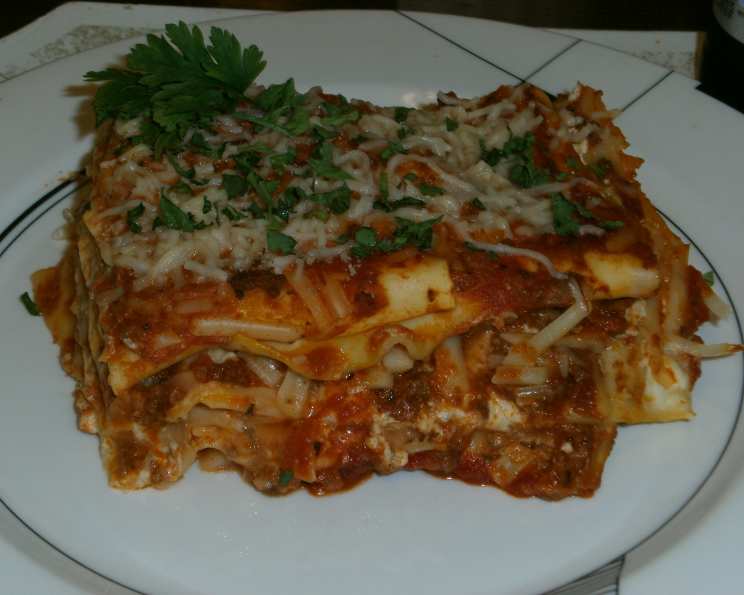
Lasagna Bolognese: A Culinary Journey to Italy
The aroma of Lasagna Bolognese transports me back to a tiny trattoria in Florence. Sunlight streamed through the window as Nonna Emilia, her hands dusted with flour, placed a steaming dish before me. The layers of pasta, rich ragu, and creamy béchamel were a symphony of flavors and textures, a comforting embrace in a foreign land. It was more than just a meal; it was a glimpse into the heart of Italian culture, a memory I cherish and strive to recreate with every lasagna I bake.
Recipe Overview
- Prep Time: 1 hour
- Cook Time: 1 hour 5 minutes
- Total Time: 2 hours 5 minutes
- Servings: 9-12
- Yield: 1 large lasagna
- Dietary Type: Not specified
Ingredients
- 3 tablespoons extra virgin olive oil
- 3 tablespoons butter
- 1 cup onion, finely diced
- 1/3 cup carrot, finely diced
- 1/4 cup celery, finely diced
- 1 garlic clove, diced (more if you like garlic)
- 1/4 cup dry white wine
- Salt, to taste
- Pepper, to taste
- 2 1/2 cups tomatoes, pureed in a blender
- 1 pinch nutmeg
- 2 tablespoons milk or 2 tablespoons heavy cream
- 4 tablespoons butter
- 3-4 tablespoons flour
- 2 1/4 cups milk
- Salt, to taste
- 7 ounces parmigiano-reggiano cheese, freshly grated (divided)
- 1 pinch nutmeg
- Lasagna pasta, amount as needed
Equipment Needed
- Large saucepan
- Wooden spoon
- Blender
- 13×9 inch baking dish
Instructions
-
Prepare the Tomato Sauce (Sugo di Carne): In a large saucepan, combine the olive oil and butter over medium heat. Allow the butter to melt and begin to foam.
-
Add the diced onion, carrot, celery, and garlic to the saucepan. Sauté and stir until the onion becomes soft and translucent, about 5-7 minutes.
-
If using ground meat, add it to the saucepan at this stage. Use a wooden spoon to break the meat into small pieces and cook until it is fully browned.
-
Pour in the dry white wine. Season with salt and pepper to taste. Increase the heat to high and allow the wine to evaporate, about 2-3 minutes.
-
Add the pureed tomatoes and a pinch of nutmeg to the sauce. For a smoother, less acidic flavor, stir in the milk or heavy cream.
-
Once the sauce begins to boil, reduce the heat to low. Cover the saucepan and simmer the sauce slowly for approximately 1 hour, stirring occasionally to prevent sticking.
-
Prepare the White Sauce (Balsamella): In a separate saucepan, melt the butter over low heat. Once melted, remove the saucepan from the heat.
-
Add the flour to the melted butter, stirring continuously until the mixture is smooth and golden. This creates a roux, the base for the white sauce.
-
Gradually add the milk to the roux, a little at a time, whisking constantly to prevent lumps from forming. Return the saucepan to the stove over low heat.
-
Slowly stir the sauce with a wooden spoon until it begins to boil and thicken. This may take several minutes, so be patient and continue stirring.
-
Remove the saucepan from the heat. Season the white sauce with salt to taste, then stir in 1 ounce of the grated parmigiano-reggiano cheese and a pinch of nutmeg.
-
Cook the Lasagna Pasta: Begin cooking the lasagna pasta in salted water according to the package directions. Cook the pasta until it is al dente (slightly firm to the bite).
-
Once the pasta is cooked, drain it and immediately run cold water over it to stop the cooking process. This prevents the pasta from becoming mushy.
-
Preheat the oven to 350 degrees Fahrenheit (175 degrees Celsius).
-
Assemble the Lasagna: Grease a large 13×9 inch baking dish generously with butter or cooking spray.
-
Spread 2-3 tablespoons of the tomato sauce evenly over the bottom of the baking dish. This will prevent the pasta from sticking.
-
Place a layer of cooked lasagna pasta over the tomato sauce in the dish, overlapping the edges as needed.
-
Spread a thin layer of tomato sauce over the pasta, making sure to leave some of the pasta visible.
-
Spread a layer of balsamella white sauce over the tomato sauce. Try to pour it as evenly as possible without blending it completely with the tomato sauce. This will create a marbled effect.
-
Sprinkle 2 ounces of the grated parmigiano-reggiano cheese over the white sauce.
-
Repeat the layering process two more times: pasta, tomato sauce, white sauce, and parmesan cheese.
-
For the top layer, create a beautiful marble effect by leaving the white sauce partially covering the tomato sauce.
-
Bake the Lasagna: Place the assembled lasagna in the preheated oven and bake for approximately 25-30 minutes. The lasagna is done when a fork inserted into the center pulls out easily from the pasta.
-
Remove the lasagna from the oven and let it rest for 10-15 minutes before serving. This allows the layers to set and makes it easier to slice.
Expert Tips & Tricks
- Make-Ahead Convenience: Both the tomato sauce and white sauce can be prepared in advance and stored in the refrigerator for up to 3 days. This makes assembling the lasagna much quicker on the day you plan to bake it.
- Meat Variations: Feel free to experiment with different types of ground meat in the tomato sauce, such as beef, pork, veal, or a combination of all three.
- Cheese Power: While parmigiano-reggiano is the classic choice, you can also use a blend of cheeses, such as mozzarella, ricotta, or provolone, to add different flavors and textures to the lasagna.
- Preventing a Dry Lasagna: To prevent the lasagna from drying out during baking, cover the baking dish with aluminum foil for the first 15-20 minutes, then remove the foil for the remaining baking time.
Serving & Storage Suggestions
Serve the Lasagna Bolognese hot, sliced into squares or rectangles. Garnish with a sprinkle of fresh parsley or basil, if desired. It pairs perfectly with a simple green salad and a glass of Italian red wine.
Leftover lasagna can be stored in the refrigerator for up to 3-4 days. To reheat, cover a slice of lasagna with foil and bake in a preheated oven at 350 degrees Fahrenheit (175 degrees Celsius) until heated through. You can also reheat it in the microwave, but the texture may be slightly softer. For longer storage, the lasagna can be frozen for up to 2-3 months. Thaw it completely in the refrigerator before reheating.
Nutritional Information
| Nutrient | Amount per Serving | % Daily Value |
|---|---|---|
| Calories | 286 kcal | N/A |
| Calories from Fat | 198g | 69% |
| Total Fat | 22.1 g | 33% |
| Saturated Fat | 11.7 g | 58% |
| Cholesterol | 48.8 mg | 16% |
| Sodium | 496.6 mg | 20% |
| Total Carbohydrate | 10.2 g | 3% |
| Dietary Fiber | 1.2 g | 4% |
| Sugars | 2.6 g | 10% |
| Protein | 11.6 g | 23% |
Note: Nutritional information is an estimate and may vary depending on specific ingredients and portion sizes.
Variations & Substitutions
- Vegetarian Lasagna: Omit the meat from the tomato sauce and add sautéed vegetables such as mushrooms, zucchini, spinach, or bell peppers.
- Gluten-Free Lasagna: Use gluten-free lasagna noodles to make this dish suitable for those with gluten sensitivities.
- Dairy-Free Lasagna: Substitute the butter with olive oil and the milk with a plant-based milk alternative such as almond or soy milk. Use a dairy-free cheese alternative for the parmigiano-reggiano.
- Spicy Lasagna: Add a pinch of red pepper flakes to the tomato sauce for a touch of heat.
FAQs (Frequently Asked Questions)
Q: Can I use pre-made pasta sauce to save time?
A: While you can use pre-made sauce, the flavor won’t be as rich or complex as a homemade sauce. If you do use pre-made sauce, consider adding some extra herbs and spices to enhance the flavor.
Q: How can I prevent the lasagna from becoming too watery?
A: Make sure to drain the cooked pasta well and pat it dry with paper towels before assembling the lasagna. Also, avoid adding too much liquid to the tomato sauce and white sauce.
Q: Can I freeze the assembled lasagna before baking?
A: Yes, you can freeze the assembled lasagna for up to 2-3 months. Wrap it tightly in plastic wrap and then in aluminum foil to prevent freezer burn. Thaw it completely in the refrigerator before baking.
Q: What is the best way to reheat lasagna without drying it out?
A: To prevent the lasagna from drying out during reheating, cover it with aluminum foil. You can also add a tablespoon or two of water or broth to the baking dish to create steam.
Q: How do I know when the lasagna is fully cooked?
A: The lasagna is fully cooked when a fork inserted into the center pulls out easily from the pasta. The cheese on top should be melted and bubbly, and the edges should be slightly browned.
Final Thoughts
Lasagna Bolognese is more than just a dish; it’s a celebration of flavors, textures, and traditions. It’s a labor of love that brings people together around the table. Don’t be intimidated by the multiple steps; each one is simple and rewarding. So, gather your ingredients, put on some Italian music, and embark on a culinary journey to create this classic masterpiece. Share your creations and feedback – Buon Appetito!