
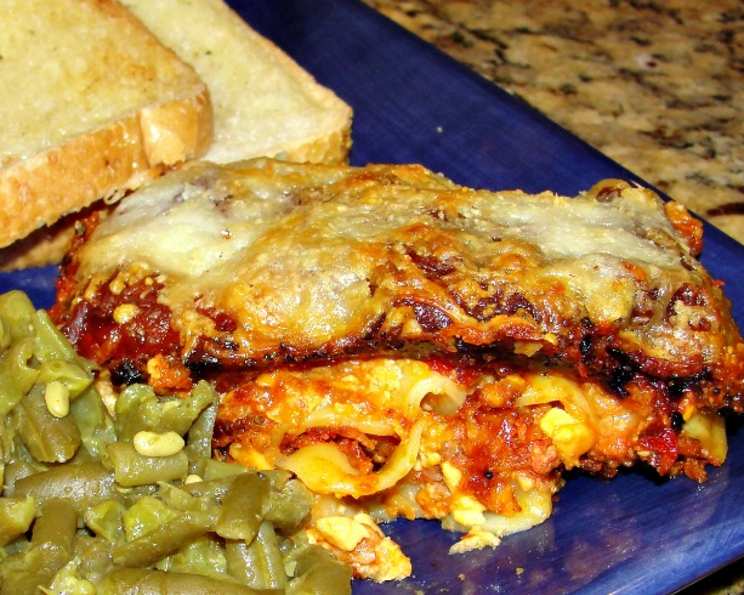
Lasagna: My Special No-Boil Recipe
The scent of lasagna always takes me back to Sunday dinners at my grandmother’s house. The aroma, a comforting blend of garlic, simmering tomatoes, and melting cheese, filled her cozy kitchen, creating an atmosphere of warmth and love. We’d all gather around her large wooden table, eagerly anticipating the first bite of her famous lasagna, a dish that seemed to hold generations of family history within each layer. I remember thinking it was some kind of culinary magic, far too complicated for me to ever attempt. That was until I discovered the ease and deliciousness of no-boil lasagna.
Recipe Overview
- Prep Time: 20 minutes
- Cook Time: 70 minutes
- Total Time: 1 hour 30 minutes
- Servings: 9-12
- Dietary Type: Comfort Food
Ingredients
For the Sauce:
- 1 lb ground chuck
- ½ cup yellow onion, diced (about 1/2 onion)
- 2 tablespoons butter
- 2 minced garlic cloves
- 1 (14 ounce) can petite diced tomatoes
- 1 (6 ounce) can tomato paste
- 1 (6 ounce) can tomato sauce
- 1 teaspoon sugar
- 1 teaspoon oregano
- 1 teaspoon basil
- ½ teaspoon thyme
- 1 teaspoon garlic pepper seasoning
- ½ teaspoon garlic sea salt (salt or garlic salt can be used instead)
- 1 ½ cups water
For the Cheese Mixture:
- 1 (15 ounce) ricotta cheese
- 1 cup shredded mozzarella cheese
- ½ cup parmesan cheese
- 1 egg
Plus:
- 9 lasagna noodles
- 1 cup shredded mozzarella cheese
Equipment Needed
- 9×13 inch pan
- Deep skillet
- 9×13 inch glass baking dish
- Spatula
- Measuring cups and spoons
Instructions
-
Begin by hydrating the lasagna noodles. In a 9×13 inch pan, place the 9 lasagna noodles in a single layer. Fill the pan with cold water until the noodles are completely submerged. Set the pan aside to allow the noodles to soften while you prepare the sauce. This step is crucial for the “no-boil” technique to work effectively.
-
Next, prepare the meat sauce. In a deep skillet, melt the 2 tablespoons of butter over medium heat. Add the 2 minced garlic cloves and ½ cup of diced yellow onion. Cook, stirring occasionally, until the onions become transparent and fragrant, about 3-5 minutes. Be careful not to burn the garlic.
-
Add the 1 lb of ground chuck to the skillet with the onions and garlic. Use a spatula to break the ground chuck into small pieces as it cooks. Continue cooking until the ground chuck is browned and no longer pink. Drain off any excess grease from the skillet to prevent the lasagna from becoming overly greasy.
-
While the ground chuck is cooking, prepare the cheese mixture. In a medium bowl, combine the 1 (15 ounce) container of ricotta cheese, 1 cup of shredded mozzarella cheese, and ½ cup of parmesan cheese. Mix well until all ingredients are evenly distributed. Finally, add the 1 egg to the cheese mixture and stir until fully incorporated. The egg acts as a binder, helping the cheese mixture hold its shape during baking. Set the cheese mixture aside.
-
Once the ground chuck is fully cooked, add the remaining sauce ingredients to the skillet. First, add the 1 (14 ounce) can of petite diced tomatoes, 1 (6 ounce) can of tomato paste, and 1 (6 ounce) can of tomato sauce. Then, add the 1 teaspoon of sugar, 1 teaspoon of oregano, 1 teaspoon of basil, ½ teaspoon of thyme, 1 teaspoon of garlic pepper seasoning, and ½ teaspoon of garlic sea salt (or regular salt to taste). Stir well to combine all ingredients.
-
Pour 1 ½ cups of water into the sauce mixture and stir thoroughly. Bring the sauce to a simmer, then reduce the heat to low and let it simmer for at least 15 minutes, stirring occasionally. This allows the flavors to meld together and the sauce to thicken slightly. Once the sauce has simmered, turn off the burner.
-
Assemble the lasagna. Preheat your oven to 350 degrees Fahrenheit (175 degrees Celsius).
-
In a 9×13 inch glass baking dish, spread a thin layer of the meat sauce onto the bottom of the dish. This will prevent the lasagna noodles from sticking to the bottom and add flavor.
-
Remove the hydrated lasagna noodles from their soaking pan, gently patting them dry to remove excess water. Arrange three of the lasagna noodles in a line on top of the sauce in the baking dish, slightly overlapping if necessary to cover the entire bottom surface.
-
Spread approximately 1/3 of the cheese mixture evenly over the lasagna noodles. Smooth it out with a spatula to create an even layer.
-
Pour approximately 1/4 of the meat sauce mixture on top of the cheese mixture. Lightly spread the sauce to cover the cheese evenly.
-
Add another layer of three lasagna noodles, followed by another 1/3 of the cheese mixture and another 1/4 of the meat sauce. Repeat this process once more for the third layer.
-
For the final layer, place the remaining three lasagna noodles on top. Spread the remaining 1/4 of the meat sauce evenly over the noodles, making sure to cover the edges and corners. This is important because if the noodles are not fully covered with sauce, they may become hard during baking.
-
Cover the baking dish tightly with aluminum foil. This will help to trap steam and ensure that the lasagna noodles cook through properly.
-
Bake the lasagna in the preheated oven at 350 degrees Fahrenheit (175 degrees Celsius) for 1 hour.
-
After 1 hour, carefully remove the lasagna from the oven and remove the aluminum foil. Sprinkle the remaining 1 cup of shredded mozzarella cheese evenly over the top of the lasagna.
-
Return the lasagna to the oven and bake for an additional 10 minutes, or until the mozzarella cheese is melted and bubbly, and lightly browned.
-
Remove the lasagna from the oven and let it rest for at least 15-20 minutes before cutting and serving. This allows the lasagna to set and makes it easier to cut into neat squares.
-
Cut the lasagna into 9-12 squares and serve hot.
Expert Tips & Tricks
- Don’t overcook the ground chuck: Overcooked ground chuck will become dry and crumbly, negatively affecting the overall texture of the lasagna.
- Hydrate the noodles properly: Ensure the noodles are completely submerged in water for at least 20-30 minutes. This ensures they cook through evenly in the oven. If you’re short on time, use slightly warmer water.
- Let it rest: Letting the lasagna rest after baking is crucial. It allows the cheese to firm up slightly and the layers to settle, making it easier to slice and serve.
- For a richer sauce: Add a splash of red wine while the sauce is simmering.
- Make ahead: Assemble the lasagna ahead of time, cover it tightly, and store it in the refrigerator for up to 24 hours before baking. Add an extra 15-20 minutes to the baking time.
Serving & Storage Suggestions
Serve this lasagna hot, straight from the oven after letting it rest. It pairs beautifully with a simple green salad and some crusty garlic bread.
Leftover lasagna can be stored in the refrigerator for up to 3-4 days in an airtight container. To reheat, simply microwave individual portions or reheat the entire dish in the oven at 350 degrees Fahrenheit (175 degrees Celsius) until heated through.
For longer storage, lasagna can be frozen for up to 2-3 months. Wrap individual portions tightly in plastic wrap and then foil or place them in freezer-safe containers. To reheat frozen lasagna, thaw it overnight in the refrigerator and then reheat in the oven or microwave.
Nutritional Information
| Nutrient | Amount per Serving | % Daily Value |
|---|---|---|
| Calories | 629 kcal | 31% |
| Total Fat | 32g | 49% |
| Saturated Fat | 18g | 90% |
| Cholesterol | 169mg | 56% |
| Sodium | 1043mg | 43% |
| Total Carbohydrate | 43g | 14% |
| Dietary Fiber | 4g | 16% |
| Sugars | 10g | N/A |
| Protein | 42g | 84% |
Nutritional information is an estimate and may vary based on specific ingredients and portion sizes.
Variations & Substitutions
- Vegetarian Lasagna: Substitute the ground chuck with sautéed vegetables like zucchini, mushrooms, spinach, and bell peppers.
- Gluten-Free Lasagna: Use gluten-free lasagna noodles.
- Spicy Lasagna: Add a pinch of red pepper flakes to the sauce for a spicy kick.
- Different Cheeses: Experiment with different types of cheeses, such as provolone or fontina, for a unique flavor.
- Low-Fat Lasagna: Use lean ground beef or ground turkey and part-skim ricotta cheese to reduce the fat content.
FAQs (Frequently Asked Questions)
Q: Can I use different types of meat in the sauce?
A: Absolutely! You can substitute the ground chuck with ground beef, ground turkey, or even Italian sausage for a different flavor profile.
Q: Do I really need to hydrate the noodles?
A: Yes, hydrating the lasagna noodles is essential for this no-boil recipe to work. It allows the noodles to soften and cook properly in the oven.
Q: Can I make this lasagna ahead of time?
A: Yes, you can assemble the lasagna ahead of time, cover it tightly, and store it in the refrigerator for up to 24 hours before baking. Add an extra 15-20 minutes to the baking time.
Q: What if my noodles are still hard after baking for 1 hour?
A: Make sure the noodles are fully covered with sauce. If they are still hard, add a little more water or tomato sauce to the dish, cover it with foil, and bake for an additional 15-20 minutes.
Q: Can I freeze leftover lasagna?
A: Yes, you can freeze leftover lasagna for up to 2-3 months. Wrap individual portions tightly in plastic wrap and then foil or place them in freezer-safe containers.
Final Thoughts
This no-boil lasagna recipe is a testament to the fact that delicious, home-cooked meals don’t have to be complicated. It’s a dish that’s perfect for weeknight dinners, weekend gatherings, or any occasion that calls for comfort food. I encourage you to try this recipe and make it your own. Feel free to experiment with different ingredients and flavors to create a lasagna that’s tailored to your taste. And, most importantly, don’t forget to share it with the people you love! Pair this lasagna with a crisp Italian white wine for a truly memorable meal.