
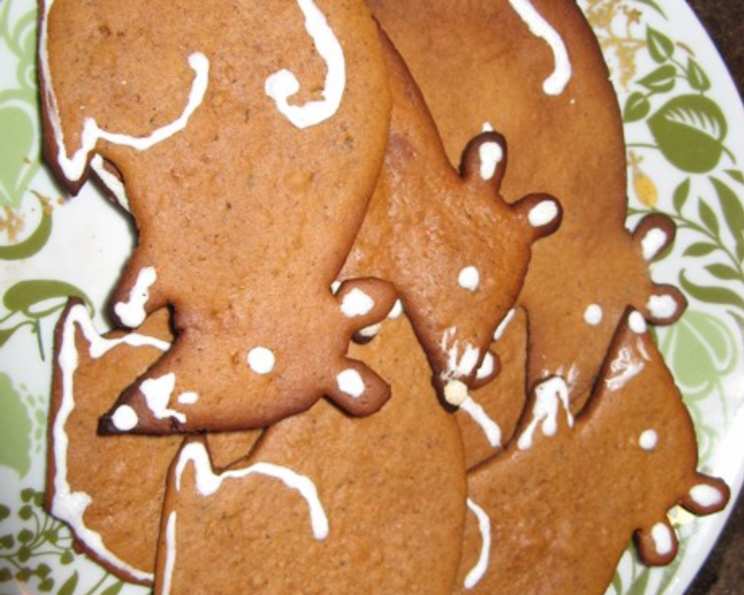
The Spicy Symphony of Latvian Christmas Gingerbread: Piparkūkas
The scent of spices always transports me back to my grandmother’s kitchen during the holidays. I remember standing on a wobbly stool, mesmerized as she expertly rolled out gingerbread dough, her hands dusted with flour. The air, thick with the aroma of cinnamon, ginger, and cloves, promised warmth and festive cheer. These weren’t just cookies; they were tiny edible vessels carrying centuries of Latvian tradition. Each bite evoked memories of snowy landscapes, crackling fireplaces, and the comforting presence of loved ones. They were, and still are, the taste of Christmas.
Recipe Overview
- Prep Time: 40 minutes
- Cook Time: 5-6 minutes
- Total Time: Several hours (including resting time)
- Yields: Approximately 100 cookies
- Dietary Type: Not specified (Contains dairy and eggs)
Ingredients
- 1/3 cup molasses (light or dark)
- 1/3 cup brown sugar (light or dark)
- 1/3 cup honey
- 1/2 cup butter
- 3 tablespoons lard
- 5 cups flour, plus more for dusting
- 1 teaspoon cinnamon
- 1 teaspoon ginger
- 1/2 teaspoon black pepper
- 1/2 teaspoon clove
- 1/2 teaspoon nutmeg
- 1/2 teaspoon cardamom
- 1/2 teaspoon coriander
- 2 eggs
- 1/2 teaspoon baking soda
- 1 1/2 teaspoons baking powder
Equipment Needed
- Large pot
- Large bowl
- Electric mixer or sturdy spoon
- Sieve
- Plastic wrap or clean cloth
- Rolling pin
- Cookie cutters
- Cookie sheets
- Cooling rack
Instructions
-
Begin by melting the base. In a large pot over medium-low heat, combine the molasses, brown sugar, honey, butter, and lard. Stir constantly until the butter, lard, and sugar are completely melted. Important: Do not allow the mixture to boil or scorch. A gentle warming is all that’s needed. Softening the butter and lard in the microwave beforehand can expedite this process.
-
Infuse with spice. Remove the pot from the heat. Add 2 1/2 cups of the flour along with all of the spices – cinnamon, ginger, black pepper, clove, nutmeg, cardamom, and coriander. Mix thoroughly until a smooth paste forms. Set the mixture aside to cool to lukewarm, stirring occasionally to prevent a skin from forming.
-
Incorporate the eggs. Lightly beat the eggs in a separate bowl. Once the spice mixture has cooled sufficiently, incorporate the eggs into the dough. Ensure the mixture is cool enough to prevent the eggs from cooking. Let the dough cool completely.
-
Blend the leavening agents. Sieve together the remaining flour with the baking soda and baking powder. This ensures that the leavening agents are evenly distributed throughout the dough, resulting in a lighter, more tender cookie.
-
Form the dough. Gradually add the sifted flour mixture to the dough, stirring thoroughly after each addition. As the dough thickens, switch from stirring to kneading. Knead the dough first in the bowl, then transfer it to a well-floured work surface. Initially, the dough will be sticky, but continue kneading until you achieve a smooth, shiny, and quite heavy dough. Add more flour if needed, a little at a time, until the dough no longer sticks excessively.
-
Rest the dough. Grease a large bowl with butter. Place the dough in the bowl, cover it with plastic wrap or a clean cloth, and let it rest for a couple of hours at room temperature. This resting period allows the gluten to relax, making the dough easier to roll out and preventing the cookies from becoming tough.
-
Prepare for baking. Preheat your oven to 400 degrees Fahrenheit (200 degrees Celsius). Generously flour your work surface to prevent the dough from sticking.
-
Roll and cut. Take a piece of the rested dough and roll it out very thinly, about 1/8 inch thick. Use your favorite cookie cutters to cut out shapes and carefully place them on a cookie sheet. There’s no need to grease the sheet, thanks to the lard in the dough, which will prevent sticking.
-
Bake to perfection. Bake in the preheated oven for no more than five or six minutes. Watch the cookies carefully. When the bottom edge begins to brown and the surface looks dry, they should be ready. Overbaking will result in hard, dry cookies.
-
Cool and assess. Take the cookie sheet out of the oven and place it on a cooling rack. As the cookies cool, they will harden slightly and should slide off the pan easily. If they are still moist or sticking to the pan, return them to the oven for another minute or two.
Expert Tips & Tricks
- Spice it up (or down): Feel free to adjust the spice levels to your liking. If you prefer a milder flavor, reduce the amount of black pepper or cloves. For a spicier kick, add a pinch of cayenne pepper.
- Dough consistency: The dough should be firm and slightly sticky. If it’s too wet, add more flour, one tablespoon at a time. If it’s too dry, add a teaspoon of water or molasses until it comes together.
- Rolling technique: Roll the dough evenly to ensure that the cookies bake uniformly. Use a rolling pin with guides to achieve a consistent thickness.
- Preventing spread: To prevent the cookies from spreading during baking, chill the cut-out shapes in the refrigerator for 10-15 minutes before placing them in the oven.
- Decorating: Once the cookies have cooled completely, decorate them with royal icing, melted chocolate, or a simple dusting of powdered sugar. Get creative with your designs and use different colors and textures.
Serving & Storage Suggestions
These Latvian Christmas Gingerbread cookies are best enjoyed during the holiday season with a cup of hot cocoa, mulled wine, or a glass of milk. They also make a wonderful homemade gift for friends and family.
To store, place the cooled cookies in an airtight container at room temperature. They will keep for up to two weeks. For longer storage, you can freeze the cookies for up to three months. Thaw them at room temperature before serving. The unbaked dough can be kept almost indefinitely in the fridge, wrapped tightly in plastic wrap. When ready to bake, let the dough soften slightly at room temperature before rolling out.
Nutritional Information
Note: Nutritional information is an estimate and may vary based on specific ingredients and portion sizes.
| Nutrient | Amount per Serving | % Daily Value |
|---|---|---|
| Calories | 50 kcal | 3% |
| Total Fat | 2g | 3% |
| Saturated Fat | 1g | 5% |
| Cholesterol | 5mg | 2% |
| Sodium | 10mg | 0% |
| Total Carbohydrate | 8g | 3% |
| Dietary Fiber | 0g | 0% |
| Sugars | 3g | |
| Protein | 1g | 2% |
Variations & Substitutions
- Gluten-Free: Substitute the all-purpose flour with a gluten-free blend. You may need to add a binding agent like xanthan gum to help hold the dough together.
- Vegan: Replace the butter with a vegan butter substitute, the lard with vegetable shortening, the honey with maple syrup, and the eggs with flax eggs (1 tablespoon of ground flaxseed mixed with 3 tablespoons of water per egg).
- Citrus Zest: Add a teaspoon of grated orange or lemon zest to the dough for a brighter flavor.
- Chocolate Dipped: Dip the cooled cookies in melted dark chocolate for a decadent treat.
- Icing Variations: Experiment with different icing flavors and colors. Add a touch of almond extract to the royal icing for a unique twist.
FAQs (Frequently Asked Questions):
Q: Why is my dough so sticky?
A: Gingerbread dough can be sticky due to the molasses and honey. Make sure to measure your ingredients accurately, and don’t be afraid to add a little extra flour if needed. Also, chilling the dough helps make it more manageable.
Q: Can I use different spices?
A: Absolutely! Feel free to experiment with other spices such as star anise, allspice, or white pepper. Adjust the quantities to your liking.
Q: How do I prevent the cookies from burning?
A: Keep a close eye on the cookies while they are baking. Since they are thin, they can burn quickly. If your oven tends to run hot, reduce the temperature by 25 degrees Fahrenheit.
Q: Can I make the dough ahead of time?
A: Yes! The dough can be made several days in advance and stored in the refrigerator, wrapped tightly in plastic wrap. Allow it to come to room temperature before rolling out.
Q: Why are my cookies hard instead of soft?
A: Overbaking is the most common reason for hard gingerbread cookies. Be sure to bake them for only 5-6 minutes, or until the edges are just beginning to brown. They will harden slightly as they cool.
Final Thoughts
I hope this recipe inspires you to create your own batch of Latvian Christmas Gingerbread. Embrace the warm spices, the delightful shapes, and the joy of sharing these traditional cookies with your loved ones. Don’t hesitate to experiment with variations and decorations to make them your own. Whether you’re a seasoned baker or a kitchen novice, I encourage you to give it a try. Share your creations and feedback – I would love to hear about your gingerbread adventures!