
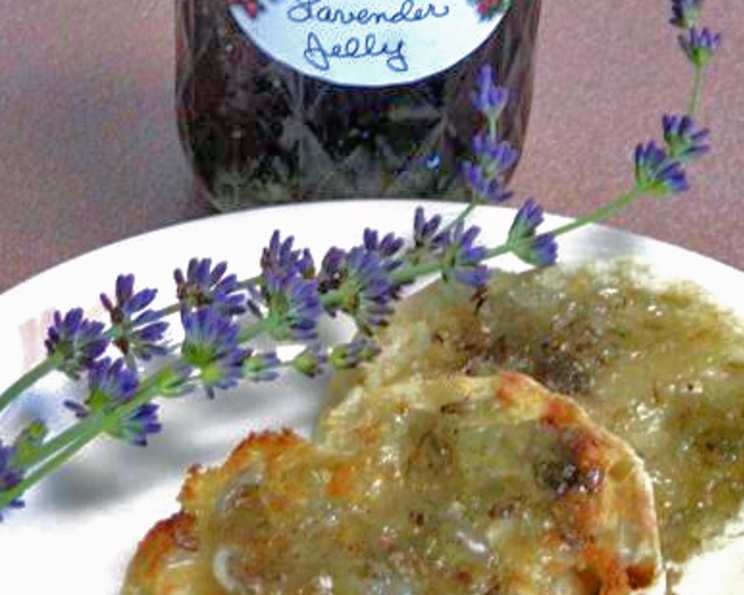
Lavender Jelly with Chamomile: A Taste of Tranquility
The scent of lavender always transports me back to my grandmother’s garden. She had rows of it, buzzing with bees, and the air thick with its sweet, floral fragrance. She’d often steep it with chamomile from her herb garden for a calming tea before bedtime. It wasn’t until years later, experimenting in my own kitchen, that I thought to capture that serene combination in a jar, creating this delicate lavender jelly. The result is a little jar of sunshine that can be enjoyed in so many ways!
Recipe Overview
- Prep Time: 25 minutes
- Cook Time: 15 minutes
- Total Time: 40 minutes
- Yields: 4-5 1/2 pint jars
- Serves: 40
- Dietary Type: Vegetarian, Gluten-Free
Ingredients
- ¼ cup dried lavender blossoms (buds, the flowers before they open)
- 1 chamomile tea bag (optional)
- 2 cups boiling water
- 1 ½ cups additional water
- 4 cups sugar
- ¼ cup lemon juice (from 1 lemon)
- 3-5 drops purple food coloring (optional)
- 3 ounces liquid pectin
Equipment Needed
- Large saucepan
- Sterilized jars (4-5 half-pint jars)
- Jar lifter
- Water bath canner
- Sterile cloth
Instructions
- Begin by sterilizing your jars. Keep the sterilized jars hot until ready to fill. You can do this by running them through a dishwasher cycle, or by boiling them in water for 10 minutes.
- Infuse the lavender and chamomile: Pour the boiling water over the dried lavender blossoms in a heatproof bowl or measuring cup. Let this steep for 15 minutes. If you’re using the chamomile tea bag, add it for the last 5 minutes of the steeping time (meaning 10 minutes after the lavender started steeping). If you are omitting chamomile, let the lavender steep for a full 20 minutes.
- Strain the infusion: Strain the lavender and chamomile tea through a fine-mesh sieve (or cheesecloth) into your large saucepan, pressing gently on the lavender blossoms to extract as much flavor as possible. Discard the spent lavender and tea bag.
- Combine ingredients: Add the additional 1 ½ cups of water, sugar, lemon juice, and purple food coloring (if using) to the saucepan.
- Bring to a rolling boil: Over medium-high heat, bring the mixture to a full rolling boil, stirring constantly to prevent scorching. A “full rolling boil” is a boil that doesn’t stop bubbling even when you stir it. Continue to boil, stirring constantly, for 1-2 minutes.
- Add pectin: Pour in the liquid pectin and return the mixture to a boil.
- Boil hard: Boil the mixture hard for exactly 1 minute, stirring constantly. It is essential to maintain a hard boil for the entire minute to ensure proper gelling.
- Remove from heat and skim: Remove the saucepan from the heat and use a spoon to skim off any foam that has formed on the surface of the jelly. This will result in a clearer, more visually appealing jelly.
- (Optional) Add lavender buds: If desired, add a couple of fresh or dried lavender buds back into the jelly for visual appeal. These will be suspended in the jelly, adding a delicate touch.
- Pour into jars: Carefully pour the hot jelly into the prepared, hot jars, leaving approximately ½ inch of headspace at the top of each jar.
- Wipe rims: Wipe the rims of the jars with a clean, sterile cloth to remove any drips or spills. This ensures a proper seal.
- Apply lids and rings: Place the lids on the jars and screw on the bands until they are fingertip tight. Do not overtighten.
- Process in a water bath: Place the filled jars into a water bath canner. Ensure that the jars are completely covered with water by at least 1 inch. Bring the water to a boil and process for 10 minutes.
- Rest in canner: Turn off the heat and let the jars sit in the hot water for an additional 5 minutes with the flame off. This helps prevent siphoning.
- Cool and label: Carefully remove the jars from the water bath using a jar lifter and place them on a towel-lined surface in a draft-free spot, without tilting them. Let the jars cool completely for 12-24 hours. As they cool, you should hear a “pop” sound as the lids seal.
- Check for seal: After the jars have cooled, check the seals by pressing down on the center of each lid. If the lid flexes or gives, it is not properly sealed, and the jar should be refrigerated and used promptly.
- Label and store: Label the jars with the date and contents, and store them in a cool, dark place for up to one year.
Expert Tips & Tricks
- Lavender Selection: The quality of your lavender blossoms directly impacts the flavor of the jelly. Look for culinary-grade lavender that has a strong, sweet aroma. Avoid using lavender that has been treated with pesticides.
- Doneness Test: If you’re unsure if the jelly has reached the proper consistency, place a small spoonful on a chilled plate. Let it cool for a minute. If it wrinkles when you push it with your finger, it’s ready.
- Sugar Adjustment: Do not reduce the amount of sugar in this recipe, as it is essential for the gelling process and acts as a preservative.
- Foam Removal: Skimming off the foam is crucial for a clear, sparkling jelly. Take your time and remove as much foam as possible.
- Troubleshooting: If your jelly doesn’t set, you can reprocess it by adding more pectin or lemon juice. Follow the pectin manufacturer’s instructions.
Serving & Storage Suggestions
Lavender jelly is incredibly versatile. It can be enjoyed in so many ways!
- Breakfast: Spread it on toast, scones, or biscuits.
- Tea Time: Add a spoonful to a cup of hot tea for a floral sweetness.
- Desserts: Use it as a filling for pastries or as a topping for ice cream.
- Savory Dishes: Glaze roasted chicken or salmon for a unique flavor combination. It also pairs well with cheeses.
- Beverages: Stir it into lemonade or iced tea for a refreshing twist, or use it to sweeten a vodka martini, garnishing with fresh lavender.
- Salad Dressing: Use it as a sweetener for a salad dressing.
- Sauces: Add to sauces for extra zing.
Store properly sealed jars of lavender jelly in a cool, dark place for up to one year. Once opened, refrigerate and use within a few weeks.
Nutritional Information
Please note that this is an estimated nutritional breakdown.
| Nutrient | Amount per Serving | % Daily Value |
|---|---|---|
| Calories | 78 kcal | 4% |
| Total Fat | 0 g | 0% |
| Saturated Fat | 0 g | 0% |
| Cholesterol | 0 mg | 0% |
| Sodium | 0.6 mg | 0% |
| Total Carbohydrate | 20.2 g | 7% |
| Dietary Fiber | 0.1 g | 0% |
| Sugars | 20 g | 80% |
| Protein | 0 g | 0% |
Variations & Substitutions
- Herbal Infusions: Experiment with different herbs in addition to or instead of chamomile. Rose petals, lemon balm, or mint would all be lovely additions.
- Citrus Zest: Add the zest of a lemon or orange to the jelly for a brighter, more pronounced citrus flavor.
- Spice Infusion: Add a small cinnamon stick or a few cardamom pods to the lavender infusion for a warm, spiced jelly. Remove before adding the pectin.
- Honey Substitution: Substitute some of the sugar with honey. Note that this may impact the final color of your jelly.
FAQs (Frequently Asked Questions)
Q: Can I use fresh lavender instead of dried?
A: While dried lavender is preferred for its concentrated flavor, you can use fresh lavender. Use about twice the amount (½ cup), and be sure to use culinary-grade lavender that hasn’t been treated with pesticides.
Q: Why is my jelly cloudy?
A: Cloudy jelly can be caused by several factors, including not skimming off the foam properly, using hard water, or improper cooling. Ensure you carefully skim off the foam and use filtered water if your tap water is hard.
Q: How long does the jelly last once opened?
A: Once opened, lavender jelly should be stored in the refrigerator and will last for several weeks.
Q: Can I double the recipe?
A: Yes, you can double the recipe, but be sure to use a large enough saucepan to prevent boiling over. You may also need to adjust the cooking time slightly.
Q: My jelly didn’t set. What can I do?
A: If your jelly doesn’t set, you can reprocess it by adding more pectin or lemon juice. Follow the pectin manufacturer’s instructions for reprocessing.
Final Thoughts
I hope this lavender jelly with chamomile recipe brings a touch of tranquility to your day. It’s a wonderful way to capture the essence of a summer garden and enjoy it year-round. Don’t be afraid to experiment with different herbs and flavor combinations to create your own unique jelly. I’d love to hear about your experiences and any variations you try! Share your feedback and pairings – perhaps a perfect cheese or a delightful afternoon tea – in the comments below. Happy cooking!