
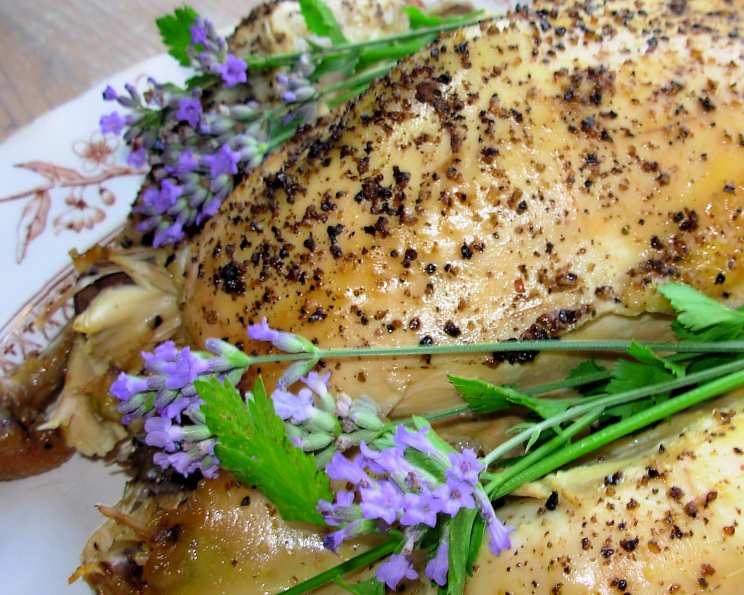
Lavender, Lovage, and Lime Roast Chicken With Honey
The scent of lavender always transports me back to my grandmother’s garden in Provence. She had rows upon rows of it, buzzing with bees, the air thick with its calming fragrance. One summer, she decided to experiment, adding lavender honey to her roast chicken. The result was transformative. It was savory, subtly sweet, and imbued with the unique floral notes of Provence. This recipe, adapted from her notes, is a tribute to those sun-drenched days and her spirit of culinary adventure.
Recipe Overview
- Prep Time: 20 minutes
- Cook Time: 1 hour 50 minutes
- Total Time: 2 hours 10 minutes
- Servings: 4-6
- Yield: 1 whole roast chicken
- Dietary Type: Gluten-Free, Dairy-Free (if using olive oil instead of butter), Refined Sugar-Free
Ingredients
- 1 small limes or 1 small lemon, finely chopped, pips removed
- 1 small onion, finely chopped
- 2-3 garlic cloves, crushed
- 100 g butter, softened (or olive oil for dairy-free)
- 1 (2-3 kg) roasting chicken
- 4 sprigs lovage or 4 stalks celery & leaves, roughly chopped
- 1 tablespoon lavender flowers
- 50 ml olive oil
- 2 tablespoons lavender honey
- Salt & freshly ground black pepper
- Lavender and lovage sprigs (to garnish)
Equipment Needed
- Roasting tray
- Small pan
- Skewer
Instructions
-
Preheat the oven to 190°C (400°F, gas mark 5). It’s crucial to have the oven at the correct temperature for even cooking and crispy skin.
-
In a bowl, combine the finely chopped lime (or lemon), onion, and crushed garlic with the softened butter. Ensure the ingredients are well incorporated to create a flavorful butter mixture. If you are avoiding dairy, simply omit the butter and rub the chicken with olive oil and then the lime/onion/garlic mixture, before proceeding.
-
Carefully loosen the skin of the chicken over the breast area. Gently slide your fingers between the skin and the breast meat, creating a pocket for the flavored butter. Be cautious not to tear the skin.
-
Stuff half of the lime-garlic butter mixture under the skin of the chicken breast, distributing it evenly. This step infuses the breast meat with flavor and helps to keep it moist during roasting.
-
Put the remaining flavored butter inside the cavity of the chicken. Add the roughly chopped lovage (or celery & leaves) and the lavender flowers. These aromatics will permeate the chicken from the inside out.
-
Secure the skin over the neck of the chicken with a skewer. This prevents the stuffing from escaping during cooking and helps to create a more presentable roast.
-
Place the chicken in a roasting tray. Ensure the chicken is centered in the tray to allow for even heat distribution.
-
In a small pan, combine the olive oil and lavender honey. Heat gently over low heat until the honey liquefies. Stir to combine the oil and honey. Do not overheat, as this can scorch the honey.
-
Pour the honey-oil mixture over the chicken, coating it evenly. This glaze will contribute to a beautiful golden-brown color and a subtly sweet flavor.
-
Season the chicken generously with salt and freshly ground black pepper. Don’t be shy with the seasoning, as it will enhance the overall flavor of the dish.
-
Roast the chicken for 45 minutes per kg, plus an additional 20 minutes. This calculation ensures the chicken is cooked through.
-
Baste the chicken with the pan juices every 20 minutes or so during roasting. Basting keeps the chicken moist and helps to develop a rich, flavorful crust.
-
If the chicken seems to be browning too quickly, cover it loosely with foil halfway through cooking. This prevents the skin from burning and ensures even cooking.
-
To test whether the chicken is cooked, pierce it with a skewer in the thickest part of the thigh. If the juices run clear, the chicken is cooked. If the juices are pink, continue roasting for a few more minutes and test again.
-
Once cooked, remove the chicken from the oven and leave it to stand, covered with foil, for 20 minutes before carving. Resting allows the juices to redistribute, resulting in a more tender and flavorful bird.
-
Garnish with fresh lavender and lovage sprigs before serving.
-
Carve the chicken at the table and serve with the pan juices. Accompany with green beans and apple & potato purée for a complete and satisfying meal.
Expert Tips & Tricks
- For extra crispy skin, pat the chicken dry with paper towels before roasting. This removes excess moisture and allows the skin to brown more effectively.
- If you can’t find lovage, use a combination of celery leaves and parsley for a similar flavor.
- To elevate the flavors even further, consider adding a splash of white wine to the pan during the last 30 minutes of roasting. The wine will deglaze the pan and add depth to the pan juices.
- If you’re short on time, you can spatchcock the chicken (remove the backbone and flatten it) to reduce the cooking time.
- Don’t discard the chicken carcass! Use it to make a flavorful chicken stock for soups and sauces.
Serving & Storage Suggestions
Serve the Lavender, Lovage, and Lime Roast Chicken hot, garnished with fresh lavender and lovage sprigs. The pan juices make a delicious sauce to drizzle over the chicken and side dishes. This dish pairs well with roasted vegetables, creamy mashed potatoes, or a simple green salad.
Leftover roast chicken can be stored in an airtight container in the refrigerator for up to 3 days. It can also be frozen for up to 2 months. To reheat, bake in a preheated oven at 175°C (350°F) until warmed through, or microwave until heated. Use leftover chicken in salads, sandwiches, or soups.
Nutritional Information
| Nutrient | Amount per Serving | % Daily Value |
|---|---|---|
| Calories | 684 kcal | 34% |
| Total Fat | 55g | 85% |
| Saturated Fat | 18g | 90% |
| Cholesterol | 210mg | 70% |
| Sodium | 260mg | 11% |
| Total Carbohydrate | 2g | 1% |
| Dietary Fiber | 0.4g | 1% |
| Sugars | 0.6g | 1% |
| Protein | 43g | 86% |
Note: Nutritional information is an estimate and may vary based on specific ingredients and portion sizes.
Variations & Substitutions
- Lemon Verbena: Substitute lemon verbena for lavender flowers for a different floral note.
- Maple Syrup: Replace lavender honey with maple syrup for a slightly different sweetness.
- Dairy-Free: Use olive oil instead of butter for a dairy-free version.
- Seasonal Herbs: Experiment with different herbs depending on the season, such as rosemary, thyme, or sage.
- Spatchcock: Spatchcock the chicken for faster cooking. This involves removing the backbone and flattening the chicken before roasting.
- Citrus: Use oranges or grapefruits instead of limes or lemons to vary the citrus flavors.
- Glaze: Add a touch of Dijon mustard to the honey-oil glaze for a tangy kick.
FAQs (Frequently Asked Questions)
Q: Can I use dried lavender instead of fresh?
A: While fresh lavender is preferred for its aroma and flavor, you can use dried lavender in a pinch. Use about half the amount of dried lavender as you would fresh.
Q: What if I can’t find lovage?
A: If you can’t find lovage, a combination of celery leaves and parsley makes a good substitute.
Q: How do I prevent the chicken from drying out?
A: Basting the chicken frequently with pan juices and covering it with foil halfway through cooking will help prevent it from drying out.
Q: Can I prepare the chicken ahead of time?
A: You can prepare the butter mixture and stuff it under the chicken skin a few hours ahead of time. Keep the chicken refrigerated until ready to roast.
Q: How do I know when the chicken is fully cooked?
A: The best way to check for doneness is to pierce the chicken with a skewer in the thickest part of the thigh. If the juices run clear, the chicken is cooked. A meat thermometer inserted into the thigh should read 165°F (74°C).
Final Thoughts
This Lavender, Lovage, and Lime Roast Chicken with Honey is more than just a recipe; it’s an experience. The combination of floral, citrus, and herbal notes creates a symphony of flavors that will tantalize your taste buds. Whether you’re hosting a dinner party or simply looking for a delicious and elegant meal, this roast chicken is sure to impress. Don’t be afraid to experiment with variations and substitutions to make it your own. And most importantly, enjoy the process of creating something beautiful and delicious. I encourage you to try this recipe, share your feedback, and perhaps pair it with a crisp white wine to elevate the dining experience. Bon appétit!