
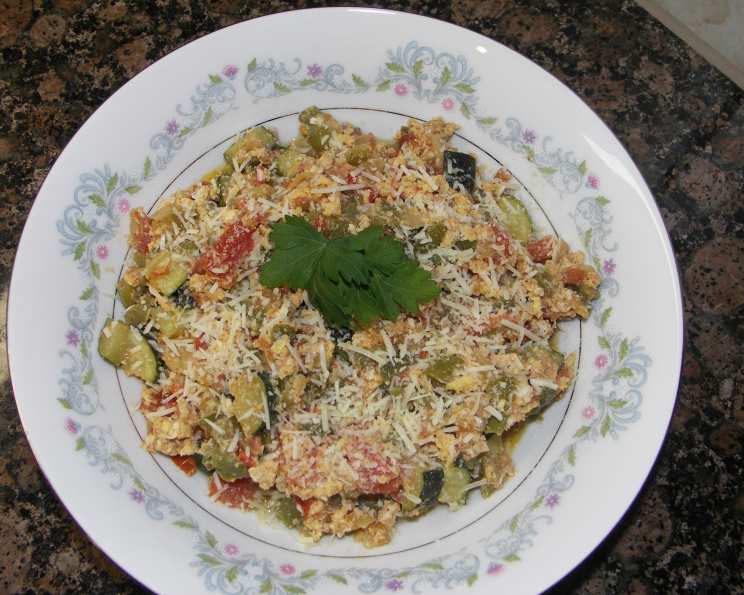
Lecho: A Taste of Hungarian Sunshine
I remember summers in my grandmother’s kitchen, the air thick with the aroma of sweet peppers and ripe tomatoes simmering on the stove. She’d stand for hours, carefully stirring a massive pot of lecho, the colors of the vegetables deepening with each passing minute. For me, lecho is more than just a dish; it’s the embodiment of those sun-drenched days, the laughter echoing through the garden, and the feeling of being utterly loved and cared for. It’s a taste of home, no matter where I am.
Recipe Overview
- Prep Time: 15 minutes
- Cook Time: 40 minutes
- Total Time: 55 minutes
- Servings: 6
- Dietary Type: Vegetarian
Ingredients
- ½ cup margarine
- 2-3 large onions, sliced
- 6 green peppers, sliced
- 1 medium zucchini, diced (optional)
- ½ cup diced mushrooms
- 6 large tomatoes, cubed
- 6 eggs
- Salt and pepper to taste
Equipment Needed
- Large skillet
- Medium bowl
- Whisk
Instructions
-
Begin by melting the margarine in a large skillet over medium heat. Make sure the skillet is large enough to accommodate all the vegetables.
-
Add the sliced onions, green peppers, diced zucchini (if using), and diced mushrooms to the skillet. Sauté the vegetables until they are tender, stirring occasionally to ensure even cooking and prevent burning. This usually takes about 10-15 minutes. The onions should become translucent and the peppers slightly softened.
-
Introduce the cubed tomatoes to the skillet. Stir them in with the other vegetables and cook for an additional 5 minutes. This allows the tomatoes to release some of their juices and begin to soften, contributing to the overall sauce.
-
Lower the heat to low and continue cooking until most of the liquid has been reduced. This step is crucial for concentrating the flavors and achieving the desired consistency of the lecho. Stir occasionally to prevent sticking. This will take approximately 10-15 minutes. You want the mixture to be saucy but not watery.
-
While the vegetables are simmering, prepare the eggs. In a medium bowl, beat the eggs with salt and pepper to taste. Whisk thoroughly until the eggs are well combined and slightly frothy. This ensures a smooth and even texture in the finished dish.
-
Pour the beaten eggs into the skillet with the vegetables.
-
Stir continuously until the eggs are cooked and the lecho has reached your desired consistency. This usually takes 3-5 minutes. Avoid overcooking the eggs, as they can become rubbery. The mixture should be creamy and well combined.
-
Serve hot over rice or in a pita bread.
Expert Tips & Tricks
- Peppers are Key: The quality of the green peppers significantly impacts the flavor of the lecho. Choose firm, brightly colored peppers for the best taste. Roasting the peppers before slicing adds a smoky depth.
- Tomato Selection: Use ripe, flavorful tomatoes for the best result. If fresh tomatoes aren’t in season, canned diced tomatoes can be substituted, but be sure to drain them well.
- Liquid Control: To prevent the lecho from becoming too watery, you can remove some of the excess liquid during the simmering process.
- Egg Incorporation: For a smoother, more integrated egg texture, temper the eggs before adding them to the skillet. This involves whisking a small amount of the hot vegetable mixture into the eggs before adding the eggs to the entire skillet.
- Spice It Up: For a spicier version, add a pinch of red pepper flakes or a finely chopped chili pepper to the vegetables while sautéing.
- Make-Ahead Option: The vegetable base of the lecho (before adding the eggs) can be made ahead of time and stored in the refrigerator for up to 2 days. When ready to serve, simply reheat and add the eggs.
Serving & Storage Suggestions
Lecho is best served warm, immediately after cooking. It makes a delicious and satisfying meal when served over fluffy rice or stuffed into warm pita bread. You can also serve it as a side dish alongside grilled meats or sausages.
Leftovers can be stored in an airtight container in the refrigerator for up to 3 days. To reheat, gently warm the lecho in a skillet over low heat, stirring occasionally. Avoid microwaving, as this can make the eggs rubbery. Freezing is not recommended as it affects the texture of the eggs.
Nutritional Information
| Nutrient | Amount per Serving | % Daily Value |
|---|---|---|
| Calories | 215 kcal | 11% |
| Total Fat | 14g | 22% |
| Saturated Fat | 3g | 15% |
| Cholesterol | 180mg | 60% |
| Sodium | 200mg | 8% |
| Total Carbohydrate | 12g | 4% |
| Dietary Fiber | 3g | 12% |
| Sugars | 7g | |
| Protein | 8g | 16% |
Nutritional information is an estimate and may vary based on specific ingredients and portion sizes.
Variations & Substitutions
- Vegan Lecho: Omit the eggs for a vegan version. Consider adding a can of drained and rinsed chickpeas or white beans for added protein and heartiness. You can also use a plant-based egg substitute.
- Meat Lover’s Lecho: Add cooked sausage, bacon, or ham to the vegetables while sautéing.
- Cheese Please: Sprinkle crumbled feta cheese or grated Parmesan cheese over the lecho before serving.
- Spicy Lecho: Add a pinch of red pepper flakes or a finely chopped chili pepper to the vegetables while sautéing. Hungarian paprika (sweet or smoked) is also a great addition.
- Different Vegetables: Feel free to experiment with other vegetables, such as bell peppers of different colors (red, yellow, orange), eggplant, or corn.
FAQs (Frequently Asked Questions)
Q: Can I use canned tomatoes instead of fresh tomatoes?
A: Yes, canned diced tomatoes can be used as a substitute for fresh tomatoes, especially when fresh tomatoes are not in season. Be sure to drain them well before adding them to the skillet.
Q: How do I prevent the lecho from becoming too watery?
A: To prevent the lecho from becoming too watery, make sure to cook the vegetables over medium-low heat until most of the liquid has been reduced. You can also remove some of the excess liquid during the simmering process.
Q: Can I make lecho ahead of time?
A: The vegetable base of the lecho (before adding the eggs) can be made ahead of time and stored in the refrigerator for up to 2 days. When ready to serve, simply reheat and add the eggs.
Q: Can I freeze lecho?
A: Freezing is not recommended, as it can affect the texture of the eggs, making them rubbery.
Q: What can I serve with lecho?
A: Lecho is delicious served over rice or stuffed into warm pita bread. You can also serve it as a side dish alongside grilled meats or sausages.
Final Thoughts
Lecho is a wonderfully versatile and comforting dish that is perfect for any time of year. Its simplicity and vibrant flavors make it a crowd-pleaser, and its adaptability allows you to customize it to your own tastes and preferences. I encourage you to try this recipe and experience the taste of Hungarian sunshine for yourself. Don’t be afraid to experiment with different vegetables and spices to create your own unique version. And, of course, I’d love to hear your feedback and any variations you come up with! Pair it with a crisp white wine and enjoy!